
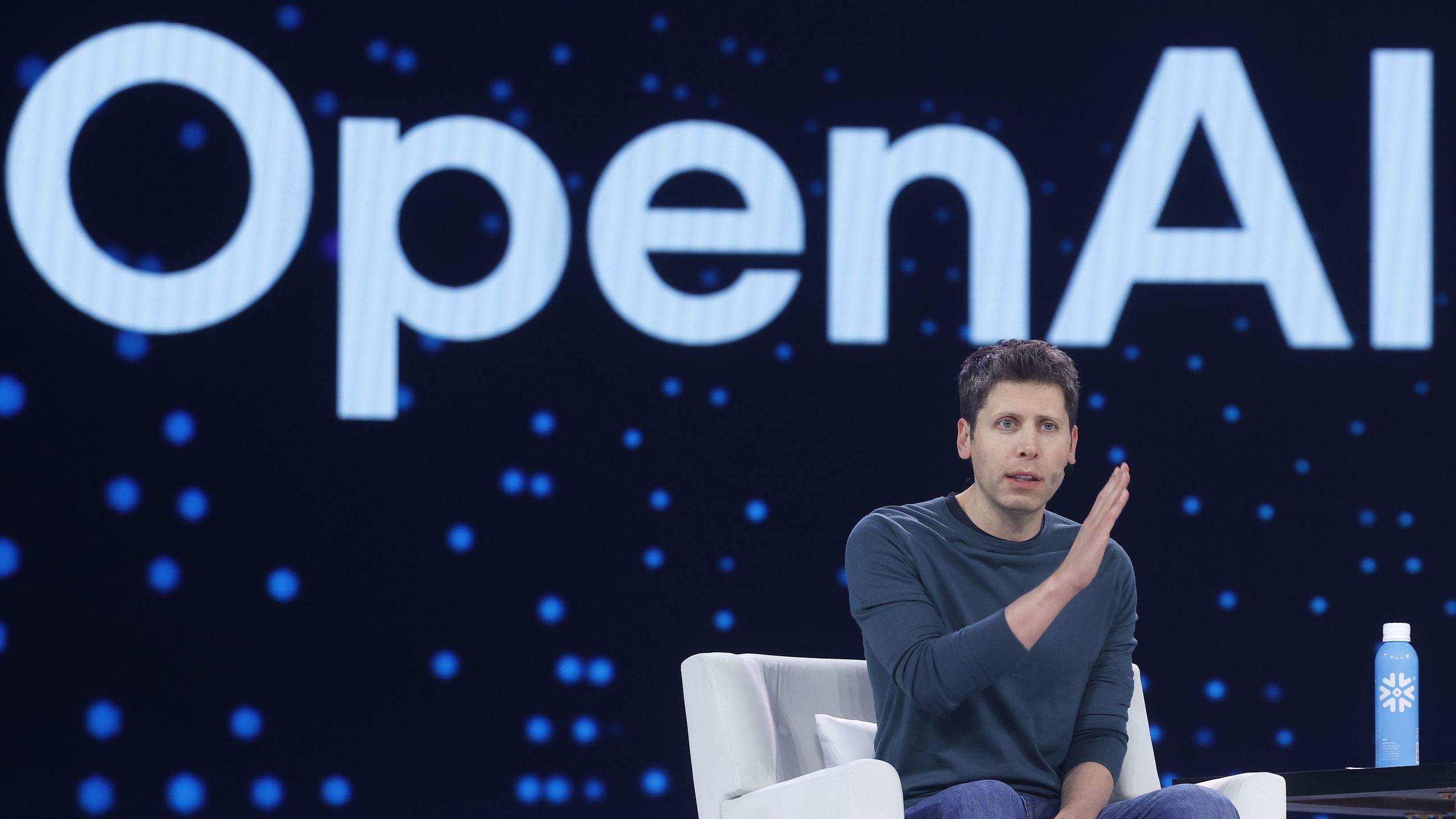
We tend to think that OpenAI and AI companies in general are pushing for minimal regulation so that nothing slows down their expansion. But in a new document, “Industrial policy in the intelligence age” OpenAI argues the opposite: that government surveillance is not only necessary; we need it now.
This suggests that we need a new type of industrial policy to address the disruption that AI will create: “The transition to superintelligence will require an even more ambitious form of industrial policy, one that reflects the capacity of democratic societies to act collectively, at scale, to shape their economic future so that superintelligence benefits everyone. »
The risk to employment is presented as the most immediate threat. “While we are confident that the benefits of AI will far outweigh its challenges, we are aware of the risks of disrupting jobs and entire industries,” the document states. It also highlights broader concerns, including threats to democracy, the concentration of wealth in the hands of a few, and the misuse of technology by “bad actors.”
Article continues below
OpenAI suggests expanding what it calls the “care and connection economy,” roles in child care, elder care, education, healthcare and community services, as new avenues for workers. It also proposes transforming the efficiencies generated by AI into tangible benefits for employees.
This is where one of his most eye-catching ideas comes into play.
OpenAI suggests that governments and employers should “incentivize employers and unions to pilot time-limited 32-hour/four-day workweeks with no loss of wages and which keep production and service levels constant.” If successful, these shorter weeks could become permanent or result in longer paid leave.
It’s an attractive vision: AI does more work and humans get more time back. But this relies on a major assumption: that these productivity gains actually translate into higher wages and not just higher profits.
Tax the rich
OpenAI’s paper also hints at a more fundamental change needed in the way economies are taxed. If AI reduces the need for human labor, he argues, governments may need to rely less on taxing workers and more on taxing capital and the businesses that benefit most from automation. In other words, if AI does more work, companies that benefit from it may have to shoulder more of the burden.
One of the most radical proposals contained in the document is the idea of a public fund. This is effectively a way to redistribute the gains of AI across society. Instead of these profits being held by a handful of companies, they could be pooled and returned to citizens, echoing models such as sovereign wealth funds.
What’s most striking about this paper, however, is how OpenAI frames AI itself. It’s no longer just about better chatbots or smarter tools. The paper positions AI as something closer to infrastructure – a foundational layer that will underpin entire industries, economies and public services.
The future is bright
OpenAI claims that AI could reshape the economy for the better, while highlighting how easily it could concentrate wealth and power if left unchecked. History has taught us that humans are generally bad at long-term planning, and that it will take a very different mindset than our political leaders currently embody to implement these ideas.
It’s also an unusual position that OpenAI finds itself in: the company that develops AI technology is now helping to define how AI should be taxed, regulated, and redistributed. Whether this is forward-thinking or self-serving will depend on who you ask, although the idea of a four-day work week would get my vote.
The best business laptops for every budget


