
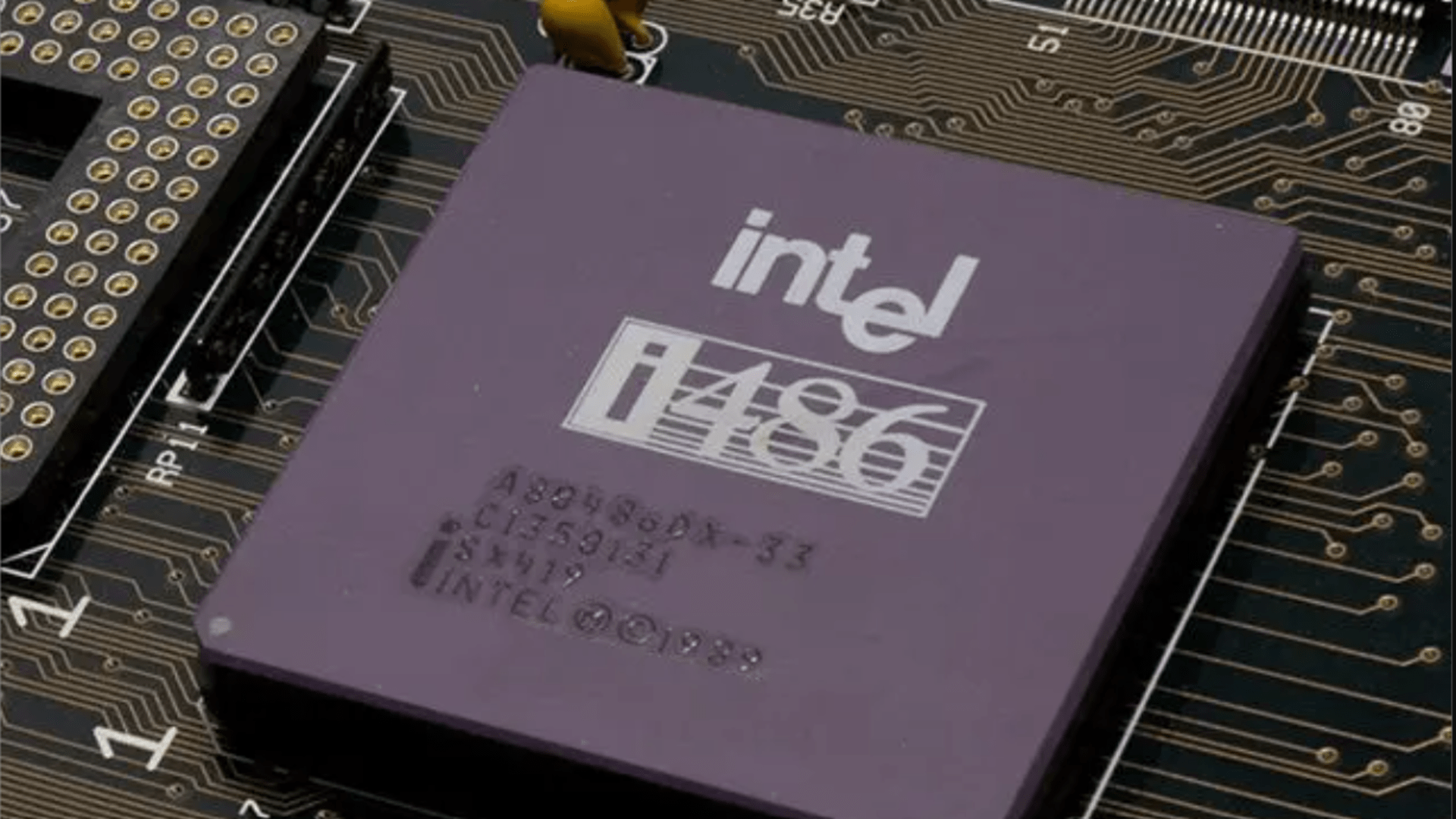
- Linux kernel developers have removed support for the Intel 486 processor
- Linus Torvalds says there is no real reason to maintain 486 compatibility
- Ingo Molnar created patches eliminating 486-related configuration options in Linux kernels
Linux kernel developers have begun removing support for the Intel 486, a processor first introduced in 1989.
The move comes as modern Linux distributions are increasingly resource-intensive, making continued compatibility with decades-old processors both technically difficult and strategically unnecessary.
Linus Torvalds, the creator of Linux, recently reinforced this perspective by saying that there was “no real reason” to maintain support for the 486 architecture, suggesting that its presence is now hampering broader kernel development efforts.
Article continues below
Support Update 486
Long-time Linux kernel developer Ingo Molnar has written a patch that eliminates key configuration options related to the 486 processor, including CONFIG_M486SX, CONFIG_M486, and CONFIG_MELAN.
These changes, when merged, will prevent users from creating kernel images targeting the 486 architecture.
According to Molnar, maintaining compatibility requires “complicated hardware emulation features on x86-32” that affect a very small subset of users.
He further explained that this “compatibility glue” sometimes introduced issues that consumed development time that could otherwise be spent improving the functionality and performance of the modern kernel.
The patch is expected to be included in Linux 7.1, signaling the end of official support for the Intel 486 in contemporary kernels.
Users who continue to operate 486 systems will need to rely on existing Long Term Support (LTS) kernels if they want to maintain modern Linux features.
Alternatively, an upgrade to a newer processor, such as a Pentium or one of the high-performance processors available in 2026, will be necessary to run current Linux distributions efficiently.
Despite this change, retro computing enthusiasts and enthusiasts can still experiment with older hardware.
Earlier in 2026, there were reports of an open source 486 motherboard built from the ground up, successfully running Linux, DOS, and classic games such as Doom.
These projects show that even if official support is withdrawn, practical engagement with existing Linux systems and applications remains possible.
The Intel 486 represented a major step in the evolution of processors, introducing integrated floating point units and pipelined execution.
However, modern kernel development has outpaced the capabilities of this type of hardware, making continued support increasingly impractical.
However, Linus Torvald’s remarks, along with Molnar’s patch, make it clear that kernel resources will now focus on architectures with active users rather than supporting this older processor.
Via Toms Hardware
Follow TechRadar on Google News And add us as your favorite source to get our news, reviews and expert opinions in your feeds. Make sure to click the Follow button!
And of course you can too follow TechRadar on TikTok for news, reviews, unboxings in video form and receive regular updates from us on WhatsApp Also.


