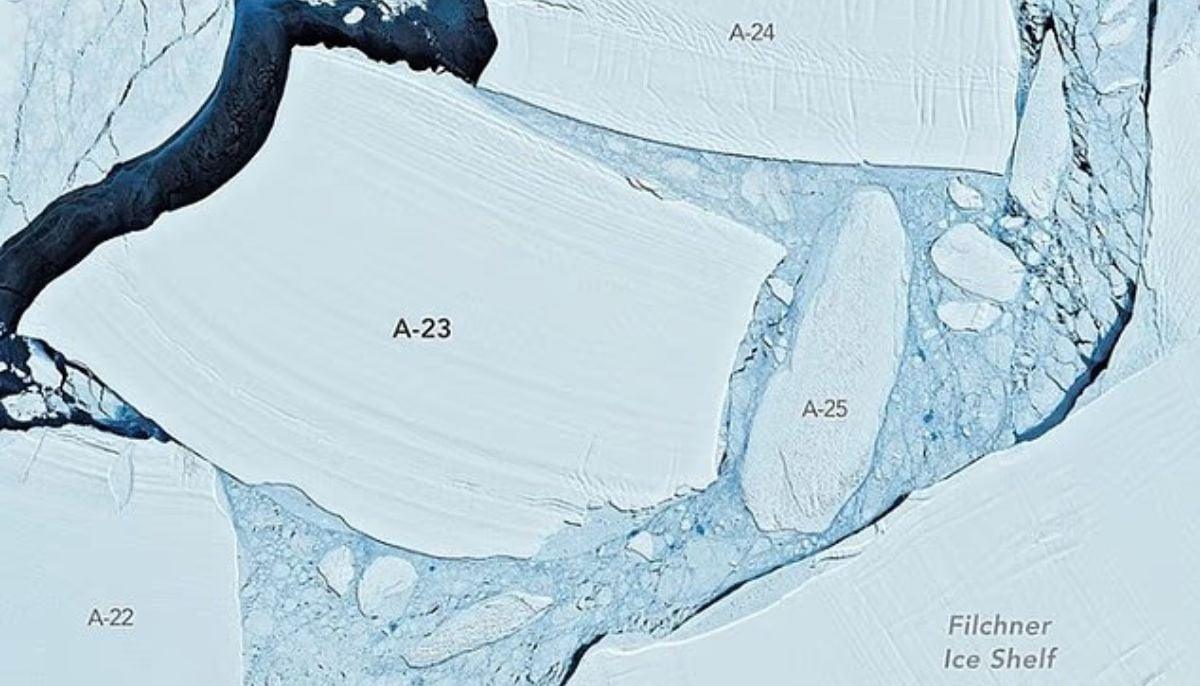
The world’s largest iceberg, the A-23A, finally broke into pieces just days before its 40th birthday.
The iceberg, weighing more than a trillion tonnes, formed from Antarctica’s Filchner Ice Shelf in 1986 and remained anchored to the seafloor for around 34 years before breaking free in 2020.
The A-23A was a massive megaberg measuring approximately 1,540 square miles, almost the size of Greater London. He traveled approximately 2,000 miles before ending his ocean odyssey.
The iceberg’s slow journey has fascinated scientists around the world. During its final months, significant melting reduced its size to approximately 66 square miles before it disintegrated.
The National Aeronautics and Space Administration (NASA) announced the news of the end of the iceberg in a blog post on Monday, April 13, 2026.
The US space agency wrote: “The journey of the Antarctic iceberg A-23A ends with fragmentation in the South Atlantic Ocean, after a 40-year lifespan documented by satellites. »
Dr Jan Lieser of the Australian Bureau of Meteorology tracked the iceberg using remote sensing.
Speaking about its disintegration, Dr Jan said: “I noticed in recent weeks how Mother Nature seemed to keep a veil of clouds over the dying iceberg, as if trying to give it some privacy at this stage. »
The latest images of the iceberg, taken on April 3, show its tiny fragments floating in the South Atlantic Ocean.