
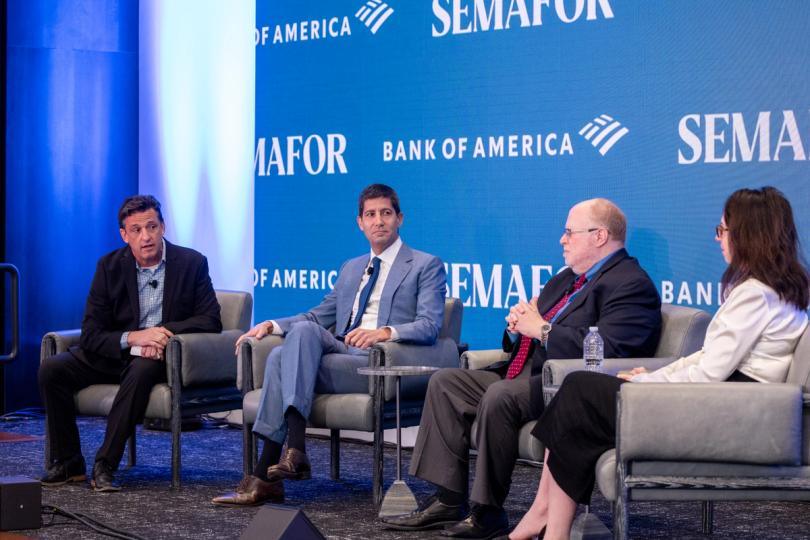
Kevin Warsh, President Trump’s nominee for Federal Reserve chairman, has filed his 69-page financial disclosure with the U.S. Office of Government Ethics, clearing the final bureaucratic hurdle before his confirmation hearing, now expected next week.
The filing reveals combined assets with his wife of at least $192 million – but it’s the crypto-specific holdings buried deep in the document that should interest this industry the most.
Warsh, through a network of venture fund structures, holds stakes in over a dozen blockchain and digital asset companies spanning DeFi lending, decentralized derivatives, layer 1 and 2 networks, prediction markets, and Bitcoin payment infrastructure. And he committed to giving up the majority.
The man who will oversee stablecoin regulation, bank crypto custody policy and any future central bank digital currency decisions has, so far, been personally invested in the crypto ecosystem, although the size of those holdings is unclear.
The complete cryptocurrency portfolio
CoinDesk reviewed the full 69-page OGE 278e form. Warsh’s crypto and blockchain-related holdings are concentrated in two fund structures: DCM Investments 10 LLC (through a vehicle called Abstract Holdings) and a series of funds labeled AVF I, AVF II, AVF III, and AVGF I and II. Here is every identifiable position in crypto and blockchain:
DeFi and trading protocols:
- Compound – Algorithmic Crypto Money Markets, one of the foundational DeFi lending protocols
- dYdX — Decentralized derivatives trading exchange
- Lighter — Decentralized Exchange Protocol
- Eulith — Cryptocurrency trading platform
Layer 1 and Layer 2 networks:
- Solana — High-Performance Layer 1 Blockchain
- Optimism – Ethereum Scales Layer 2
- Blast – Yield Generating Ethereum Layer 2
- Zero Gravity – Layer 2 AI blockchain platform
- DeSo – Crypto Social Network
Specific to Bitcoin:
- Flashnet – Bitcoin Lightning Network Trading Platform
- Lightning Network – Off-chain Bitcoin payment network (a direct holding)
Crypto investment and financial infrastructure:
- Polychain – Crypto investment company
- Scalar Capital – Blockchain Investment Company
- Polymarket — Prediction Market Platform
- Lemon Cash – Crypto Financial Services Platform
- Alpaca — Financial Asset API Infrastructure
- OnJuno – Crypto-enabled neobank
- OneSafe – DeFi Data Infrastructure
- Ridian – Crypto Wallet Automation
- SkyLink — DeFi Portfolio Management
- Caliza — Global USD Banking Platform
- Kinetic — Digital Asset Exchange Platform
Web3, NFT and crypto-adjacent:
- Crossmint — NFT Development Tools
- CreatorDAO — Investment platform for creators
- Friends with Benefits — Web3 Community Platform
- Dapper Labs — Consumer Digital Assets (NBA Top Shot)
- Tenderly – Ethereum Development Platform
- Vana — Incentivized Data Collection Platform
- Structure (Zaibatsu Heavy Industries) — Blockchain Retail
- Metatheory – Web3 Games (owned separately as direct SPV)
Additionally, Warsh previously invested in Bitwise Asset Management, the company behind one of the spot bitcoin ETFs, although this position does not appear in the current disclosure.
What it has to sell – and what it means
Most of these crypto positions are in fund vehicles whose individual elements are declared to have no monetary value, which under OGE rules means each is worth less than $1,000. In other words, these are small risk bets and not concentrated positions.
But there are larger pots that almost certainly contain crypto exposure. Warsh owns more than $100 million in Juggernaut Fund LP, whose underlying assets are protected by confidentiality agreements. He also holds dozens of positions in THSDFS LLC, some individually valued between $1 million and $5 million, all equally opaque. Both will require a total surrender.
Heather Jones, OGE certification manager, flagged them in her review, noting that Warsh will comply with the Ethics in Government Act once it completes the assignments. The open question is how this transfer will take place for illiquid holdings. Selling a position in Compound Token Holdings or dYdX is simple; the unwinding of LP stakes in the Polychain or Bessemer Venture Associates funds is not.
The question of conflict
Even after the sale, Warsh will face a complicated recusal landscape. Federal ethics rules generally impose a one-year cooling-off period for matters directly affecting recent financial interests. This could be relevant as the Fed intervenes on:
- Legislation on stablecoins: Congress is actively debating stablecoin frameworks that would define which institutions can issue and hold stablecoins – which would directly impact DeFi protocols and crypto neobanks like those in Warsh’s portfolio.
- Advice on storing banking cryptocurrencies: The Fed’s oversight stance on whether banks can hold digital assets is one of the most contentious crypto policy issues since 2022.
- Tokenized deposits and securities: The Fed has a direct role in approving or discouraging banking experimentation with token deposits, an area adjacent to several of Warsh’s holdings.
- CBDC Research: Although political support for a US CBDC has cooled, the Fed’s ongoing research intersects with the payment network infrastructure represented by the Lightning Network and Solana holdings.
Overview
What’s striking is less the size of the crypto bets – most are small – but more that they exist. This is not a nominee who passively held bitcoins through a brokerage account. Warsh has deliberately sought exposure to the specific protocols, networks, and infrastructure companies that the Fed’s regulatory and monetary policy decisions most directly affect.
Its broader financial profile underlines this point. Warsh earned $10.2 million in advisory fees from the Duquesne Family Office, the investment arm of Stanley Druckenmiller, one of the most prominent macro investors in crypto. He raised $1.55 million from GoldenTree Asset Management, $750,000 from Cerberus Capital Management, and another $750,000 in fees from Brevan Howard – all companies with significant digital asset trading operations.
His speaking fees in the first half of 2025 alone totaled more than $780,000 from companies including TPG, Warburg Pincus, State Street, Eli Lilly and Centerview Partners.
Combined with his wife Jane Lauder’s estimated net worth of $1.9 billion, Warsh would be one of the richest Fed chairs in modern history.
What comes next
Senate Banking Committee Chairman Tim Scott (R-S.C.) said Tuesday that a confirmation hearing would take place next week. But Sen. Thom Tillis (R-N.C.) continues to block any final vote until the Justice Department drops its criminal investigation into current Fed Chairman Jerome Powell, whose term expires May 15.
Crypto holdings will almost certainly be called into question. Senators on both sides are more focused on financial conflicts within the Fed, and Warsh’s portfolio gives them specific, named companies to ask questions about.
For the crypto industry, Warsh’s disclosure is a double-edged signal. On the one hand, a Fed chairman with personal exposure to DeFi and blockchain infrastructure may have more nuanced opinions on the technology than his predecessors who did not. On the other hand, mandatory divestment and recusal requirements could limit its ability to act on the sympathies implied by these investments – at least in the first year.


