
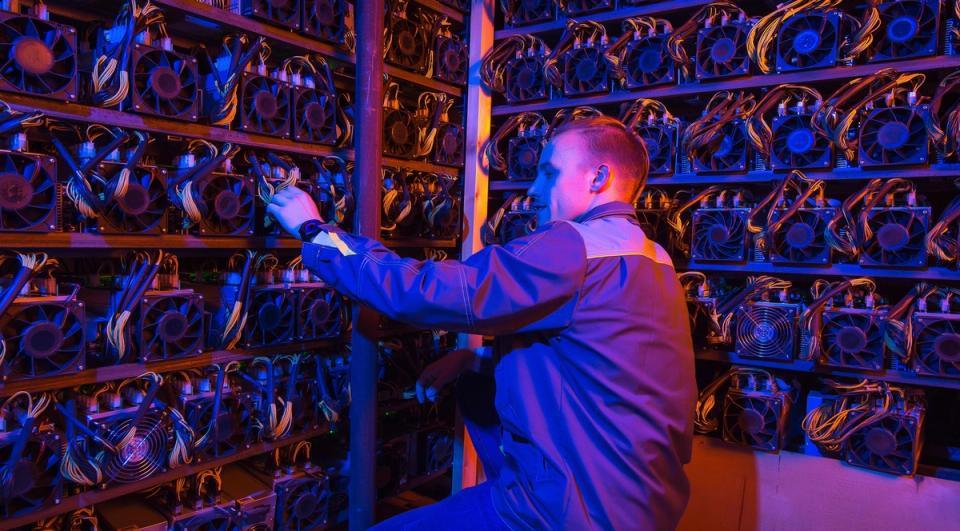
TeraWulf (WULF), a U.S. data center operator focused on bitcoin mining and AI computing, saw its shares fall early Wednesday, after the company announced a $900 million capital raise.
The company priced 47.4 million shares at $19 each. WULF is down 5.8% at $19.73 in early trading. The underwriters’ repurchase option covers an additional 7 million shares.
Alongside other AI infrastructure names, WULF is experiencing meteoric growth, increasing by more than 50% since the end of March.
Proceeds are intended to fund the construction of a major data center campus in Hawesville, Kentucky, as well as repay ongoing bridge financing and support future expansion.
Preliminary first quarter results
Along with the offering, TeraWulf released its preliminary results for the first quarter of 2026. The company expects revenue to be between $30 million and $35 million. The balance sheet showed $3.1 billion in cash and $5.8 billion in total debt.
Management highlighted a growing shift toward contracted HPC hosting revenue, which now accounts for more than half of total revenue, positioning the company for more stable, long-term cash flow.
Compass Point analyst Michael Donovan, who has a Buy rating and $28 price target on WULF, highlighted the mix shift toward HPC as a positive inflection point for the company, with contract hosting revenue surpassing Bitcoin mining for the first time. He also sees the capital increase as a necessary step to unlock the next phase of growth. While acknowledging the dilution, he said the additional funding improves visibility on construction of the Kentucky site, which he said will be developed in phases based on customer demand. He added that demand for TeraWulf’s energy and accommodation capacity remains strong.
Looking ahead, Donovan expects the company’s revenue profile to change significantly as HPC evolves. He predicts that contract hosting will become the primary revenue driver over the next two years, reducing dependence on Bitcoin price fluctuations and promoting a more predictable revenue stream.
This shift reflects a broader trend in the industry, as Bitcoin miners increasingly turn to AI and high-performance computing infrastructure to diversify revenue streams and improve margins.


