
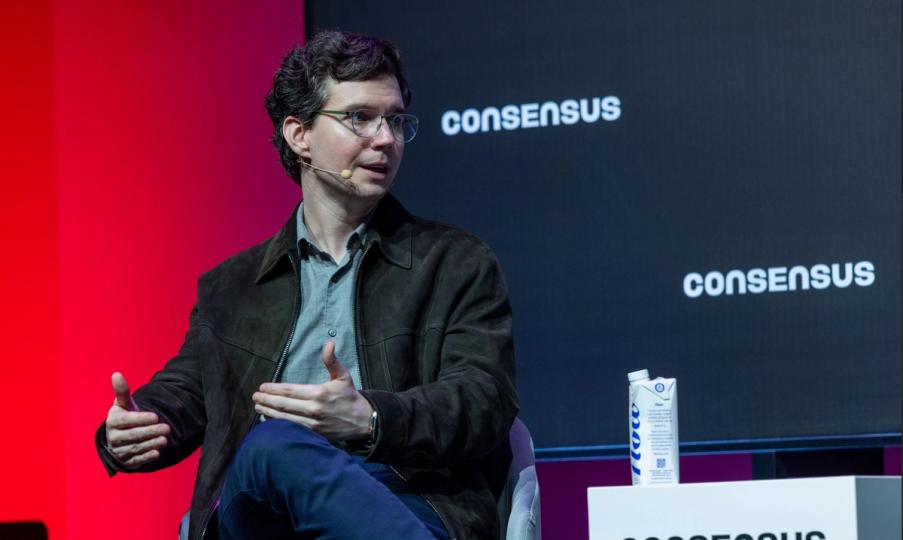
Austin Federa left his role as head of strategy at the Solana Foundation in 2024 to fight what he saw as injustice in the cryptocurrency trading environment. Eighteen months later, his company, DoubleZero, says it is ready.
DoubleZero aims to eliminate proximity to an exchange’s servers as a competitive advantage for traders. The private fiber network removes latency, the time it takes for an order to reach the platform from a merchant’s desk, and introduces a fairer environment, even if regulators – and merchants – aren’t demanding it yet.
The problem, Federa says, is that crypto confuses decentralized with distributed. DeFi protocols are decentralized because of their open source code and permissionless sets of validators, but when milliseconds determine who wins a transaction, the laws of physics push validators to cluster in the same data centers anyway. On platforms like Hyperliquid, for example, Tokyo-based traders enjoy an advantage of around 200 milliseconds over their foreign rivals.
“Hyperliquid may be a decentralized system from a governance and user perspective, but it is not a distributed system,” Federa said in an interview with CoinDesk. “It’s still hosted in the same environment, even though it’s managed by several different entities.”
This is a problem that traditional finance already faces. When the New York Stock Exchange expanded its Mahwah, New Jersey, data center more than a decade ago, it designed cable-length equalization to the nanosecond because asymmetric access was bad for business, not because regulators required it. Simply, merchants who felt disadvantaged took their orders elsewhere.
Read more: Former Solana executive takes inspiration from Wall Street playbook to accelerate global crypto trading
DoubleZero’s solution is timestamping.
The network pools operators’ private bandwidth to route blockchain data over dedicated links, while giving sites tools to timestamp orders across global entry points and reconstruct a fair sequence similar in purpose to cable equalization used by the NYSE.
The challenge is not only speed, but also verifiability. On a site operating on the public Internet, a merchant whose order arrives late has no way of distinguishing ordinary network congestion from something more deliberate.
“Is this true because the public Internet drops packets all the time, or is it true because you saw my transaction and said, ‘Hey, this guy is pretty good, I don’t want to include this block,'” Federa said. “The counterfactual is really hard to prove.”
DoubleZero’s argument is that a network managed with deterministic latency makes this distinction provable. Physics still applies: a New York trading desk going through DoubleZero to reach Hyperliquid in Tokyo will not overtake a closer competitor in AWS’s ap-northeast-1 region.
But the gap is narrowing and, more importantly, the variance is narrowing. Traders not only benefit from lower latency, but also predictable latency, which is what high-frequency trading companies actually pay for in traditional markets.
Federa’s broader point is that crypto misinterprets what makes traditional markets fair. Regulators are important, but they are not the main driver. FINRA, the agency that controls much of Wall Street’s day-to-day conduct, is technically a voluntary self-regulatory organization. The Securities and Exchange Commission and the Commodity Futures Trading Commission serve as safety nets with enforcement powers, but the day-to-day work of keeping the markets fair is done by the exchanges themselves.
They do it because their business depends on it. Sites known for their asymmetric access lose volume to those that are not.
If he is right, DeFi’s latency problem does not wait for regulators. It’s about waiting for the moment when a major site decides that equity is a competitive advantage worth paying for.
Crypto has spent a decade proving that you can build decentralized systems. The next decade will test whether anyone wants to build distributed servers, where the advantage doesn’t depend on where your server is located in Tokyo.
“No one wants to trade on an unfair platform,” Federa said.


