
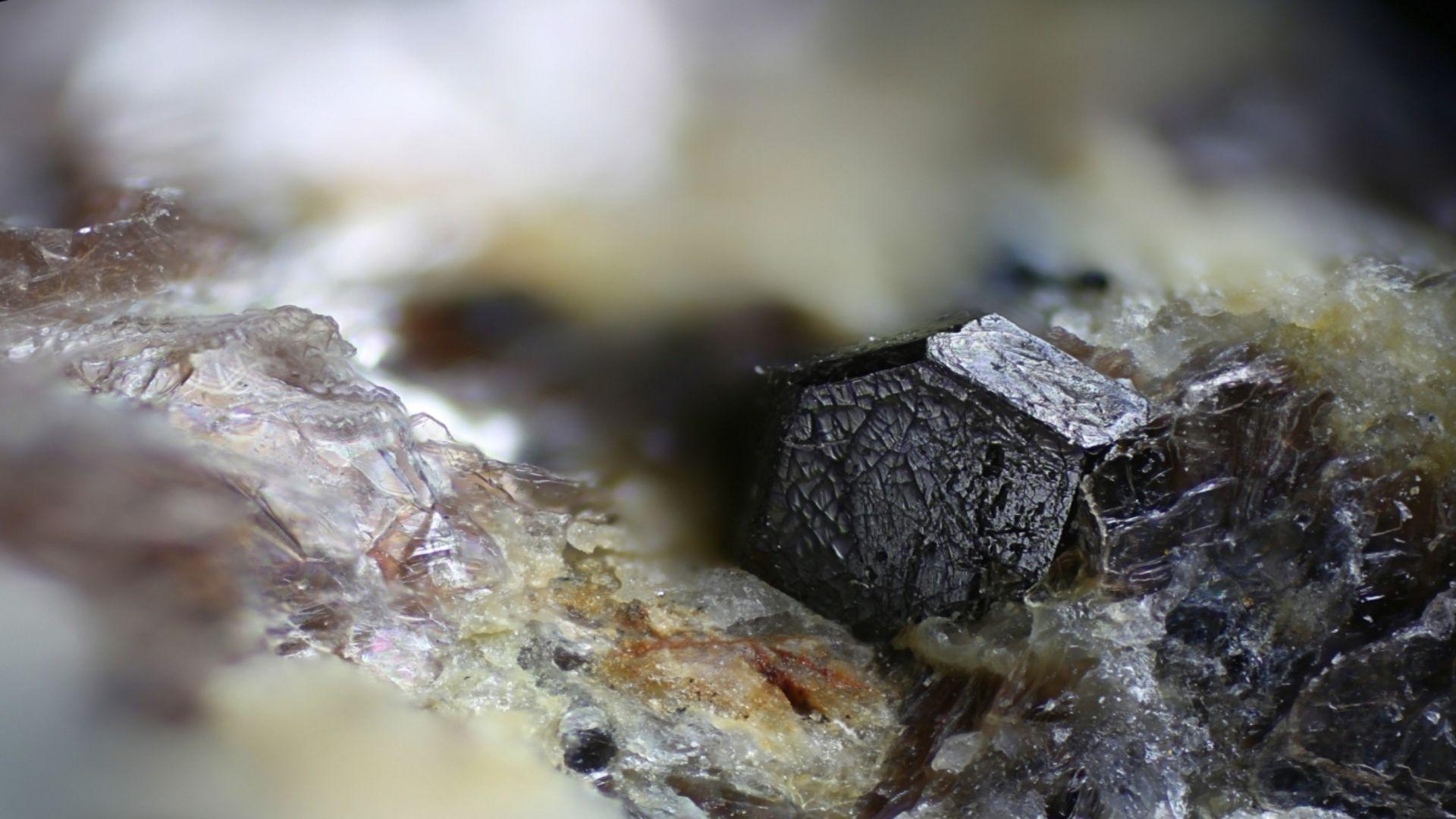
- Nuclear clocks promise far greater precision than existing atomic timekeeping systems
- Thorium-229 offers a rare path to practical nuclear time measurement
- Ultraviolet breakthrough reduces one of toughest hurdles to nuclear clock development
A new crystal developed by Chinese scientists has broken the world record for converting ultraviolet light, bringing nuclear clock technology closer to reality.
The fluorinated borate compound pushes laser light to a wavelength of 145.2 nm, surpassing the previous benchmark of 150 nm set by a Chinese crystal from the 1990s.
This wavelength is short enough to meet a key requirement for ultra-precise portable nuclear clocks under development in the United States, China and other countries.
Article continues below
Nuclear clocks: a major GPS upgrade
Nuclear clocks tell time using vibrations inside an atomic nucleus rather than the electronic vibrations used in atomic clocks.
Atomic nuclei are much more stable than electrons and less affected by temperature, external vibrations and magnetic fields, meaning nuclear clocks could be 10 to 1,000 times more accurate than current atomic clocks.
Such precision would enable navigation in places where GPS does not work, including deep space and underwater.
Submarines currently must surface to obtain GPS fixings, making them vulnerable to detection. A nuclear clock could therefore allow them to navigate freely underwater using dead reckoning based on speed, direction and elapsed time.
The research team, led by Pan Shilie of the Xinjiang Technical Institute of Physics and Chemistry, turned to thorium-229 for their work.
This element is special because its core vibrates at a very low energy level, making it relatively easy to monitor and measure.
However, its measurement requires extremely precise UV lasers with wavelengths around 148.3 nm, which have been very difficult to produce.
The new crystal converts laser light to 145.2 nm, which is still far from the target but is a major step forward.
The team wrote that their work “paves the way for the practical development of the thorium-229 nuclear clock.”
If the magic number is ever reached, the crystal could also help missiles become immune to navigation jamming, an advantage in war.
For spacecraft, autonomous navigation in deep space without Earth-based corrections would become possible, and signals from stars, pulsars, and radio sources could also serve as navigation aids.
This work also offers a new way to design next-generation deep ultraviolet materials for various applications.
In theory, the extreme precision of nuclear clocks could enable much closer synchronization of networks, which could lead to faster Internet speeds in future systems.
However, such clocks are unlikely to make GPS entirely redundant, but will help reduce reliance on such systems if perfected.
GPS can be jammed or spoofed with false signals, making it vulnerable in war, and it does not work well underwater or underground. A thorium nuclear clock would address all of these limitations.
Follow TechRadar on Google News And add us as your favorite source to get our news, reviews and expert opinions in your feeds.


