
Both sides express concern about the broader implications on the global economy, particularly for developing countries.
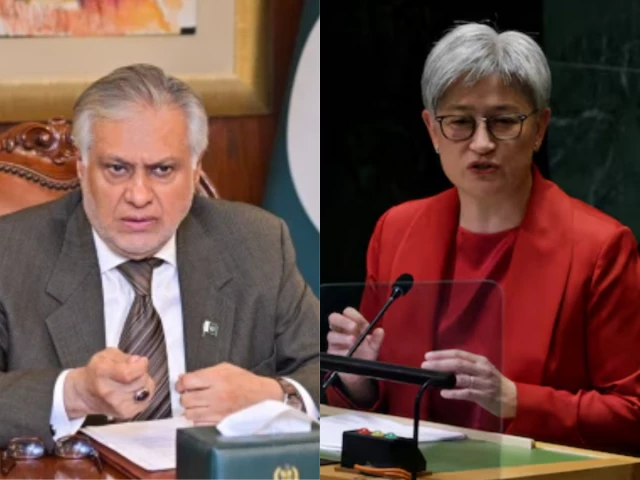
Deputy Prime Minister and Minister of Foreign Affairs Mohammad Ishaq Dar held a telephone conversation with Australian Foreign Minister Penny Wong on Sunday, April 20, 2026.
Australian Foreign Minister Penny Wong, in a phone call with her Foreign Minister Ishaq Dar on Monday, praised Pakistan’s “constructive role” in facilitating dialogue between Iran and the United States and its continued commitment to diplomatic efforts, the Foreign Office said.
According to the statement, the two counterparts discussed Pakistan’s diplomatic engagement efforts and regional developments. Dar briefed the Australian Foreign Minister on the Islamabad talks held earlier, reiterating Pakistan’s determination to “continue to encourage dialogue and constructive engagement”.
“Both leaders expressed concern about the broader implications on the global economy, particularly for developing countries, and stressed the importance of peaceful resolution of conflicts,” the statement concluded.
Deputy Prime Minister/Foreign Minister Senator Mohammad Ishaq Dar @MIshaqDar50had a telephone conversation with Australian Foreign Minister Penny Wong @SenatorWong.
FM Wong expressed his appreciation for the efforts of the DPM/FM, as well as Pakistan’s constructive role in… pic.twitter.com/pFNZyz6LNm
— Ministry of Foreign Affairs – Pakistan (@ForeignOfficePk) April 20, 2026
Islamabad is preparing to host the second round of Iran-US talks after Washington confirmed that a high-level delegation led by US Vice President JD Vance would arrive in Pakistan this week.
The visit comes amid heightened regional tensions and renewed diplomatic activity aimed at preventing further escalation in the Gulf, particularly around the Strait of Hormuz, a crucial global energy route.
Read: Trump sends negotiators for second round of Islamabad
However, the Islamic Republic News Agency (IRNA) said Iran had rejected its participation in the planned second round of US-Iran talks in Islamabad, citing what it described as Washington’s “excessive demands”, changing positions and the ongoing naval blockade as the main reasons for its decision.
State media reported that Tehran would not join the dialogue following US President Donald Trump’s announcement that American representatives would arrive in Islamabad on Monday for negotiations. The development comes after a previous round of 21-hour marathon talks, held in Islamabad on April 12, ended without result, although both sides described the engagement as intense and acknowledged Pakistan’s facilitation efforts.
Pakistan has emerged as a central facilitator on the sensitive diplomatic track, positioning itself as an “honest broker” amid sharply polarized positions between Washington and Tehran. While the first round highlighted deep disagreements over sanctions, maritime security and regional influence, officials suggest both sides have so far kept the channel open, even as public discourse has hardened ahead of the next phase of talks.
Learn more: Twin Cities universities go online ahead of Iran-US talks
Both leaders also expressed concern about the broader implications of current geopolitical tensions on the global economy, particularly for developing countries, and stressed the importance of resolving conflicts through peaceful means and sustained diplomatic engagement.
This conversation comes as Pakistan continues to position itself as a facilitator of dialogue amid growing regional and global tensions, including concerns over economic stability and energy market disruptions.


