
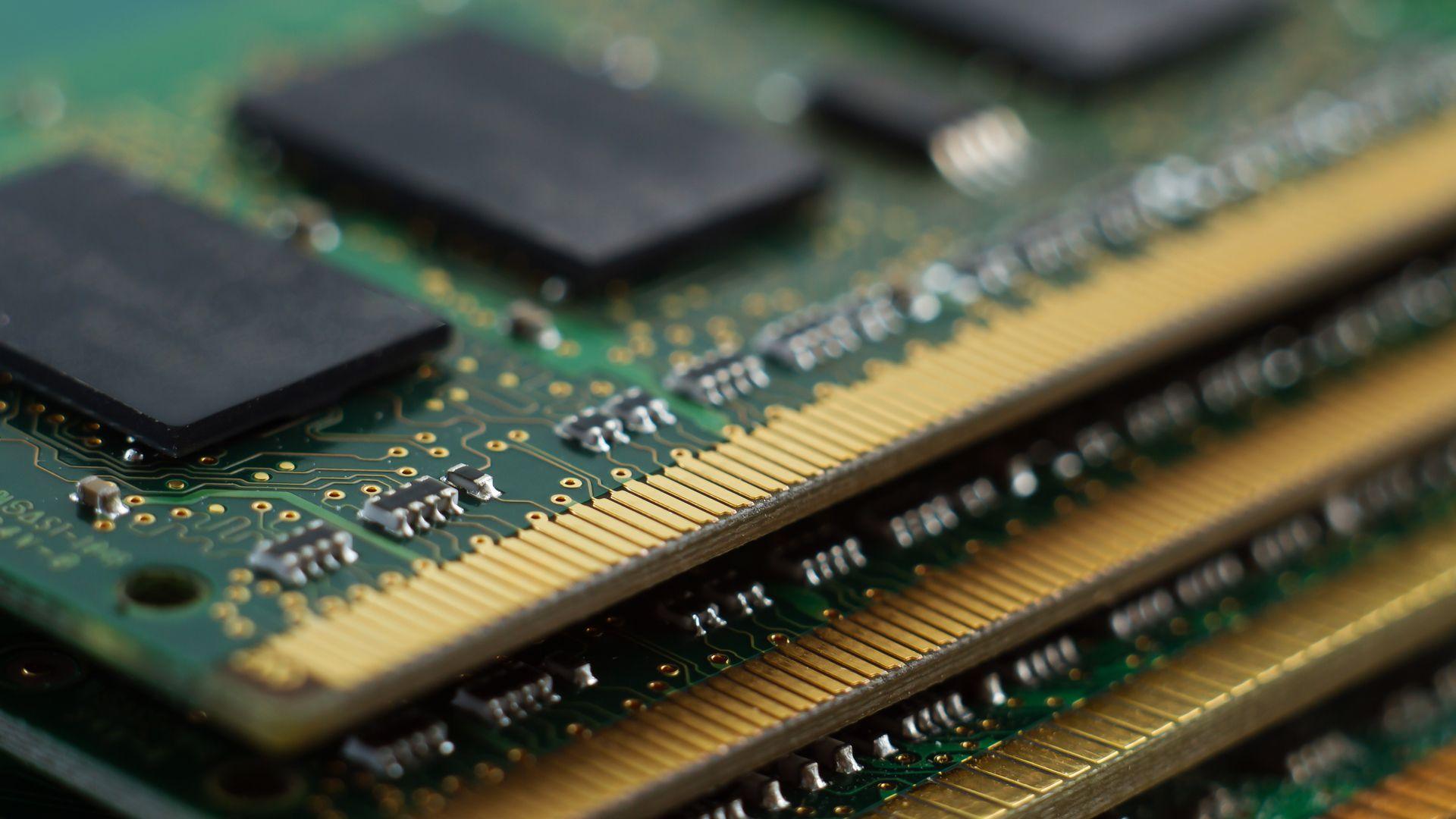
- ASRock revealed a new trick to beat high RAM prices
- HUDIMM DDR5 RAM modules are considerably more affordable
- However, they reduce performance, so it’s a trade-off here
There’s a new kind of DDR5 RAM in town, and it’s cheaper, but before you start rejoicing that all your memory-related prayers have been answered, keep in mind that there are some heavy caveats here.
Tom’s Hardware noticed ASRock’s announcement of its new HUDIMM DDR5 RAM module for motherboards equipped with Intel chipsets. In a nutshell, these are designed to be much more affordable, but to achieve this, performance is significantly reduced.
A standard DDR5 stick (UDIMM) uses a two-subchannel (2 x 32-bit) architecture, but with HUDIMM (the “HU” stands for Half Unbuffered), you get a single 32-bit subchannel instead.
Article continues below
This sounds very technical, but what happens is quite simple: the bandwidth and density of the RAM stick are effectively cut in half. And keys requiring fewer memory modules can, of course, be made more cheaply, because you only buy half the chips to produce them.
As the company observed on »
Intel’s Robert Hallock, vice president and general manager of its Enthusiast Channel Segment Group, commented: “Innovations such as ASRock’s One subchannel DRAM technology are crucial to ensuring that desktop computing remains accessible despite the growing demand and costs of DDR5 memory.
“Intel is grateful for ASRock’s support in bringing our 600/700/800 series chipsets to market, ensuring Intel users will have greater access to the benefits of DDR5 memory in the years to come.”
So, as noted, these new RAM offerings are compatible with ASRock’s Intel 600, 700, and 800 motherboards.
ASRock has partnered with TeamGroup to produce these HUDIMM sticks, and it goes without saying that these will be entry-level offerings. This RAM will also be manufactured for laptops, in the form of HSODIMM.
Asus is also said to be investigating this type of memory, as per leaks on
Analysis: sign of the times RAM
The problem is that the reductions to this RAM mean that performance is going to be much slower. Is this a compromise you want to make? That may be the case, given the current cost of DDR5 RAM, which has frankly reached exorbitant levels.
The problem is that ASRock’s new way of working can work with standard DDR5 RAM, which remains compatible with these motherboards. HUDIMM offers dual-channel asymmetric support at the BIOS level, so you should be able to place a HUDIMM next to a standard UDIMM, and they will work fine in dual-channel mode (with 3 active 32-bit subchannels – one from the HUDIMM and a pair from the UDIMM).
If you had an 8GB HUDIMM stick next to a 16GB UDIMM stick, this would, in theory, be a faster implementation than a single 24GB UDIMM stick. So you could, for example, start with just an 8GB (or 16GB) HUDIMM, then expand later with a UDIMM (when the price comes down to a more reasonable level).
However, as Tom points out, ASRock’s marketing indicates a non-negligible 90ns latency with this RAM standard, and the proof will be in the pudding of how these types of theorized combos work.
Meanwhile, HUDIMMs certainly represent a shortcut to reducing the price of DDR5 RAM, but the performance trade-off (outside of mix-and-match scenarios) will be a steep price in itself. Still, it may be an option that some people want to exercise, and I can’t say I blame them, given what retailers are asking these days for regular DDR5.
It also reminds us how bad the RAM crisis is, and the fact that hardware makers are considering longer-term solutions like this project isn’t very reassuring about how long this whole thing might last.

The best laptops for every budget
Follow TechRadar on Google News And add us as your favorite source to get our news, reviews and expert opinions in your feeds. Make sure to click the Follow button!
And of course you can also follow TechRadar on YouTube And TikTok for news, reviews, unboxings in video form and receive regular updates from us on WhatsApp Also.


