
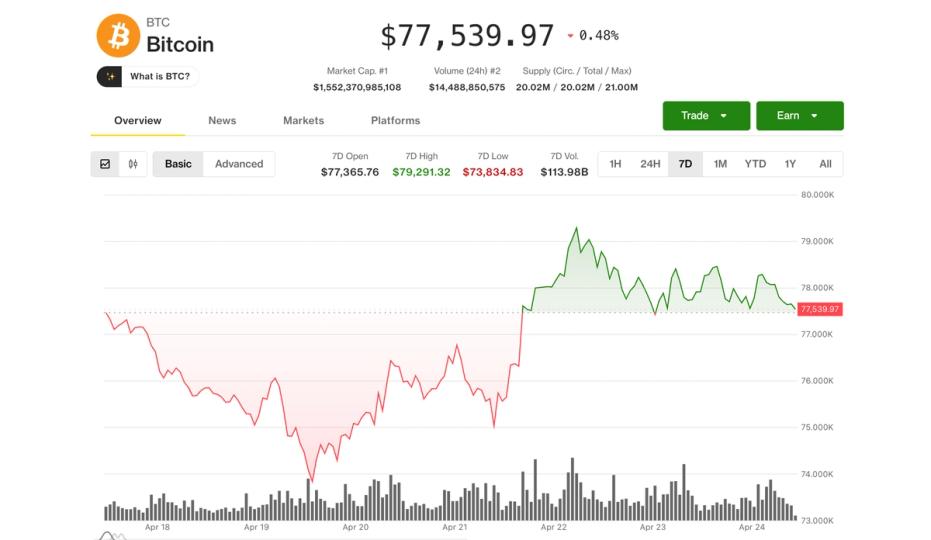
Bitcoin held above $77,000 on Friday, consolidating after hitting its highest level since early February earlier in the week.
The largest cryptocurrency rose about 13.6% in April, putting it on track for its best monthly performance in a year, according to CoinGlass data. The rebound follows a difficult period, with crypto markets recording their longest losing streak since 2018, posting consecutive monthly declines from October to February.
This turnaround comes as the broader macroeconomic context has improved. U.S. stocks have seen a strong rally, with the S&P 500 and Nasdaq climbing back to record highs after briefly slipping into correction territory earlier this year.
But there is also a crypto-specific driver behind this decision.
Tether’s USDT offering the largest and most popular stablecoin, surged to just under $150 billion, adding about $5 billion in the past two weeks after months of stagnation.
This is important because stablecoins – cryptocurrencies linked to fiat currency like the US dollar – act as liquidity in crypto markets, which capital traders use to purchase digital assets in the blockchain economy. Analysts often interpret stable coin growth as a signal for capital flowing into the crypto market, a healthy signal for asset prices.
Markets no longer care about the war in Iran
However, the macroeconomic situation is not yet clear. Geopolitical tensions in the Middle East and uncertainty surrounding the war in Iran persist, keeping oil prices high.
But for now, markets appear to be looking beyond that, said Jasper de Maere, OTC trader at Wintermute.
“The stock and crypto markets seem to have stopped caring about complex headlines about the direction of the conflict,” de Maere said. “It shows a certain level of fatigue and potentially complacency.”
He noted that strong corporate profits and resilient stock markets are helping to ease concerns about rising energy costs and geopolitical risks.
Upcoming FOMC Test
In this environment, bitcoin is near the top of its trading range, while the $79,000 level has proven to be a powerful ceiling for traders taking profits.
This level “is structurally important because the institutional overhead supply is just above it,” said Adam Haeems, head of asset management at Tesseract Group.
BTC’s ability to break through will depend on what’s driving the move and who’s buying. Moves driven primarily by short covering tend to fade once momentum cools, while a breakout backed by sustained institutional demand can mark a more lasting shift, he said.
The next test will come soon with the April Fed meeting which could determine whether the current rally holds, Haeems said.
If ETF inflows continue during this event, he said, $79,000 could move from resistance to support, opening the door to a higher trading range. If the flows fade, bitcoin could fall back into the $75,000-$77,000 range.


