
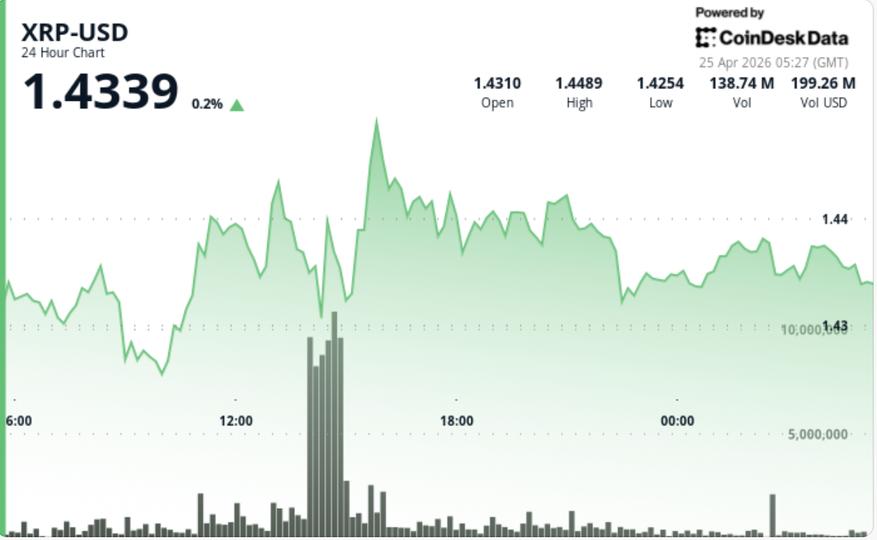
XRP is stuck just below resistance, but price action is starting to lean in one direction. Each push higher is sold, but each pullback becomes shallower and shallower. This tells you that sellers are still active, but are gradually losing control. When this balance shifts, the ensuing movement is usually rapid and decisive.
Prices move sideways at the top of the range, which is where markets typically resolve after absorbing supply. Add growing participation and stable positioning underneath, and it starts to look less like indecision and more like a setup waiting for a trigger.
News context
• Spot XRP ETFs saw further inflows, extending last week’s strong demand and pushing total institutional positioning above $2.6 billion. This maintains a stable supply under the market even when prices stagnate.
• Currency outflows reached one of the largest daily figures this year, with nearly 35 million XRP flowing out of trading platforms. This generally reduces immediate selling pressure and promotes tighter supply conditions.
Price Action Summary
• XRP traded between $1.43 and $1.45 after a high-volume surge earlier in the session.
• Attempted breakout above $1.44 held briefly but failed to expand, leading to sideways consolidation.
• Price is now compressing into a narrower range, maintaining support without returning to higher levels.
Technical analysis
• The dominant structure is a symmetrical, multi-week triangle, with lower highs and lower lows pushing the price toward a decision point.
• Volume spiked on the initial breakout attempt, but transitioned into consolidation, suggesting absorption rather than conviction.
• Buyers continue to defend higher lows, limiting downside risks for now.
• The market is indeed turbulent, with neither the bulls nor the bears in complete control.
What traders should watch out for
• $1.50 is the key breakout level. Removing it would shift momentum more decisively upward.
• $1.39 remains critical support. Losing it would break the structure and pave the way for a decline.
• The tighter the range becomes, the more likely it is that a sharp move will follow. The direction will depend on which side breaks first.


