
Green Beret Arrested for Betting on Classified US Raid Looked Like a One-Time Scandal for Predictive Markets. A new study suggests that this may be a more troubling data point: an extreme example of a small group of informed traders who, as the soldier is accused of doing, move prices on Polymarket, while the crowd around them loses money.
The study, part of a working paper published this week by Roberto Gómez-Cram, Yunhan Guo, Theis Ingerslev Jensen and Howard Kung of the London Business School and Yale, directly tests the industry’s fundamental assertion that markets operate on the massive knowledge of their participants.
Using every Polymarket transaction from 2023 to 2025, the authors conclude that it is actually a small group of informed traders that moves prices. Researchers analyzed 1.72 million accounts and $13.76 billion in trading volume, and found that just 3% of traders are responsible for the majority of price discovery, meaning they are the ones moving prices toward the right outcome.
These traders consistently predict outcomes and move prices in the right direction. The other 97% generally don’t. They provide liquidity and generate volume, but overall they are on the losing side to the informed minority, whose profits come directly from these positions.
The hardest part is distinguishing skill from luck. With over a million traders on Polymarket, many will rack up big wins through chance alone.
To filter this out, the authors re-ran each trader’s bets 10,000 times, keeping everything the same except the direction.
Same markets, same times, same dollar amounts – but a coin toss decided whether to buy or sell. This gave them a benchmark for what each trader’s profits would look like, with no real upside. If the actual results consistently beat the coin toss, that’s skill. Otherwise, it’s luck.
The results show that among the biggest winners in terms of gross profit, only 12% exceeded the benchmark, and many apparent winners did not stay that way: about 60% of “lucky winners” become losers when their performance is compared to a separate sample of events.
Their activity improves market accuracy. When qualified participants make up a larger share of trading, prices move closer to the correct outcome, especially in the home stretch before resolution. They are also the first to react when new information arrives, changing positions in response to events such as Federal Reserve announcements or company earnings, while other traders show few consistent reactions.
The same advantage that makes skilled traders valuable for price discovery raises a more difficult question when that information is not public, or not supposed to be.
Polymarket and Kalshi said trading on non-public information was strictly against their rules.
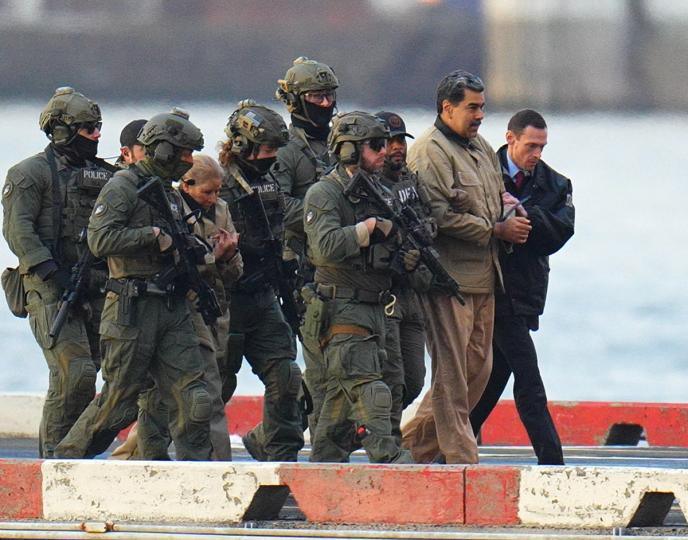
The newspaper bases this risk on a concrete case: the removal by the United States of Nicolas Maduro from power in Venezuela in January. In the days and hours leading up to the operation, three newly created Polymarket accounts piled up in a contract asking whether Maduro would be fired. At the time, the market valued odds at around 10%.
The new accounts placed unusually large bets, including orders for tens of thousands of shares, before the price moved. When the raid took place, the accounts collectively brought in more than $630,000. Two ceased operations completely shortly thereafter, and the third remained virtually inactive. There is no evidence of wrongdoing on these accounts.
Insider trades, when they occur, move prices even more aggressively per dollar, approximately seven to 12 times more than typical specialty trades. But they are rare and concentrated in a handful of events, not in the daily price discovery engine. Most of the time, market accuracy still depends on regular traders consistently outperforming rather than one-off bets.
The results challenge the idea that prediction markets operate on crowds. They seem to work because of who is informed.


