
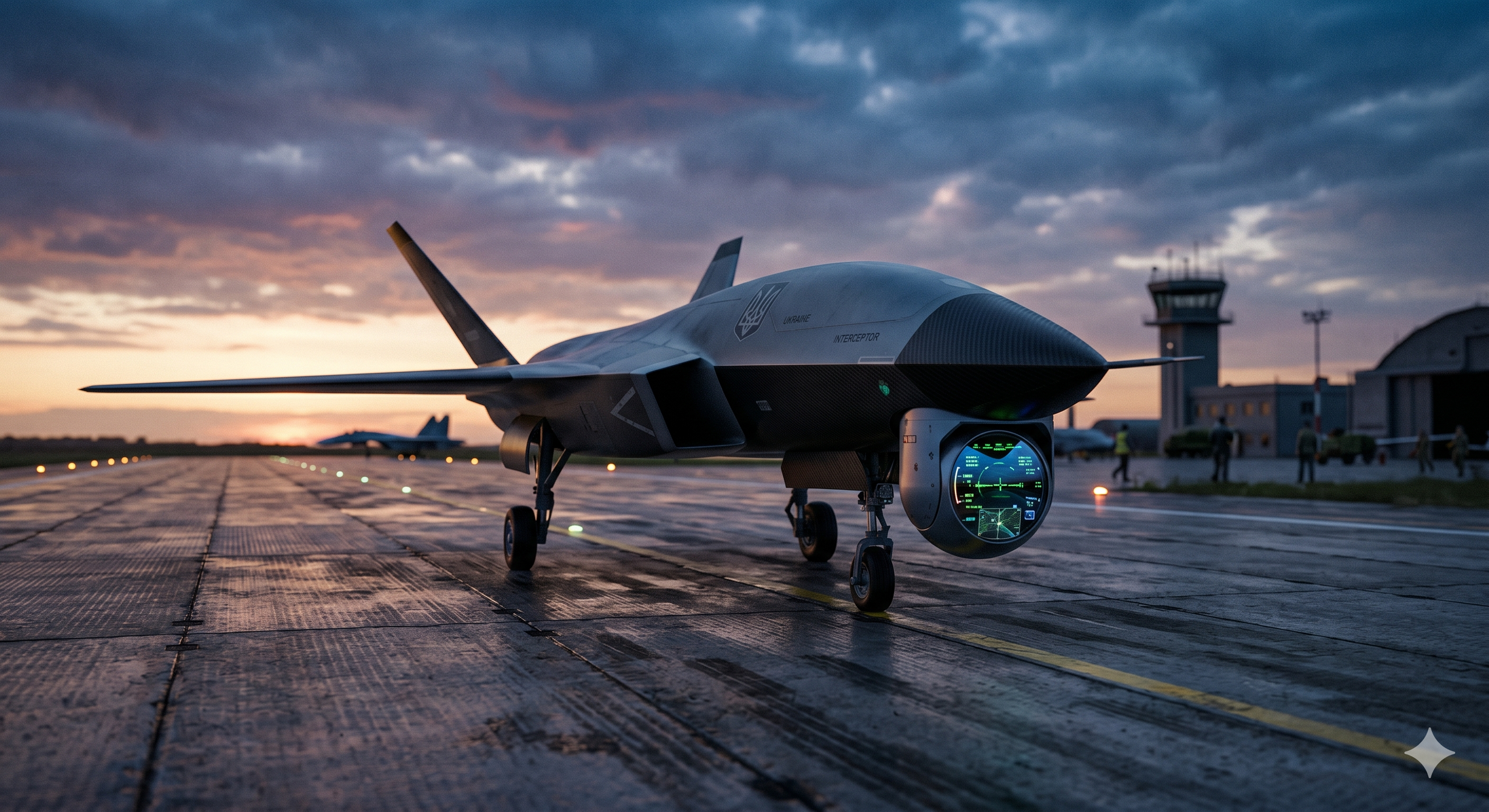
- Ukraine scales remote interceptor drones capable of destroying aerial targets from remote protected areas
- Operators control aerial interceptors from bunkers thousands of miles away rather than from the front lines.
- Demonstrations prove long-range drone interception works over 1,240 miles
Ukraine has become the first country to scale remotely controlled interceptor drones capable of destroying aerial targets over great distances, opening the door to aerial combat conducted far from the battlefield itself.
Operators can now guide interceptor drones from secure bunkers hundreds or even thousands of kilometers away, allowing aerial targets to be destroyed without pilots or launch teams being exposed to direct danger.
Ukrainian Defense Minister Mykhailo Fedorov said the capability was already operating in combat conditions, with confirmed interceptions taking place over long distances.
Article continues below
Government-backed Brave1 platform
“A year ago, thanks to Brave1, we started the development and testing of remote control technology for interceptor drones. Today we have a confirmed result: shooting down targets at distances of hundreds and thousands of kilometers,” Fedorov wrote on social media.
Brave1 is a government-backed platform created to accelerate the development of new defense technologies through coordination between engineers and manufacturers.
Fedorov added that Ukraine is the first country to systematically expand remote control of interceptor drones, describing the effort as creating a new standard in air defense.
“The pilot is no longer tied to a position. The drone is in the sky, control comes from a protected environment in kyiv, Lviv or even abroad,” he writes.
These changes mean that interceptor operators no longer need to sit close to launch positions, allowing operations to be controlled from protected locations away from the battlefield.
“This increases the effectiveness of interceptions, minimizes risks for operators and allows capabilities to evolve without being tied to the front,” Fedorov wrote.
He also said that more than 10 defense manufacturers have already integrated remote control capability into their interception systems.
A recent demonstration pushed the concept into long-range territory when Ukrainian drone maker Wild Hornets flew its Sting interceptor drone about 1,240 miles, or about 2,000 kilometers, while the operator remained based in northern Ukraine, according to a report from The Kyiv Independent.
That flight relied on the company’s Hornet Vision Ctrl system to maintain continuous control over the entire route, with the system now deployed on the interceptor platforms, the news site reported.
Traditional intercept missions placed pilots or crews directly in contested airspace, forcing aircraft and personnel into positions where reaction time and survival depended on seconds.
Remote interception systems replace these risks with long-range command links and hardened shelters, allowing aerial engagements without crews entering the sky.
If production continues to grow among manufacturers, interception missions could increasingly shift toward remote operations rather than cockpit combat, thereby reducing the number of personnel exposed during air defense.
Follow TechRadar on Google News And add us as your favorite source to get our news, reviews and expert opinions in your feeds.


