
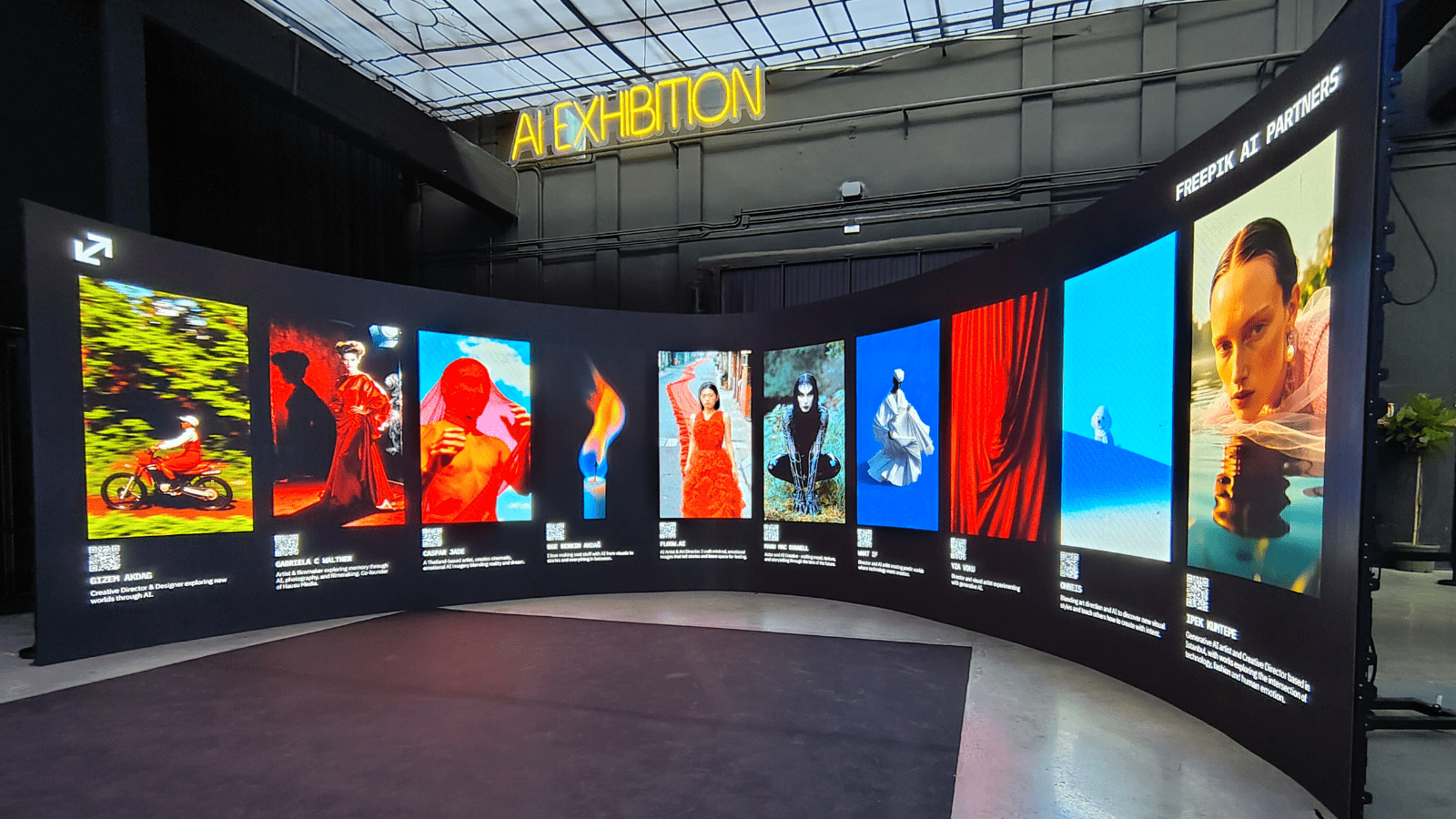
- Freepik becomes Magnific
- This marks the shift to a more integrated creative platform
- The company is the latest to aim for more accessible all-in-one creation apps.
So, goodbye, Freepik. The creative platform has now been rebranded Magnific as CEO Joaquín Cuenca Abela seeks to transform the single free stock images site into a unique production platform.
I’m not surprised by the change, given that the original name had that stock image heritage at its heart. A legacy that has long expanded with the introduction of AI tools and products like Spaces. And for existing users, it appears there are no major changes to the service itself, with the company confirming that the plans will work until current subscriptions expire.
But it’s not the rebranding that’s interesting — it’s that Freepik’s relaunch is another illustration of a broader industry trend toward all-in-one AI platforms for creators.
Article continues below
A complete creative stack for the “collarless economy”
The creatives, the dreamers, are about to become more powerful than expected. This is the collarless economy.
Joaquín Cuenca Abela, CEO of Magnific
It’s been almost two years since Freepik acquired the scaling tool Magnific as part of its large-scale expansion into AI, which also later saw the introduction of the then-titled Freepik Spaces.
Now, Magnific bills itself as “a comprehensive AI creative platform for images, video, audio, 3D, collaborative tools, and over 250 million assets,” in a move toward a more integrated system of tools.
Commenting on the launch, Cuenca Abela said: “The industrial revolution created the blue-collar economy. The digital revolution created the white-collar economy. The creatives, the dreamers, are about to become more powerful than expected. It’s the no-collar economy. And it’s already happening.”
Freepik is far from alone in this space. In recent months, I’ve seen Canva make design software Affinity and promotion tool Cavalry free for all users, merge productivity and creativity tools, and launch Canva AI 2.0, bringing together photo, layout, vector, and motion tools into a single ecosystem.
And Blackmagic Design recently unveiled its new RAW photo tool, effectively bringing Lightroom-like features to its video editing software, which brings all the tools its users need into one space.
72% of new creators joining the platform identify as beginners.
Like much in the creative software space – which frankly continues to be dominated by Adobe – lowering the barriers to entry is a core principle. This is of course made easier with advances in new AI tools.
The company boasts of gaining over 1,000 subscriptions in just six weeks, with over 50% new users deploying AI-powered workflows in industries such as film studios, agencies and global brands.
But the number that interested me the most was that “72% of new creators joining the platform identify as beginners,” according to Magnific.
Like many competitors in the space, Magnific clearly recognizes that the cost and experience required to create professional-level content is now significantly lower. What was once the preserve of design studios and creative agencies is now accessible on phones and laptops. This opens up new opportunities and new markets.
In November 2025, I interviewed Cuenca Abela, asking her opinion on the importance of lowering barriers to entry. He told me:
“Is it a good thing that it opens up creativity to more people? My opinion is absolutely the same. Just like a camera. You know, cameras opened up creativity to new people, making it easier, and that was good. I think anything that allows people to create things that are locked in their heads is good.”
Magnific hopes the result will be a redefinition of value. Where work and knowledge defined the industrial and digital economies respectively, the AI economy will be driven by creativity.
Follow TechRadar on Google News And add us as your favorite source to get our news, reviews and expert opinions in your feeds.

The best photo editors for every budget


