
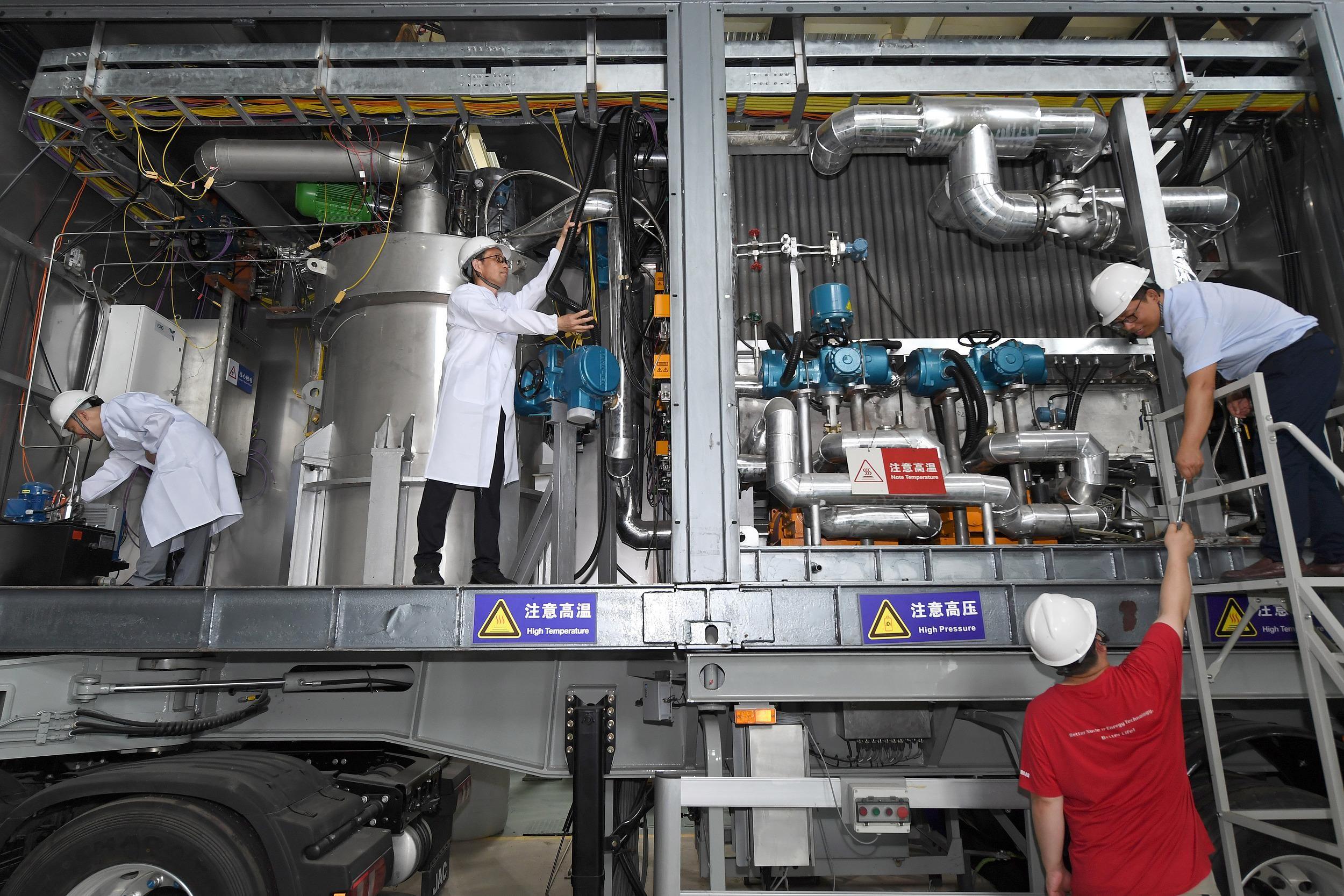
- China tests mobile nuclear reactor capable of powering AI data centers
- Prototype truck-mounted reactor built for decades of unrefueled operation
- Portable 10MW nuclear unit targets remote power supply and AI workloads
China is currently testing a nuclear reactor small enough to be transported on a truck, a project that scientists say could help solve growing demand for electricity through artificial intelligence systems.
THE South China Morning Post reports that the reactor is the world’s first 10 MW shipboard nuclear power plant, developed over several years and now on its way to real-world use.
The power is enough to power a mid-sized AI data center, where uninterrupted electricity is essential.
Article continues below
Maintaining unavailable or unreliable network areas
Wu Yican, chief scientific advisor of the Nuclear Energy Safety Technology Institute of Hefei Institute of Physical Sciences, said: Science and Technology Daily“Our proposed ‘nuclear power bank’ exemplifies the next generation of nuclear power systems. This technology provides exceptional safety in a remarkably compact size and an operational lifespan of decades without recharging.”
Mobility is at the heart of the concept, since the reactor can be transported by truck to areas where traditional grid connections are unavailable or unreliable.
“It offers a solution to battery anxiety in different applications, including providing power to remote regions and islands, providing emergency backup power in special environments, propelling ships, powering space systems, and supporting AI and data centers,” Wu said.
He explained that next-generation nuclear systems should be built around security and adaptability. “They must be accessible, flexible and intelligent, allowing them to meet the diverse energy needs of the future,” Wu said.
Interest in portable nuclear systems is growing as computer AI continues to develop, pushing power requirements far beyond what many existing networks were built for.
SCMP states that China currently operates 59 commercial nuclear units producing 467.7 billion kilowatt hours of electricity, accounting for 4.82% of national demand and ranking second in the world behind the United States.
Technology companies are turning to nuclear power as demand for electricity from data centers continues to rise.
Amazon plans to develop 12 small modular nuclear reactors with a combined output of nearly 1 GW, while Google is building a small reactor in Tennessee to power its facilities. Amazon, Meta, Google and Microsoft have all joined the World Nuclear Association.
Microsoft has also opted for existing infrastructure, participating in the restart of the Three Mile Island nuclear power plant, while smaller systems such as Westinghouse’s eVinci microreactor are being developed to provide around 5 MW for 100 months without refueling.
Wu also discussed nuclear technology beyond electricity generation, highlighting its growing role in medicine where radioactive molecules are used to assess bodily functions and diagnose and treat diseases, including cancer.
More than 5 million people in China are diagnosed with cancer each year, increasing pressure to develop medical tools relying on nuclear research and production capacity.
“If nuclear technology could help improve treatments, it could provide immeasurable social and economic value,” Wu said.
Follow TechRadar on Google News And add us as your favorite source to get our news, reviews and expert opinions in your feeds.


