
Gulf states have confidence in Pakistan’s role; Islamabad leads regional negotiations and maintains close Saudi-UAE relations
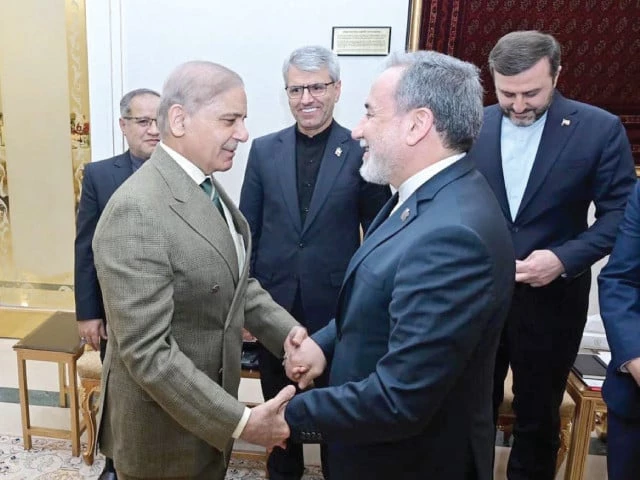
Prime Minister Shehbaz Sharif warmly receives Iranian Foreign Minister Abbas Araghchi during a meeting in Islamabad. Photo: application
Since the US-Israeli war with Iran erupted on February 28, Pakistan’s efforts to advance mediation have been difficult to ignore.
The federal government has circulated several peace proposals between the two capitals, expanded its diplomatic margin to bring the conflicting parties to the negotiating table and, despite limited success in early April talks in Islamabad, continues to enjoy considerable support from Iran and the United States to broker a consensus on the path to de-escalation.
The advantage of not having skin in the game
These dynamics merit a deeper understanding of what constitutes Pakistan’s role as a critical mediator in the conflict and the factors that propel it to this status.
First, Islamabad does not face some of the constraints associated with Gulf countries and traditional US-focused mediators. For example, Islamabad does not host any U.S. military bases, making it a key player in gaining the trust of Tehran, which has attacked Middle Eastern countries, including mediators Oman and Qatar, for their perceived role in facilitating U.S. attacks on the country.
Islamabad preserves this confidence by avoiding any appearance of military complicity – even tacit support for the United States – that could place it in the crosshairs of the current war.
Learn more: Mojtaba Khamenei opens new chapter in Gulf, calls for US exit from Hormuz
On the other hand, Islamabad, as a destination of choice, offers great geographical security from the main conflict hotspots.
For example, Pakistan is not near areas immediately surrounding the Strait of Hormuz, where fluctuating tensions between the United States and Iran over the opening of the waterway have caused considerable concern in Middle Eastern economies.
That matters to U.S. negotiators, who have been sensitive to regions likely to invite Iranian attacks, and similar threat perceptions for Tehran — which has seen many of its senior leaders become targets of unwarranted Israeli-U.S. attacks — make Islamabad a destination offering greater security and a firmer basis for serious negotiations.
Gulf countries also view Pakistan’s role with great confidence. This was evident in the run-up to the first round of the “Islamabad talks,” when regional heavyweight Saudi Arabia joined forces with Turkey and Egypt to assess the contours of regional security in four-party talks in Islamabad.
Pakistan also has very close ties with Saudi Arabia and the United Arab Emirates, and the leaders have made the most of their multi-vector foreign policy by making urgent visits to countries like Qatar to assess prospects for de-escalation. Pakistan is also one of the few countries to have the ear of US President Donald Trump, who has expressed support for top leaders.
Energy dependence as a driver of diplomacy
This proximity allows Islamabad to credibly facilitate the vital exchange of competing peace plans for the benefit of US-Iran talks, as well as meet expectations for a sustainable de-escalation scenario, as seen through the prism of key Gulf partners including Oman, Qatar, Saudi Arabia, the UAE and Kuwait.
At the same time, Pakistan’s geographic proximity to Iran – a close neighbor with a history of counterterrorism cooperation and shared energy ties – makes mediation a matter of strategic value when the economy is already on the sidelines.
This reality, reinforced by growth risks and limited borrowing potential, makes it clear that Pakistan cannot afford to look the other way when drastic energy shocks due to Strait of Hormuz tensions affect the global energy outlook, as well as domestic energy supplies.
Pakistan imports the lion’s share of its gas from major Gulf countries. The energy factor gives Islamabad’s mediation the added immediacy that is essential to bring the conflict to a successful conclusion for its domestic constituency as well.
The strong relations between Pakistan and China are also a positive reinforcement. This alignment is reflected in the two countries’ “five-point” peace plan, which calls for de-escalation and the resumption of peace talks.
The federal government’s historic opposition to unilateral sanctions, its firm respect for international law and its refusal to take sides in the Iran-United States conflict give its mediation potential the promise of permanence, alignment with UN-supported principles of dialogue and rare credibility in negotiating consensus.
It is this practical reading of the gradual but enduring dynamics of peace talks, geographic constraints, energy drivers and close diplomatic proximity to Tehran and Washington that gives Islamabad the influence and stamina to emerge as a major mediator in the US-Iran war.


