The U.S. Department of Homeland Security identified the U.S.-Iran war as a potential motive for the man accused of attempting to assassinate President Donald Trump and senior members of his administration during a White House journalists’ gala last month, according to an intelligence report sent to state and local law enforcement and other federal agencies.
The report, a preliminary assessment from the Department of Homeland Security’s Office of Intelligence and Analysis dated April 27, finds that suspect Cole Allen had “multiple social and political grievances.” He concluded that the Iranian conflict “may have contributed to his decision to carry out the attack,” citing social media posts by Allen criticizing U.S. actions in the war.
The assessment sheds new light on the U.S. government’s search for a motive in the foiled attack on the White House Correspondents’ Dinner on April 25.
Its findings, while preliminary, offer the most definitive evidence yet that the Iranian conflict, which has killed thousands in the Middle East and shaken the global economy, could have been a trigger.
The report, marked as a “Critical Incident Note,” was obtained through open records requests by the transparency nonprofit Property of the People and shared with Reuters.
A DHS spokesperson declined to comment on the contents of the intelligence assessment.
“These reports inform our partners of the latest information available following significant incidents with impacts on homeland security,” the spokesperson said.
The FBI declined to comment and the U.S. Department of Justice did not respond to requests for comment.
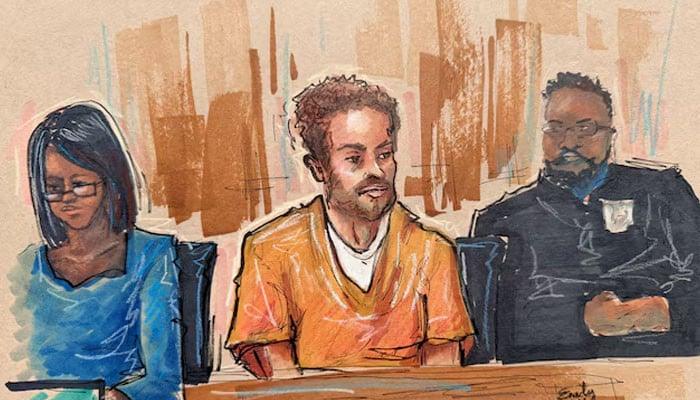
On Tuesday, the U.S. Department of Justice added a charge of assault on a federal officer, accusing Allen of shooting a U.S. Secret Service agent at a security checkpoint, in addition to attempted murder, discharging a firearm during a crime of violence and illegally transporting a firearm and ammunition across state lines. He has not yet entered a plea.
FBI examines social media
U.S. officials have so far said little about Allen’s alleged motives, only citing an email Allen sent to his relatives the night of the attack. The message, which officials called a manifesto, expressed anger at the administration and referenced its desire to target the “traitor” who was giving a speech, without mentioning Trump by name.
In court documents, prosecutors alleged that Allen “disagreed” politically with Trump and “wanted to ‘retaliate’ against government policies and decisions he found morally wrong.”
The FBI conducted a detailed review of Allen’s social media activity and digital footprint to seek a motive for the attack, a senior law enforcement official told Reuters, speaking on condition of anonymity.
“This is under careful review,” the official said. Reuters.
The review includes a review of posts on a Bluesky social media account linked to Allen that posted and shared a series of anti-Trump messages in the weeks leading up to the attack.
The messages criticize US actions in Iran, but also attacks on the Trump administration on immigration controls, Elon Musk and Russia’s war in Ukraine.
The account shared a message calling for Trump’s impeachment for his April 7 threat to destroy Iranian civilization, which came hours before Trump agreed to a ceasefire. He also criticized journalists who planned to attend the press dinner.
The FBI also examined a 2024 post in which an account linked to Allen, while quoting a Bible verse, appeared to call Trump “the devil” in response to a post from Trump’s daughter Tiffany.
The focus on Allen’s online activity is intended in part to ward off conspiracy theories about the alleged shooter’s motive and online activity, the official said, adding that speculation about the online activity of the man who shot Trump at a 2024 campaign rally in Butler, Pennsylvania, had sparked widespread conspiracy theories.