
The Wall Street clearinghouse is working with blockchain developers to bring online one of the least glamorous but operationally complex functions of the capital market: securities trading.
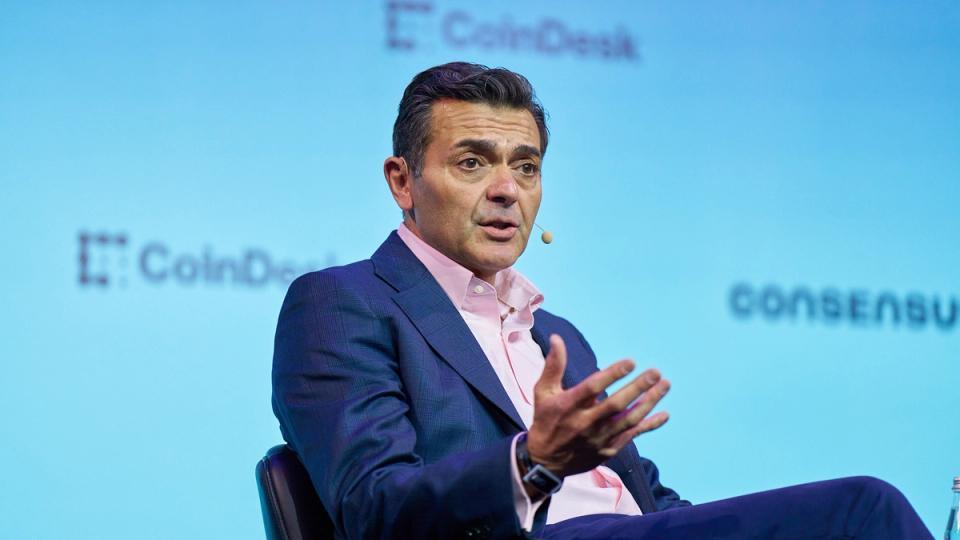
Frank La Salla, CEO of Depository Trust and Clearing Corporation (DTCC), said Wednesday at Consensus 2026 in Miami that the market infrastructure giant is collaborating with multiple Layer 1 (L1) blockchain networks to improve how dividend payments, tender offers and other post-trade events could be processed in tokenized markets.
“We are currently working with very good L1s, who are focused on being able to process at faster rates and have greater resilience,” he said.
Currently, the bottleneck is that on most blockchain networks, it can take a few days to process securities transactions, he pointed out.
“We process millions of dividend payments a day to fuel the industry,” Le Salla said. “For this, we need efficient L1s.”
DTCC sits at the center of America’s capital markets infrastructure, processing approximately $20 trillion in Treasury and corporate securities transactions each day. The clearinghouse has spent nearly a decade exploring blockchain applications, but La Salla said the technology only gained commercial importance when real-world use cases began to emerge in recent years.
Recently, the company has accelerated its efforts to modernize market infrastructure through tokenization and blockchain technology. This week, DTCC announced that it would begin testing its tokenized securities platform in July before a broader rollout in October.
La Salla said the collateral movement could become the first large-scale institutional use case for blockchain. Tokenized collateral could allow businesses outside of U.S. market hours to access real-time liquidity without relying on traditional settlement windows. He described a scenario in which Asian companies could access the US dollar on a Sunday in New York by posting token collateral on the chain in real time.
“It’s incredibly powerful,” La Salla said.
But he warned that blockchain systems still face major hurdles in scalability, liquidity fragmentation and risk management.
One challenge, for example, is clearing transactions. Traditional market infrastructure compresses massive trading activity into smaller settlement obligations, thereby reducing capital requirements across the system.
“Blockchain is decentralized,” La Salla said. “A lot of the efficiencies we get in our industry are due to the concentration of liquidity.”


