
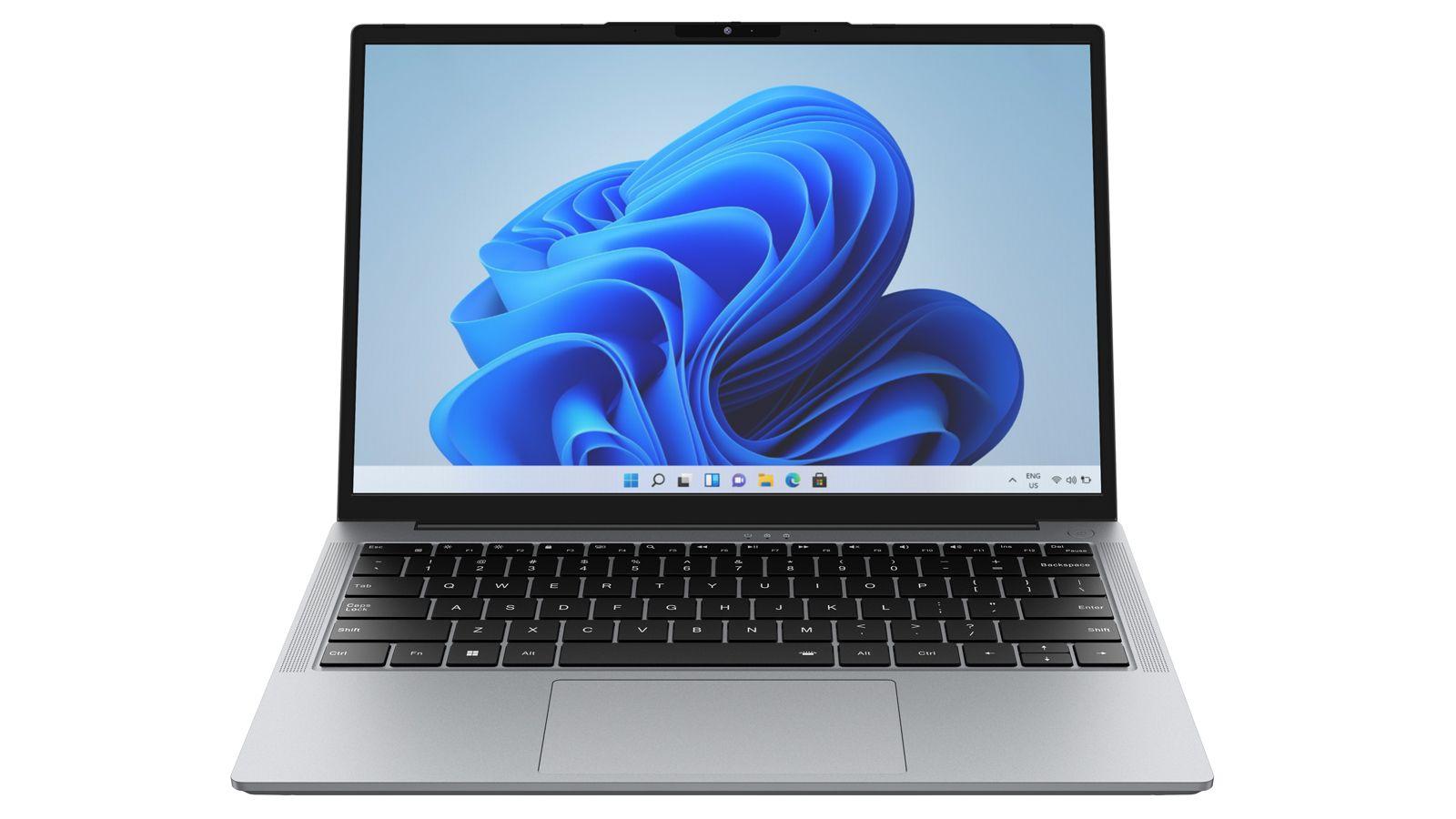
- The Chuwi UniBook is an entry-level Windows challenger to Apple’s successful MacBook Neo.
- It offers more connectivity and expansion than the MacBook Neo, but it compromises on some fronts.
- Its price advantage compared to Apple’s offer may not be significant for students
The Chuwi UniBook has plenty of feathers in its cap if you’re looking for a cheaper alternative to Apple’s latest MacBook Neo.
Chuwi’s device is one of the first Intel Wildcat Lake-powered laptops on the market, offering a plethora of ports, a lower price than its perceived competitors, and specifications that appeal to both students and budget-conscious users who need connectivity and have an affinity for Windows over MacOS.
And at $150 less than Apple’s device, it’s tempting – so what’s the point of the Chuwi UniBook?

A MacBook Neo killer?
Calling the Chuwi UniBook a MacBook Neo killer might be premature, to say the least. It’s aggressively priced, filling a gap in a market reeling from rising RAM and SSD prices, but Apple’s surprise move to target the mainstream entry-level segment earlier this year appears to have caught Microsoft, Intel and AMD off guard.
That being said, while the cheaper price is sobering, especially given how aggressively Chuwi is positioning its product, it invites a comparison with Apple’s entry-level offering, and the results might not be so flattering for the former.
Chuwi UniBook vs MacBook Neo: Similar at a glance?
The Chuwi UniBook and MacBook Neo seem quite similar at first glance. Both offer all-day battery life (Apple claims 16 hours versus Chuwi’s 15-20 hours for mixed use), and both are locked to 8GB of RAM while offering 256GB of SSD storage (Apple offers a jump to 512GB if you spend $100 more).
Both have two USB-C ports and operate in the same weight class (1.3 kg on the UniBook versus 1.23 kg on the Neo), and both offer similar screen sizes (14 inches versus 13 inches, respectively).
Important elements
The differences quickly become apparent once you take a closer look at what the Chuwi UniBook sacrifices versus what it doesn’t.
For the segment it competes in, the UniBook offers an excellent range of connectivity: it comes with a dedicated Gigabit Ethernet port, an HDMI 2.0 port, 3 additional USB-A ports, and, interestingly, even a MicroSD card slot, which could be an inexpensive storage upgrade for those interested. It also incorporates a backlit keyboard and presents its screen as 100% sRGB IPS while capping it at a resolution of 1920 x 1200.
Apple’s offering is more akin to what we’ve already come to expect to some extent from the MacBook Air. The missing backlit keyboard is something that stands out, as is the lack of expansion, but Apple’s A18 Pro processor is passively cooled and, based on the limited benchmark tests available online for the Core 3 304 processor, holds its own, often beating the latter. It also offers better wireless connectivity, offering BT6.0 and WiFi 6E compared to the UniBook’s older WiFi 6 and BT5.2.
The MacBook Neo also sports an inherently superior display, which may be one of the biggest distinguishing factors in its weight class compared to Windows-based competitors, with an sRGB display that supports a mammoth resolution of 2408 x 1506 and a significantly higher PPI (pixels per inch) density of 219.
We can’t compare the SSDs head-to-head, given the differences in operating systems and optimization techniques at play, but both options offer entry-level storage, with Chuwi stating that the UniBook comes with a “PCI-E 3.0 SSD”, and Apple’s offering reads and writes slightly below the 2,000MB/s mark.
After reflection: a reduction for education that shakes up the non-Apple basket
The Chuwi UniBook might just want to grab a small slice of Apple’s highly successful MacBook Neo market share, and it might well succeed, given that it’s aimed at users demanding more connectivity and expansion options, a Windows-based option, and, perhaps most importantly, a backlit keyboard.
The MacBook Neo offers a significant display upgrade over the UniBook, a much more power-efficient processor that should allow it to hold its own in terms of battery life despite its lower capacity, and, more importantly, it’s aimed at the target audience Apple wants to convert from the start: students.
A $100 discount on the Apple Education Store, along with aggressive financing, closes the $150 gap between the two options to just $50, and at that price, the Chuwi UniBook is a much tougher recommendation, although it scores some major wins.
The MacBook Neo is here to stay, and it tends to worry both Intel and Microsoft, who previously had unchecked dominance at this price point, even as AMD continues to chart its own course. The Chuwi UniBook says they and their partners now recognize the Neo’s aggressive positioning in a segment and are responding in kind.

Follow TechRadar on Google News And add us as your favorite source to get our news, reviews and expert opinions in your feeds.


