
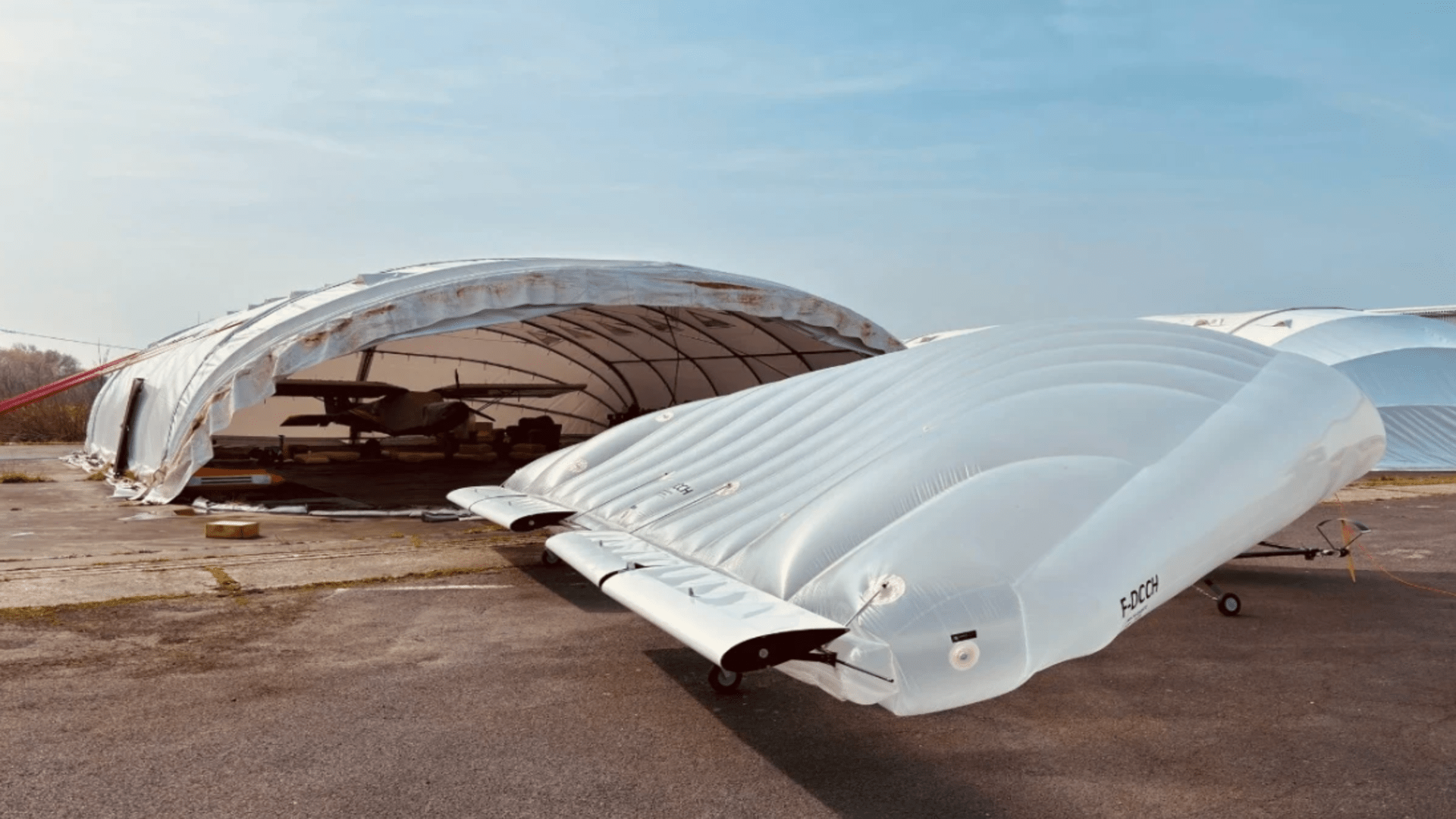
- Celeste Ecoflyers tested the inflatable wing cargo drone in initial flight evaluations
- Airplanes generate aerodynamic lift without relying on lighter-than-air buoyancy systems
- The drone carried payload masses exceeding its own empty structural weight during testing
A French aerospace startup called Celeste Ecoflyers has conducted the first flight tests of an experimental cargo drone using a pressurized textile wing instead of rigid internal structures.
The company recently carried out short takeoffs at Le Havre airport using its dAS10 cargo platform, which replaces conventional aluminum spars and ribs with an inflatable architecture.
Unlike airships or lighter-than-air vehicles, the aircraft generates lift entirely through aerodynamic principles identical to those used by conventional fixed-wing aircraft.

Inflatable wings challenge conventional aircraft design
Celeste Ecoflyers publicly clarified this distinction after earlier confusion surrounding the aircraft’s unusual appearance and bloated structural components.
The company clearly stated that “lift is aerodynamic, not buoyancy”, while explaining that only the wing structure itself remains pneumatically supported during operations.
This distinction is important because inflatable structural systems behave very differently from traditional aircraft chassis during transportation, deployment, and field maintenance procedures.
A rigid cargo aircraft requires significant infrastructure, transportation equipment and specialized repair facilities, while inflatable models can theoretically operate with fewer logistical burdens.
The dAS10 wing would be capable of deflating, folding and compressing into smaller volumes than similarly sized cargo platforms designed for equivalent operational missions.
This portability could prove valuable to military forces attempting to move equipment into isolated areas where regular air support is unavailable or vulnerable.
Military logistics and operational implications
The aircraft performed only brief low-altitude flights lasting several seconds, although these tests confirmed that the inflatable structure generated sufficient aerodynamic lift for controlled movement.
According to company statements, the drone also carried test masses exceeding its own empty weight during evaluation flights.
This ratio is extremely important in aviation economics because payload capacity ultimately determines whether cargo aircraft remain commercially and operationally practical under demanding conditions.
Celeste Ecoflyers has not disclosed the exact payload rate achieved in testing, and independent verification has not yet confirmed the company’s technical claims.
Its textile structure creates an unusual radar signature that differs from standard rigid aircraft built from metallic or composite materials.
This feature is said to have sparked defense interest, as radar visibility increasingly determines the survivability of unmanned aircraft on the front lines.
Based on available information, the aircraft may possess an unusually high lift reserve compared to similarly compact unmanned logistics platforms.
The military implications become easier to understand once the aircraft’s characteristics are examined in the context of modern distributed warfare and forward resupply environments.
An eight-meter cargo drone, capable of operating on rugged surfaces while carrying large loads, fills logistical gaps that conventional military aviation handles inefficiently and expensively.
On-site repairability is also important because inflatables potentially allow maintenance using simpler tools and less specialized technical expertise than traditional composite airframes.
Despite growing interest in entry-level drones and autonomous logistics systems, the dAS10 remains an early-stage prototype.
This requires much more testing before wider operational deployment becomes realistic.
The company acknowledged that its engineers still needed adjustments to mass balance and flight control responsiveness.
These limitations are normal during aircraft development programs, particularly when manufacturers attempt unconventional technical approaches.
Whether inflatable wing structures are truly superior to conventional cargo drones in operational performance will likely depend on durability, survivability, maintenance costs and long-term reliability.
Via Defense Blog

Follow TechRadar on Google News And add us as your favorite source to get our news, reviews and expert opinions in your feeds.


