
ISLAMABAD:
The Supreme Court on Wednesday acquitted two Muttahida Qaumi Movement (MQM) workers in the Baldia factory fire case, setting aside the death sentences awarded to them by a trial court and later upheld by the Sindh High Court (SHC).
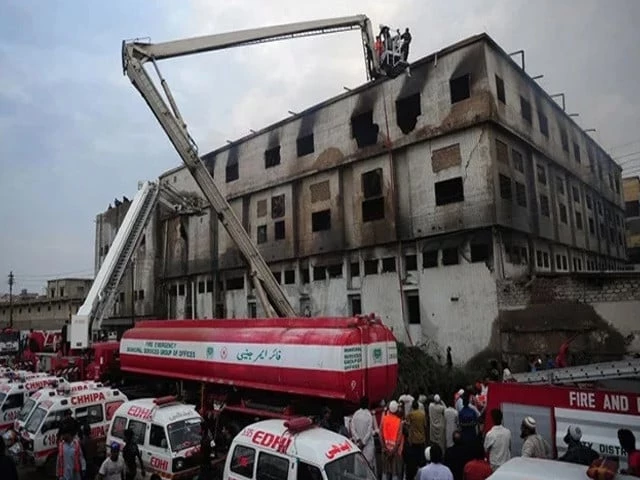
On September 11, 2012, more than 260 workers were burned to death in the multi-storey building of the Ali Enterprises garment factory in the town of Baldia, in what was the worst industrial disaster in the country’s history.
A three-member bench headed by Justice Shahzad Malik announced the verdict after hearing the appeals filed by Abdul Rehman alias Bhola and Zubair alias Chariya, granting their petitions and giving them the benefit of doubt.
The court ruled that, in light of the evidence and legal issues involved in the case, the defendants were entitled to acquittal.
The bench also ruled on a motion seeking the striking out of certain judicial observations, declaring it unsuccessful.
The court observed that, the initial judgment having been annulled, the remarks relating thereto automatically lost their legal effect.
During the proceedings, the court highlighted several legal and evidentiary weaknesses in the prosecution’s case.
Questions have also been raised regarding certain confessional statements and questions related to the alleged political affiliations of some of the defendants.
The judiciary further rejected requests to involve the heirs of the deceased victims as parties to the proceedings. The court observed that allowing a large number of parties to join the case could unnecessarily prolong the litigation process.
Justice Malik noted that the case had been made more complicated by the nexus between various political and legal aspects, while Justice Shakeel Ahmad noted obvious contradictions between some statements and the available evidence.
In 2023, the SHC rejected appeals challenging the death sentences handed down to the two MQM activists after a special anti-terrorism court upheld the death sentence imposed on them.
In its 46-page judgment, the SHC said the forensic report clearly showed that the factory fire was not caused by a short circuit. She further found that the evidence and witness statements confirmed that Zubair Chariya had set the factory on fire.
According to the record, Abdul Rehman was associated with the MQM as a sector in-charge, while Zubair was an active worker of the municipality. Both were present at the factory when the fire broke out.
The appeals claimed that from the date of the incident until 2015, the police and factory owners had not filed any complaints or registered any cases for the alleged extortion.
They further argued that the prosecution had not placed in evidence a report published by the scientific laboratory of the University of Karachi establishing that the fire was the result of a chemical substance.


