
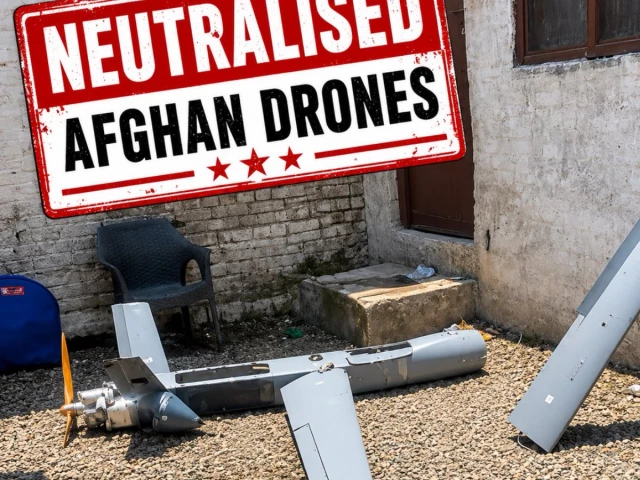
A statement accuses the Taliban of trying to divert attention from militant activities originating in Afghanistan.
The Ministry of Information on Friday strongly rejected allegations circulating on Afghan Taliban-linked propaganda channels of cross-border drone strikes on suspected Islamic State camps in Pakistan’s Khorasan Province (ISKP), calling such reports “false as usual”.
In a fact-checking statement published on
*𝐅𝐚𝐜𝐭 𝐂𝐡𝐞𝐜𝐤 | 𝐌𝐢𝐧𝐢𝐬𝐭𝐫𝐲 𝐨𝐟𝐈𝐧𝐟𝐨𝐫𝐦𝐚𝐭𝐢𝐨𝐧 𝐁𝐫𝐨𝐚𝐝𝐜𝐚𝐬𝐭𝐢𝐧𝐠*
◼️The Afghan Taliban regime, through its various propaganda spokespersons and official statements, claims to have targeted certain suspected ISKP camps in the border areas of Khyber… pic.twitter.com/xyzutM6O3A– Fact Checker MoIB (@FactCheckerMoIB) June 19, 2026
He added: “Terrorist camps, including that of ISIS and more than two dozen other terrorist organizations, are in fact located, managed and staffed from within territories under the control of the Afghan Taliban regime. »
The post has attached an image of a screenshot of an
Read also: The terrorist landscape in Pakistan: challenges and remedies
Rejecting this narrative, the statement criticized the Afghan Taliban for attempting to divert attention from militant activities originating in Afghanistan, adding that such claims are regularly used “to cover their condescension of terrorism carried out in neighboring countries and region.”
The ministry also presented what it called the factual account of the incident, saying: “A crude drone of the Taliban regime entered Pakistani airspace near Shinko, Khyber. It was immediately identified and neutralized by the air defense warning system of the Pakistan Air Force.”
Concluding the message, the ministry said: “The truth prevails over lies.”
Pak-Afghan tensions
KP witnessed a significant increase in militant violence last year, with more than 500 attacks reported, a 50% increase from the previous year.
Fighting between Pakistan and Afghanistan that began in October has left dozens dead on both sides, with Afghans bearing the brunt. Islamabad accuses the Afghan Taliban of harboring militants who launch attacks in Pakistan, although Kabul denies this, calling such militancy its neighbor’s domestic problem.
Operation Ghazab Lil Haq was launched towards the end of February following renewed clashes along the Pakistan-Afghanistan border, after Afghan Taliban forces fired on several sites, provoking rapid military retaliation from Pakistan.
The clashes intensified after Afghanistan launched a border offensive in response to Pakistani airstrikes targeting terrorist positions. The two sides had agreed to a one-week ceasefire on the eve of Eidul Fitr on March 18, following requests from Turkey, Saudi Arabia and Qatar.
In April, Pakistan presented three main demands to the Afghan Taliban during peace talks in Urumqi, China, including that of Kabul to officially declare Tehreek-e-Taliban Pakistan a terrorist organization, dismantle its infrastructure and provide verifiable evidence of its action. These demands form the basis of Pakistan’s negotiating position, which sources say has hardened due to ongoing security concerns.
Recently, Pakistan carried out “precision strikes” along the Pakistan-Afghan border, targeting terrorist hideouts, killing 26 people. Fitna al-Khawarij terrorists in response to recent terrorist attacks in the country.
Information Minister Attaullah Tarar said the operations were carried out following recent attacks, including the assault on a federal police post in Khyber-Pakhtunkhwa on June 9, a vehicle-borne suicide attack on a military post in North Waziristan on June 2, and an attack on a police post in Bannu on May 9.


