
Citizen Questions Stray Dog Killings; official denies ban, says government is enforcing it
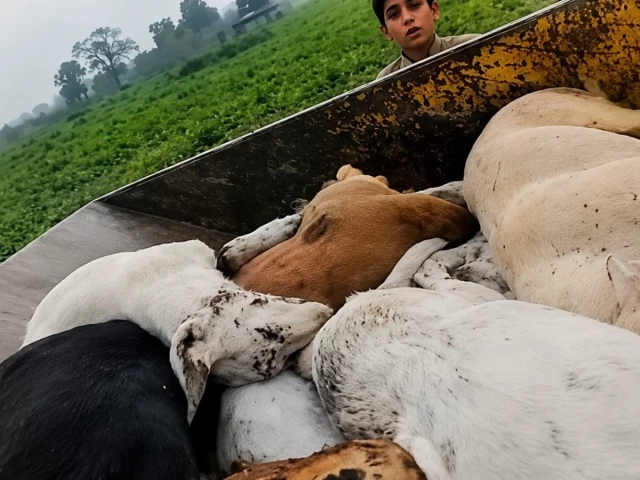
A screenshot of dead dogs thrown into a truck allegedly belonging to the Suthra Punjab program. – SCREENSHOT
Another alleged incident involving the killing of stray dogs by the Lahore Metropolitan Corporation has surfaced after the release of a new video showing the carcasses of stray dogs being transported near Harbanspura Ring Road.
The video allegedly shows the dead dogs being loaded onto vehicles associated with the Punjab Chief Minister’s Suthra Punjab programme. He also alleges that vehicles assigned to the cleanliness process were used to transport the animals.
In the footage, a citizen can be heard questioning an official about a court ban on killing stray dogs. The official reportedly replied that there was “no ban” and that “the government was enforcing it.”
The video surfaced despite directions issued by the Lahore High Court demanding that the Punjab government implement the Punjab Animal Birth Control (TNVR) Policy 2021. During the court proceedings, government officials assured the court that the stray dogs would not be put down and would instead be managed within the policy through the Trap-Neuter-Vaccinate-Release (TNVR) program. The court also warned that any violation of its orders could lead to contempt of court proceedings.
Learn more: Dog bites are on the rise in the city
The Punjab government introduced the TNVR policy in 2021 as a humane approach to control the stray dog population. According to this policy, stray dogs must be captured, sterilized, vaccinated against rabies and released in the same locality.
Animal welfare organizations have repeatedly claimed that stray dogs continue to be killed in Lahore and other parts of Punjab, despite court directions and the government’s stated policy. However, the competent authorities have repeatedly denied these allegations.
Animal rights activists also say incidents of stray dogs allegedly being killed have continued to surface at several private housing societies, raising new concerns about compliance with court orders and the provincial government’s animal control policy.


