
Covering 21 situations of concern, the report documented 9,788 cases verified by the United Nations in 2025.
THE UNITED NATIONS:
Seventeen years after the UN recognized conflict-related sexual violence as a threat to international peace and security, Pakistan has called for “full, faithful and non-selective” implementation of Security Council resolutions, including on women, peace and security, which aimed to combat the crime.
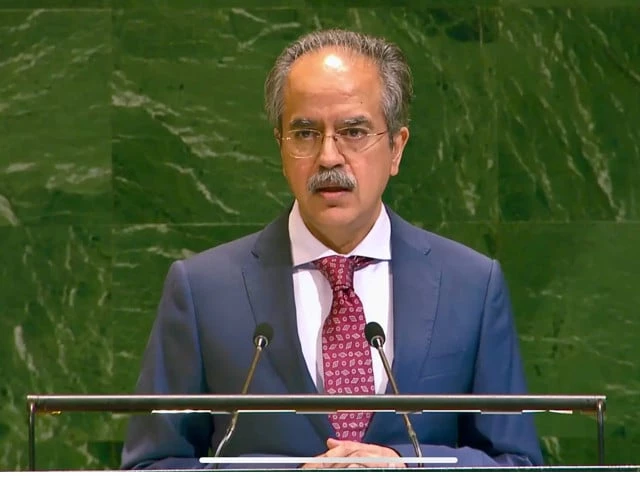
Speaking before the 15-member Council, Ambassador Asim Iftikhar Ahmad, Pakistan’s permanent representative to the UN, said “these resolutions carry clear obligations to prevent, protect, investigate, prosecute and redress” with the aim of ending sexual violence in conflict.
This would be the “real test” of the Security Council’s commitment to the cause, he said during a debate convened by the Democratic Republic of Congo (DRC), president of the Council for the month of July, in which more than 70 delegations participated. They reviewed the recent report of the Secretary-General on conflict-related sexual violence, presented by Pramila Patten, Special Representative of the Secretary-General on Sexual Violence in Conflict.
Covering 21 situations of concern, the report documented 9,788 cases verified by the United Nations in 2025, more than double the number recorded in 2024. “Yet such figures can never capture the scale and magnitude of this chronically underestimated crime,” said Ms. Patten, the Special Representative, adding that for every case arriving at a clinic, an estimated 10 to 20 go unreported and untreated.
The mandate was established by Council resolution 1888 (2009), building on the Council’s recognition of conflict-related sexual violence as a matter of international peace and security, including its use as a weapon and tactic of war and the continued impunity enjoyed by perpetrators of such violence.
In his remarks, Pakistani envoy Ambassador Asim Ahmad said conflict-related sexual violence destroys individuals, fractures families, terrorizes communities and leaves intergenerational wounds, including for children born from conflict-related rape.
At the same time, he stressed that the Secretary-General’s “listing mechanism”, the blacklist of perpetrators of crimes, should cover all situations of conflict and foreign occupation on the Council’s agenda.
“No situation should be immune from scrutiny, and no perpetrator should be allowed to treat sexual violence as gratuitous,” the Pakistani envoy said.
“Sanctions regimes, where appropriate, should be used more effectively against persistent perpetrators, and justice processes should be designed to be more victim- and survivor-centered, trauma-informed and accessible. »
Ambassador Asim Ahmad also stressed the need to strengthen accountability “in a comprehensive and coherent manner”, saying victims and survivors must receive prompt and comprehensive support, including medical care, psychosocial assistance, legal aid, livelihood support and reparations.
“Prevention must be placed at the center of our collective response,” the Pakistani envoy said. “This requires respect for international humanitarian law and international human rights law; meaningful participation of women in peace processes; early warning; sustainable financing; responsible arms control; and, above all, address the root causes of the conflict, including foreign occupation and the denial of the right to self-determination. »
“The true test of this Council’s commitment lies in the full, faithful and non-selective implementation of its resolutions, particularly on women, peace and security,” he added.


