
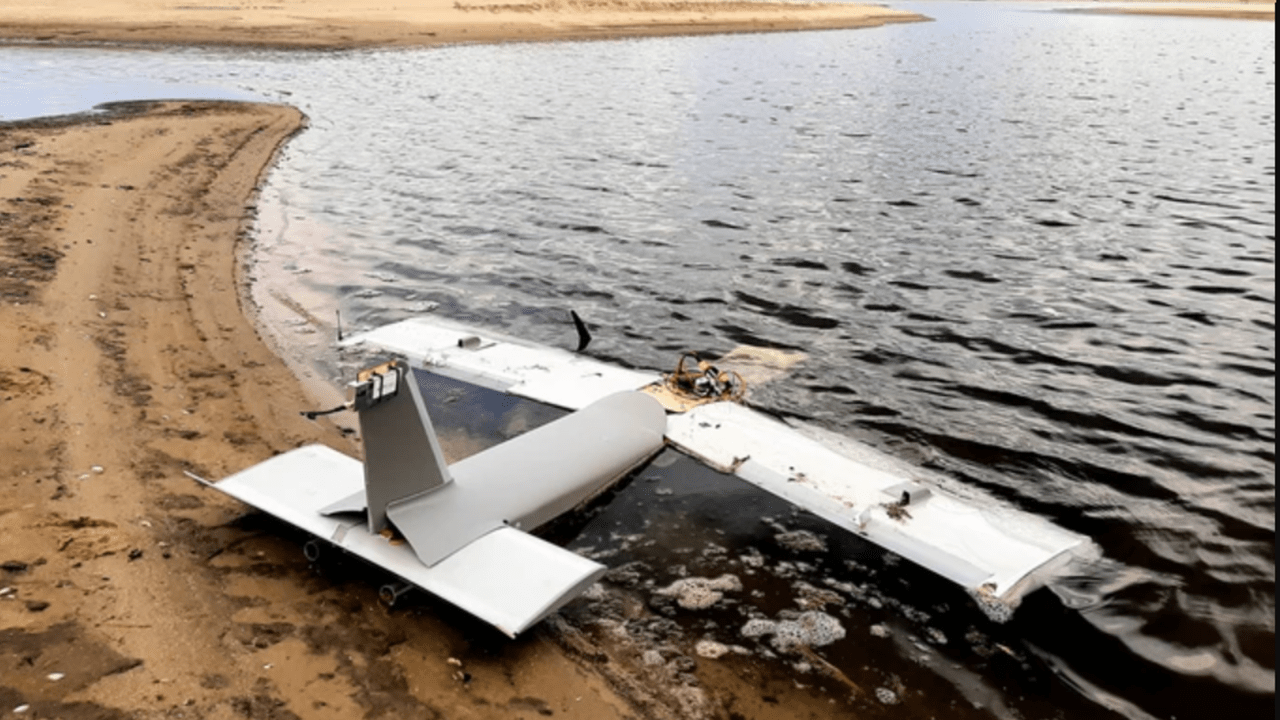
- Molniya drone struck without any visible control antenna
- Only a camera and a computer were found inside the recovered drone
- Ukraine believes navigation and targeting can now work without humans
A Russian Molniya drone recently struck a Ukrainian facility without a visible control antenna, and the strike seemed unusual to observers following the weapon’s design.
The recovered drone carried only a camera and an onboard computer, a stripped-down configuration that suggests a move toward greater autonomy in strike sequences.
Radio technology specialist Serhii “Flash” Beskrestnov, an adviser to Ukraine’s defense minister, said the findings suggest navigation and targeting functions work without a human operator.
A familiar model of the V2U platform
The same onboard configuration had previously only appeared on the V2U drone, a separate Russian platform used earlier in the conflict.
“The enemy is using the V2U platform to train its neural network,” Beskrestnov wrote, adding that the repeated hardware marked a worrying development.
“The drone only had a camera and a computer. That’s where everything is heading. Navigation, target acquisition and attack will become completely autonomous.”
Ukrainian defense intelligence, through its War&Sanctions portal, already classifies the V2U as an AI-enabled loitering munition, although independent confirmation remains absent from other sources.
This overlap raises new questions about whether commercial processors, originally designed for civilian robotics, are being repurposed for battlefield autonomy across programs.
There is speculation that the Russian drone program will rely on Nvidia’s Jetson Orin platform, a processor widely used in amateur and commercial drone projects for on-board image recognition.
This type of chip could presumably allow a drone to identify and track targets without the need for constant external human guidance.
However, no independent laboratory analysis has publicly confirmed the presence of a specific chip inside the recovered Molniya drone.
This gap leaves the true source of the material unclear and raises a larger question: How could these components get to Russian manufacturers?
COTS components complicate export controls
Russia’s reliance on commercial off-the-shelf equipment, or COTS, appears to reveal a persistent gap in international sanctions enforcement efforts globally.
These components are typically manufactured for civilian markets and often reach restricted buyers through intermediaries, making it difficult to verify end use across borders.
Once a chip like the Jetson Orin leaves its original supply chain, it becomes difficult for export control agencies to trace its final destination in practice.
Manufacturers rarely sell directly to sanctioned states, so a single chip may pass through multiple resellers before reaching its final buyer.
Each additional link in this chain makes it harder for regulators to know exactly where a processor ends up.
This loophole means that sanctioned states can potentially acquire advanced processors intended for amateur or commercial use and then repurpose them for weapons development.
A chip designed for a drone hobbyist’s camera could, in principle, end up guiding an errant munition.
Closing this gap would likely require stricter oversight of dealers and distributors rather than restrictions on manufacturers themselves.
Export control regimes relied largely on large, traceable defense contracts rather than small shipments of consumer electronics.
This mismatch leaves regulators several steps behind when commercial parts are diverted to military applications.
Until distributors face stricter tracking requirements, similar material could continue to surface in future weapons, regardless of what sanctions are in place.
Via Ukrainian Pravda


