NEWYou can now listen to PK Press Club articles!
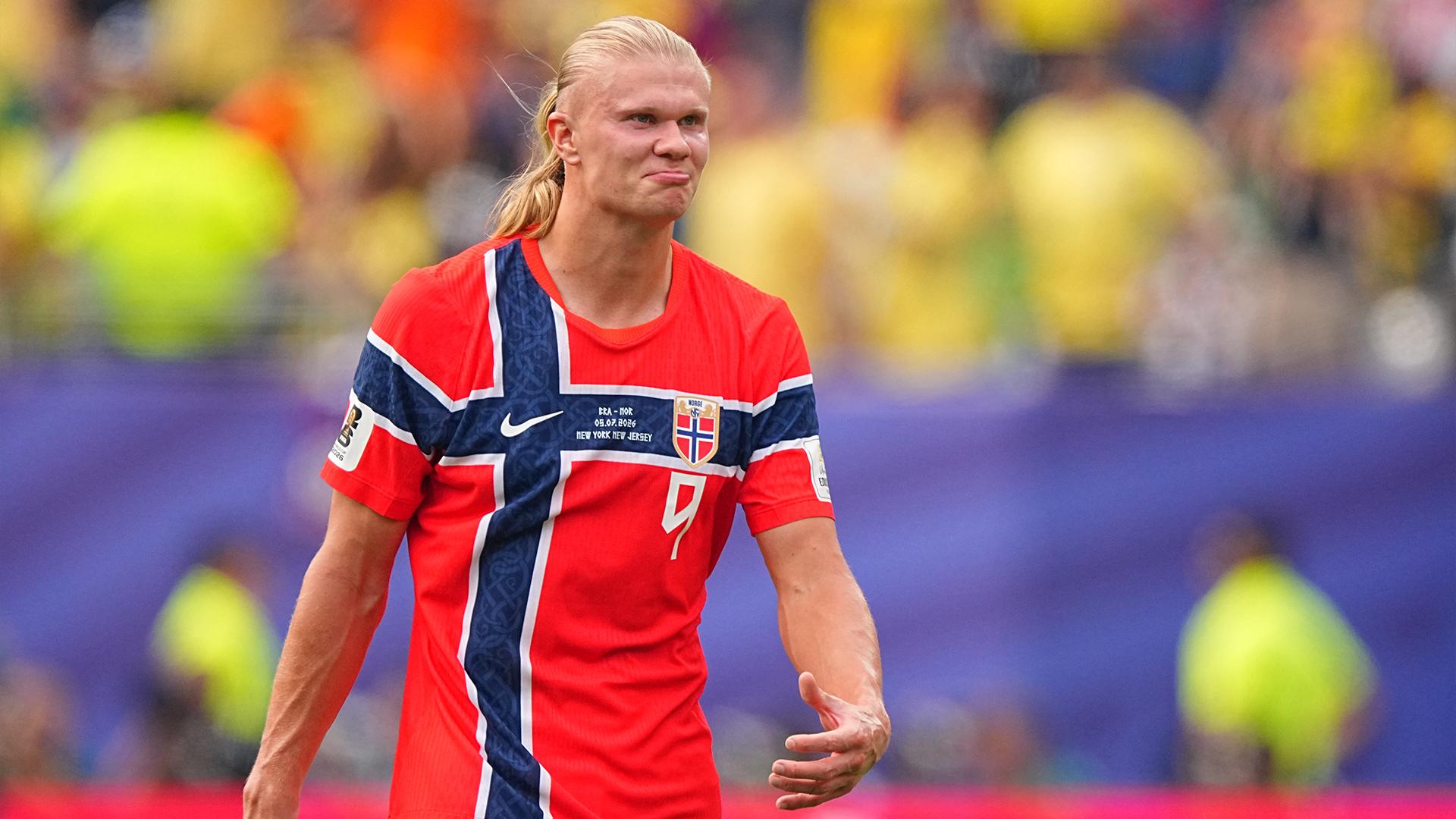
Erling Haaland stands 6ft 5in, an intimidating force who can make his fellow footballers seem diminutive in terms of stature and talent. Scoring seven goals in four World Cup matches on Saturday, the Norwegian player was described as a machine. But if you ask new loyal fans, she’s also a little girl and a princess.
Haaland has become a social media phenomenon, with his own posts and other people’s memes turning even soccer novices into die-hard fans.
Her dominant physical appearance coupled with her goofy online personality have contributed to this craze. Fans notice his flowing blonde mane, color-coordinated hair ties and playful posts like a filtered Snapchat selfie in which he proclaims Shrek his “twin.” The contrast between her strength and skill on the field and her softer, looser online presence has also subjected her to the “babygirl” treatment online. This term is frequently used by fans of endearing male celebrities or characters who appear sensitive, caring, or vulnerable.
Haaland is emblematic of a broader adoption of soccer players as pop culture figures, driven in large part by how they present themselves off the field.
Haaland as “pretty Norwegian princess”
Sarah Wilson, a baseball content creator in New York, is new to football, but has become a big enough fan over the past month to embark on a long hunt to buy her new favorite player’s jersey.
“I love Erling Haaland more than life itself,” Wilson, 31, said in a now-viral video. “I can’t imagine being such a pretty Norwegian princess and at the same time being one of the best strikers in all of football.”
Haaland is catapulted into even more intense fame than he had already enjoyed as the Premier League’s top scorer. This moment comes down to the combination of elite skills and an original personality, Wilson said.
“He’s really, really talented, he’s the first pillar of this whole thing. And then you find out he’s 25 years old and he’s probably the most Gen Z athlete in the World Cup,” Wilson told the Associated Press, highlighting his use of Snapchat and goofy filters in online photos. Many think, ‘Wow, I love this guy, he’s hilarious. Now he’s my new favorite player,’ and that’s exactly what happened to me,” she added.
Haaland’s expressive reactions on the pitch and his unique appearance spawned hundreds of memes. He leaned into this virality, posting cheeky selfies on Instagram, uploading lengthy vlogs to YouTube, and interacting with his fans on his public Snapchat stories, often making fun of himself.
After scoring two goals to eliminate Brazil, he posted a smug selfie from the locker room with the caption: “Well, well.” When an Instagram video with nearly 100 million views compared her appearance to a green onion — its wiry roots acting as hair — Haaland responded in the comments with a GIF of a side-eyed dog. When Google added a Viking line animation to its search results, Haaland wrote on
Haaland said during a team news conference Thursday that he loves being welcomed to the United States.
“I think it’s a good thing because I like Americans. I think they’re also pretty hilarious. They’re funny. I like the way they are,” he said. “I think it’s just good and honestly, out of everything, the World Cup so far has been amazing.”
Sports is a “cultural force” like politics or religion, said Jeffrey Kassing, a professor at Arizona State University who has studied social media use by fans and athletes. It’s natural that Haaland “crossed over” to a non-football audience, he said. A song from his youth went viral. A lookalike competition is in sight. Even the dogs wear blonde wigs.
“Before there was a lot of scrutiny that happened with athletes; you never heard the athlete’s point of view, maybe in an interview or at a press conference,” Kassing said. Haaland is proof that players now have much more control over shaping their image, he added.
Fans also try to “shape the perception” of their favorite players
Fan access to athletes contributes to what’s called a parasocial relationship, defined by one-way acquaintance, said Gayle Stever, a professor at Empire State University who has studied the dynamic between celebrities and fans for decades. Haaland’s fans feel like they know him personally, but he doesn’t know the nearly 60 million people who follow him on Instagram alone.
The majority of parasocial relationships are “positive, healthy and normal,” Stever said. Only a small percentage of people go to the extreme, she said.
Skyla Clarke, a 19-year-old sports management student from Brisbane, Australia – and lifelong football fan – says she’s seen that ugly side rear its head; attacks on players after poor performances, and even unprovoked hatred towards athletes’ wives and partners are not uncommon. Haaland himself called AI-generated player content “a little scary.” But he noted in Norwegian that attention to the team and its traditions — the rowing cheers, for example — is a sign of praise.
“Usually if it’s like that, it means you’re doing something good and your country is doing something good,” Haaland said.
Even healthy parasocial dynamics can seem unusual to those not initiated into Internet culture. Haaland is not the only player whose personality has exploded on social networks, nor the only one whose fans have devoted a little girl.
Fans have described feeling “maternal” towards Luka Modric – especially after Croatia were eliminated in the 40-year-old’s final international match. Modrić is a “special case” whose difficult upbringing amid the dissolution of Yugoslavia plays a role in how fans characterize him online, Clarke said. Some will incorporate photos from his childhood into their content, creating “a greater appreciation of him as a player,” she added. Clarke’s TikTok video about Modrić’s potential retirement reached hundreds of thousands of viewers within days.
Modrić himself has a rather subdued presence on social media, especially compared to Haaland, but Kassing noted that fans “take it upon themselves to try to shape the perception” of those with whom they develop a parasocial attachment. In the cases of Modrić and Haaland, some do this by superimposing bows and hearts onto their images.
Ahead of Norway’s quarterfinal match against England on Saturday, fans also focused intensely on Haaland’s friendship with England player Jude Bellingham, his former teammate. Some “shipped” the two football players, showing them kissing or celebrating together and drawing comparisons to the television sensation “Heated Rivalry,” in which two professional hockey opponents develop a romance off the ice.
Stories from the World Cup in Norway
“People say ‘Haalandry heated,'” said Nulara Ratwatté, a 19-year-old art student at the University of Melbourne. She is one of many fans whose videos about their newfound love for Haaland have gone viral.
Ratwatté said she was “not supposed to talk about football” due to her lack of knowledge, but she isn’t looking back after catching Haaland fever. She describes him as a “big, friendly giant” and, despite his lack of football knowledge, she now tunes in to cheer on Norway.
“Really, from the bottom of my heart,” she said, “I love him.”
Associated Press reporting.