
KARACHI:
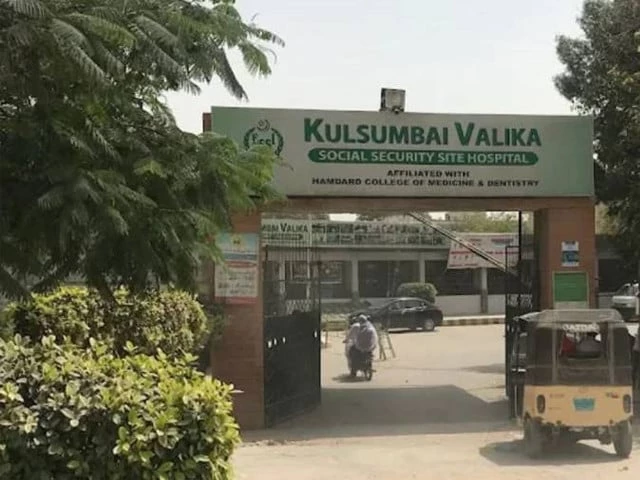
In the densely populated poor neighborhoods clustered around Valika Hospital, a quiet crisis is unfolding – one that has shattered dozens of families, searching for answers and battling a stigma as painful as the disease itself.
As the number of HIV-positive children rises to 80, parents say their lives have been turned upside down – not only because of a diagnosis they can’t explain, but also because of the rejection, fear and isolation that followed.
While authorities say all infected children are receiving treatment at antiretroviral therapy (ART) centers and have announced a 2 billion rupee endowment fund for long-term care, affected families describe a grim reality marked by treatment delays, financial hardship and deep social stigma.
The outbreak first emerged in October 2025, prompting expanded screening and an ongoing investigation. Most of the cases emerged in the areas surrounding the hospital, including Banaras, Orangi Town, SIET Zone, Itehad Town and Pathan Colony. For many parents, the biggest question remains unanswered: how their children contracted the virus.
“We both tested negative. We still don’t know how our daughter contracted HIV,” said Mehtab, father of three-year-old Uzma Naz. He said his daughter was admitted to Valika Hospital in October 2025 with a fever and underwent several tests, including a blood transfusion, during a 10-12 day stay.
“When two children in my brother’s family tested positive, I finally agreed to have my daughter tested. His result also came back positive,” he said, adding that he and his wife later tested negative.
Mehtab also alleged delays in hospital services. “Tests were ordered in the morning, but the blood sample was only taken around 4 p.m., after repeated visits to the authorities,” he explained.
Beyond the medical ordeal, families now say they are struggling with social isolation.
“Our children’s lives have been destroyed. Neighbors and even relatives are avoiding them. We want justice and proper treatment,” he said. For Ayesha Kamran, whose 17-month-old son is HIV-positive, the diagnosis changed her life. “My in-laws forced me to leave the house,” she said, adding that her husband, a daily wage laborer, risked losing his job if he missed work. “If he doesn’t work, how will we survive?
She said her son, admitted to Valika Hospital in August 2025, was diagnosed months later after another bout of illness.
“My child was without medication for two days. HIV treatment was supposed to be timely, but we couldn’t get it,” she added.
Another parent, Aftab, whose three children – aged 12, as well as her three- and eight-year-old daughter – are HIV-positive, said the stigma has been as devastating as the disease itself.
“The school asked us to withdraw our children because other parents wanted to withdraw theirs,” he explained. “In our neighborhood, children no longer play with it.”
He described instances of discrimination at social events. “At weddings, my children were forced to sit separately and were served food in separate utensils.”
“Their questions break me,” he added. “They ask: what disease do we have, why is everyone avoiding us, what have we done wrong?”
Local authorities say the scale of the outbreak could be larger than reported. Pathan Colony Union Council Chairman Irshad Khan said evidence submitted to the Sindh High Court suggests that the number of cases could exceed 100.
He also raised concerns over alleged negligence, including the use of expired test kits and poor infection control practices in the hospital’s children’s ward.
“We do not want the hospital to be closed because it serves the poor, but those responsible must be held accountable,” he said.
Khan further criticized attempts to place blame on administrative staff, arguing that procurement and clinical decisions are outside their mandate. He warned that if the investigation lacked transparency, his organization would request a judicial inquiry.
Despite ongoing investigations, families say accountability remains elusive.
The Sindh government initiated disciplinary action, suspending two doctors and 17 nursing staff, while issuing show cause notices to 37 doctors and paramedical staff. The hospital’s medical director was also dismissed.
But for affected families, the crisis goes beyond the numbers.
They continue to fight against interrupted treatment, increased spending and social stigma, while demanding answers about how the infections happened – and assurances that no other child will suffer the same fate.
“We don’t just need treatment,” one parent said. “We need justice, dignity and a future for our children.”


