
Most depends on federal support, the region’s non-tax revenue is estimated at Rs6.08b
GILGIT:
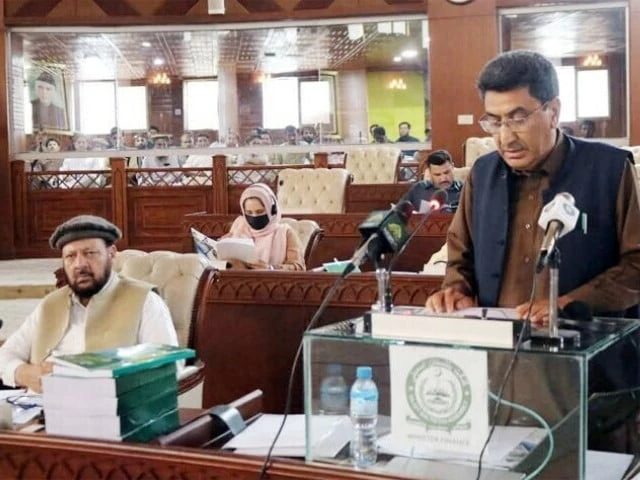
Advisor to Chief Minister Finance Muhammad Ali Akhtar on Monday presented a three-month interim budget for the financial year 2026-27 in the Gilgit-Baltistan Assembly, saying the government had opted for an interim budget instead of an annual financial plan.
Presenting the budget, Akhtar said the interim agreement aims to ensure uninterrupted functioning of government departments, continuity of public services and timely payment of salaries and allowances of government employees. He said negotiations were ongoing with the federal government on resource allocation and wheat subsidies.
According to the budget documents, the total estimated resources available to Britain in the financial year 2026-27 stand at Rs 158.54 billion, an increase of around Rs 12.23 billion from the previous financial year.
Much of the budget depends on federal support, including a non-development grant of 88 billion rupees, while the region’s non-tax revenue is estimated at around 6.08 billion rupees.
The advisor said approval had been sought for Rs20.478 billion to meet expenditure during the first quarter of the financial year, while Rs15.225 billion had been earmarked for payment of salaries and allowances of government employees.
He said Rs15 billion had been allocated for wheat subsidy to ensure continuous supply of subsidized wheat to the people, while wheat sales were expected to generate Rs3 billion in revenue. Efforts are also underway to secure additional financial support from the federal government for the grant.
Akhtar said the interim budget proposed an additional allocation of Rs 300 million for the Health Endowment Fund to facilitate treatment of deserving patients. It also earmarked Rs25 million for eradication of tuberculosis in the first quarter and Rs100 million for purchasing new ambulances.
He said 138 million rupees had been allocated to the GB Waste Management Company and 202 million rupees to local government institutions to improve sanitation and municipal services in the area.
The advisor said Rs100 million had been proposed as government contribution under the new pension policy, Rs200 million for group insurance and Rs250 million as seed capital for the General Provident Fund.


