NEWYou can now listen to PK Press Club articles!
The 2026 MLB All-Star Game may be the last one we see for quite a while – and, unfortunately for baseball fans, that’s not hyperbole.
The clock has been ticking for some time, but now a looming MLB work stoppage is upon us. The current collective bargaining agreement expires on December 1, and even that one had to jump through numerous hurdles to reach an agreement.
The 2022 season was delayed due to an owners lockout after the previous CBA expired the previous December. However, the feeling at the time among baseball pundits was that if you thought it was bad, wait until 2026.
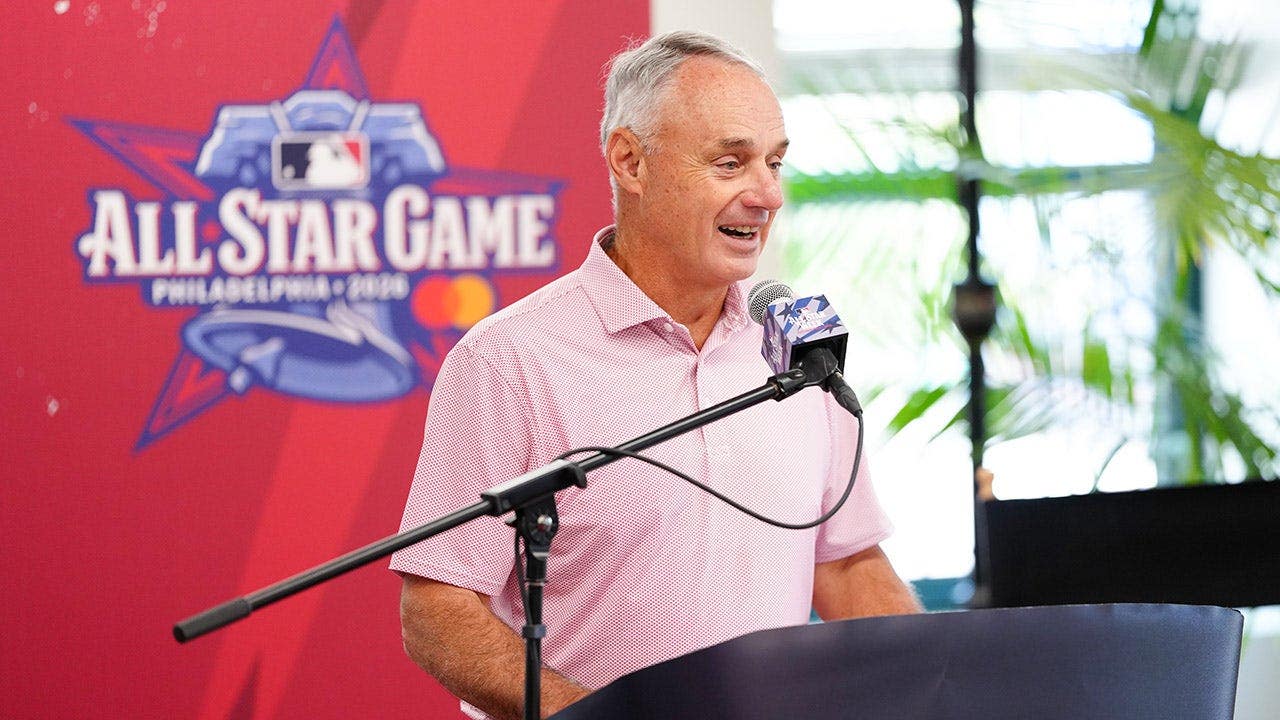
Major League Baseball Commissioner Robert D. Manfred speaks during the renovation of the 2026 All-Star Legacy Veterans Multi-Service Center at the Veterans Multi-Service Center, Monday, July 13, 2026, in Philadelphia, Pennsylvania. (Daniel Shirey/MLB Photos via Getty Images)
Well, 2026 is here, and they weren’t kidding.
CLICK HERE FOR MORE SPORTS COVERAGE ON PK Press Club
In an era of the biggest contracts in sports history, baseball is in a bind where big-market teams are grabbing players, dollars and — in recent years — titles, while small-market teams are left behind more than ever.
The history of each ripple effect dates back to before Marvin Miller even played baseball, but the writing for these contentious talks has been on the wall since the negotiations five years ago.
And with baseball potentially experiencing a fourth straight year of increased attendance for the first time since 2004 to 2007, the game can’t afford any missed opportunities that would deter fans from straying from the diamond.
So here’s everything you need to know about the negotiations, what each party wants and what could happen during the negotiations.
Salary ceiling/floor
Some would say this is all the fault of the Los Angeles Dodgers. They signed Shohei Ohtani to a $700 million contract before the 2024 season, which was the first contract in baseball to exceed even $500 million, and 98% of that deal is carried over until the end of the contract. In total, the Dodgers’ current AAV payroll is more than $440 million, a far cry from the Miami Marlins’ $81 million, with tens of millions carried over.
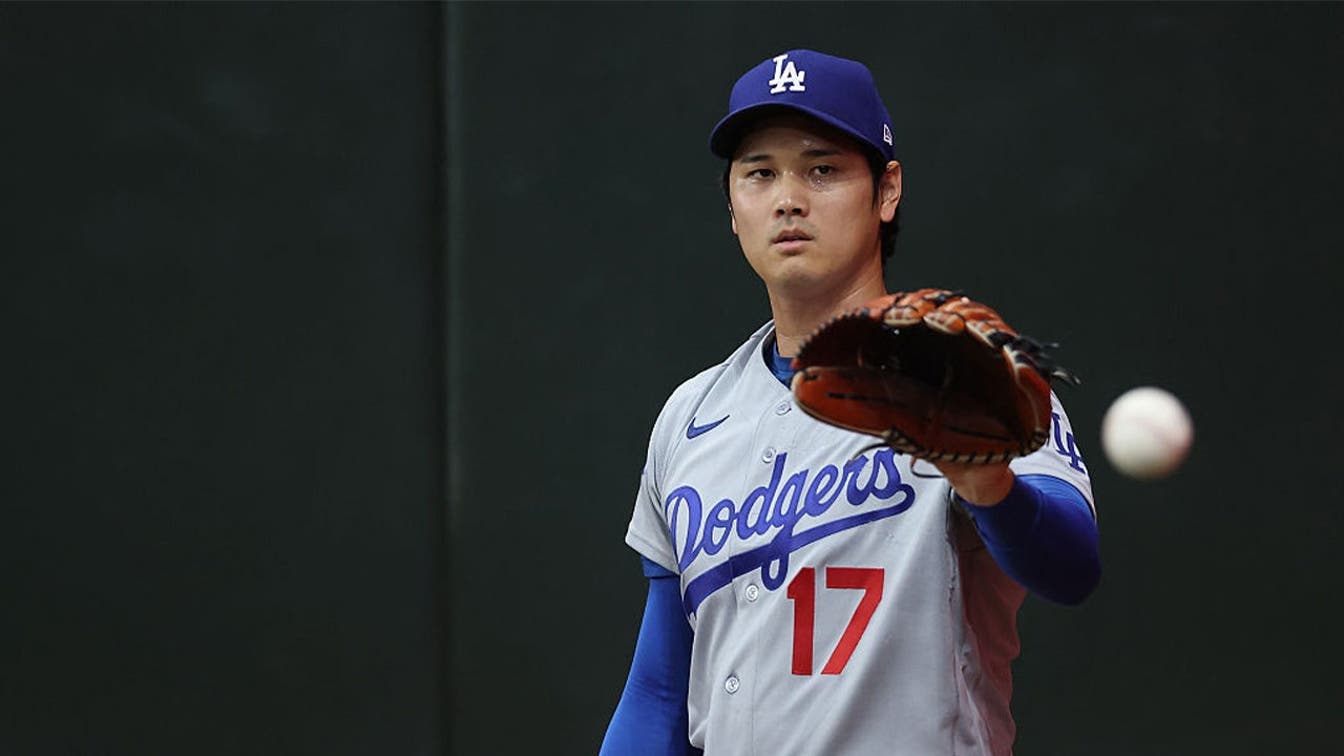
Starting pitcher Shohei Ohtani #17 of the Los Angeles Dodgers warms up before the MLB game against the Arizona Diamondbacks at Chase Field on June 3, 2026 in Phoenix, Arizona. (Photo by Christian Petersen/Getty Images) (Christian Petersen/Getty Images)
TRUMP SAYS IT’S ‘SHOCKING’ MAJOR LEAGUE BASEBALL STILL HAS NO SALARY CAP IN PLACE
In this world of insane contracts, only a handful of teams are constantly in conversations to sign star free agents. The Dodgers and New York Yankees have always been in the mix, and the New York Mets recently joined the fray thanks to Steve Cohen, who signed Juan Soto to a $765 million contract. Other teams are sometimes present, but it is normally unrealistic to consider them as real threats for these types of megatransactions.
The other camp, however, can blame small-market teams, who have multi-billion dollar owners, but their payroll is only a fraction of that. The league’s last five payrolls total just over $500 million, which is less than what the Dodgers will spend after luxury tax penalties.
For example, there are extremes on both sides: two teams don’t even have a nine-figure payroll. The Marlins’ payroll is actually about half of what it was in 2017, despite the sale of the team and everyone in the league making more money than ever. The Dodgers have already committed more money to 2030 than 12 teams have this season.
The league wants a salary cap, and few things are going to stand in its way.
“I have an ownership group that is more united than any other group since I’ve been in baseball,” MLB Commissioner Rob Manfred said Tuesday before the All-Star Game.
Manfred added that owners are “just listening to our fans” regarding the salary cap and said it “defies human experience…to think that the bottom of the ladder [payroll] The gap has the same chance of winning the high end. » Owners are even willing to share their local television rights if there is a cap.
“What our fans in a number of our markets are telling us, more than half of them, is that there is a lack of competitive balance in the game. And everything we are proposing is aimed at addressing that fan concern,” Manfred said. “I believe that for this game to reach its full potential, we must continue to address the concerns of our fans, particularly the concerns that are at the heart of our mission, which is competitive balance. We must ensure that fans in the markets at the start of the season have a realistic belief that their team has a chance to win.
“I think we need a system where fans, especially in smaller markets, can have some hope that players recruited and developed by their organizations can actually stay there through free agency. And honestly, I think we need a system where there’s a more robust free agent market. So if you don’t want to go to New York or Los Angeles, you have a realistic opportunity to get a viable free agent contract.”
The players, for their part, will not budge. A salary cap, which has never existed in the league, is non-negotiable. They want owners to spend a minimum and have no maximum.
“The salary cap is the ultimate excuse not to compete. It’s the ultimate excuse for an owner to say, ‘Well, I’d like to make the team better, but you know I can’t,'” MLBPA interim executive director Bruce Meyer said Tuesday. “Salary caps are bad for fans. Salary caps prevent teams from doing things they believe are in their best interest to improve the team.”
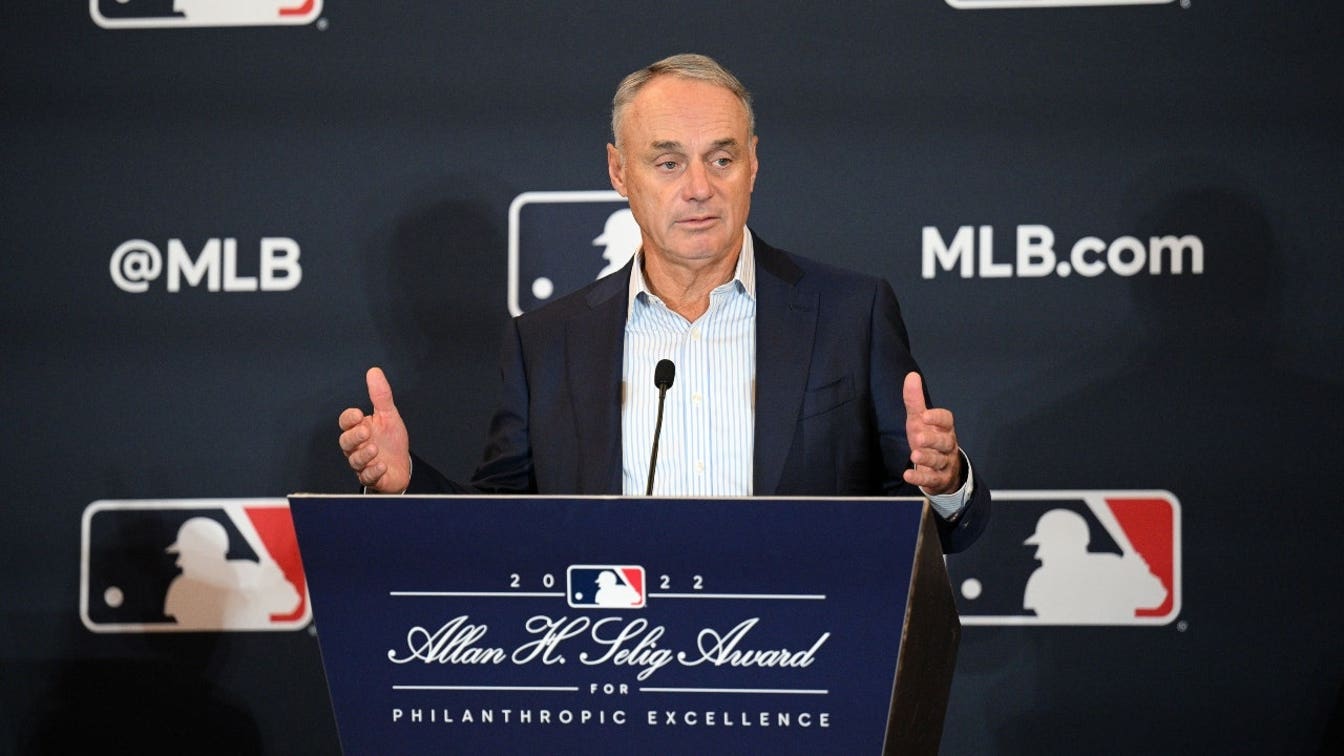
MLB Commissioner Rob Manfred presents the Allan H. Selling Award for Philanthropic Excellence during the 2022 MLB Winter Meetings at the Manchester Grand Hyatt. (Orlando Ramirez/Imagn Images)
MLB COMMISSIONER SAYS TRUMP ‘INTERESTED’ IN MLB CBA NEGOTIATIONS BUT WILL ‘PASS’ ON POTENTIAL HELP
“Every baseball team can afford to compete, many choose not to,” Meyer added. “For me, that’s the biggest problem right now.”
Service time/free agency
Players want, and owners are willing to let them, become free agents sooner. Currently, players are generally under team control for six years, barring service time manipulation (more on that soon).
The first three years are pre-arbitration, meaning players receive the league minimum each season. Then, in each of the next three seasons, the player and team agree on one-year contracts, but these discussions can become contentious.
Now teams can turn those six years into almost a full seven years. A famous example is Kris Bryant, who in 2015 was optioned to the minor leagues for less than two weeks in order to allow the Chicago Cubs to gain almost an additional full season of control, prompting a lawsuit.
The current CBA attempts to combat this tactic whereby if a prospect starts the year on the Opening Day roster and wins certain major awards, say Rookie of the Year, that team could receive draft picks. Additionally, if a player finishes in the top two in Rookie of the Year voting, he will get a full season of service regardless of when he is called up. Pre-referee players can also earn more money based on their success during the season.
But some teams are always willing to take risks to try to keep their players longer. Players’ desire to become free agents sooner, especially for those who don’t reach free agency until after age 30, will certainly help their case.
MLB owners recently proposed a salary cap for the first time since 1994, and we all know how that turned out. They also proposed strict contract limits, capping contract lengths at six years at 16% of the proposed salary cap for players re-signing with clubs and five years at 15% for those signing with different teams. This would be a pretty major change, as there have been 29 contracts in MLB history totaling 10 years or more, and it’s been almost 60 years since Al Kaline signed the first seven-year contract.
The players, on the other hand, recently proposed a roster of 28 players instead of the normal 26 for the first 15 days of the regular season in order to continue to avoid any service time manipulation.
If long-running speculation is correct, owners will likely cut players if a deal isn’t reached. As long as players refuse a salary cap, the start of next season is at risk, to say the least.
Manfred, however, remains “optimistic”.
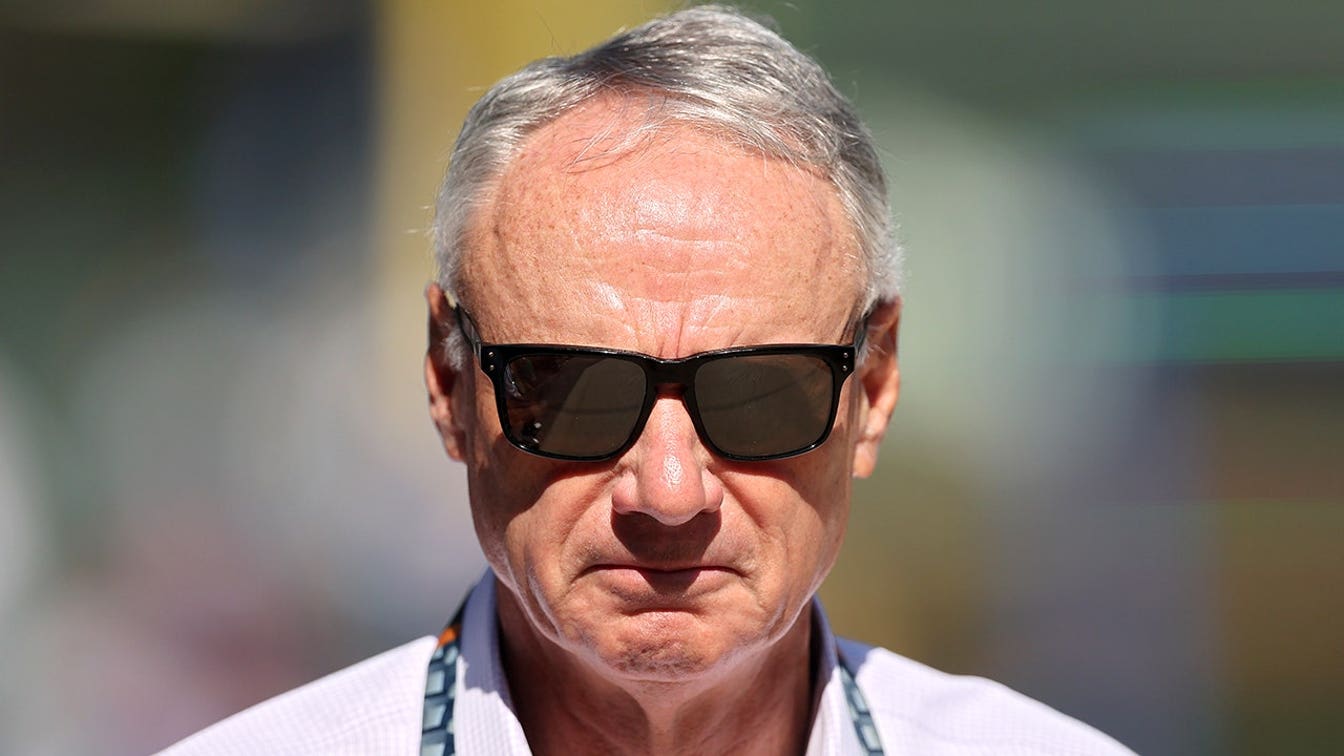
MLB Commissioner Rob Manfred looks on before Game 1 of the National League Wild Card Series between the San Diego Padres and the Chicago Cubs at Wrigley Field in Chicago, Illinois on September 30, 2025. (Michael Reaves/Getty Images)
CLICK HERE TO DOWNLOAD THE PK Press Club APP
“I sincerely believe that if people engage in the process, solutions will be found,” he said.
Baseball hasn’t lost a game since 1995, with the season having to be shortened by 18 games due to the players’ strike that cost the 1994 playoffs. But if neither side is willing to budge on its top priority, an unfortunate history could be made at a time when baseball is once again thriving.