
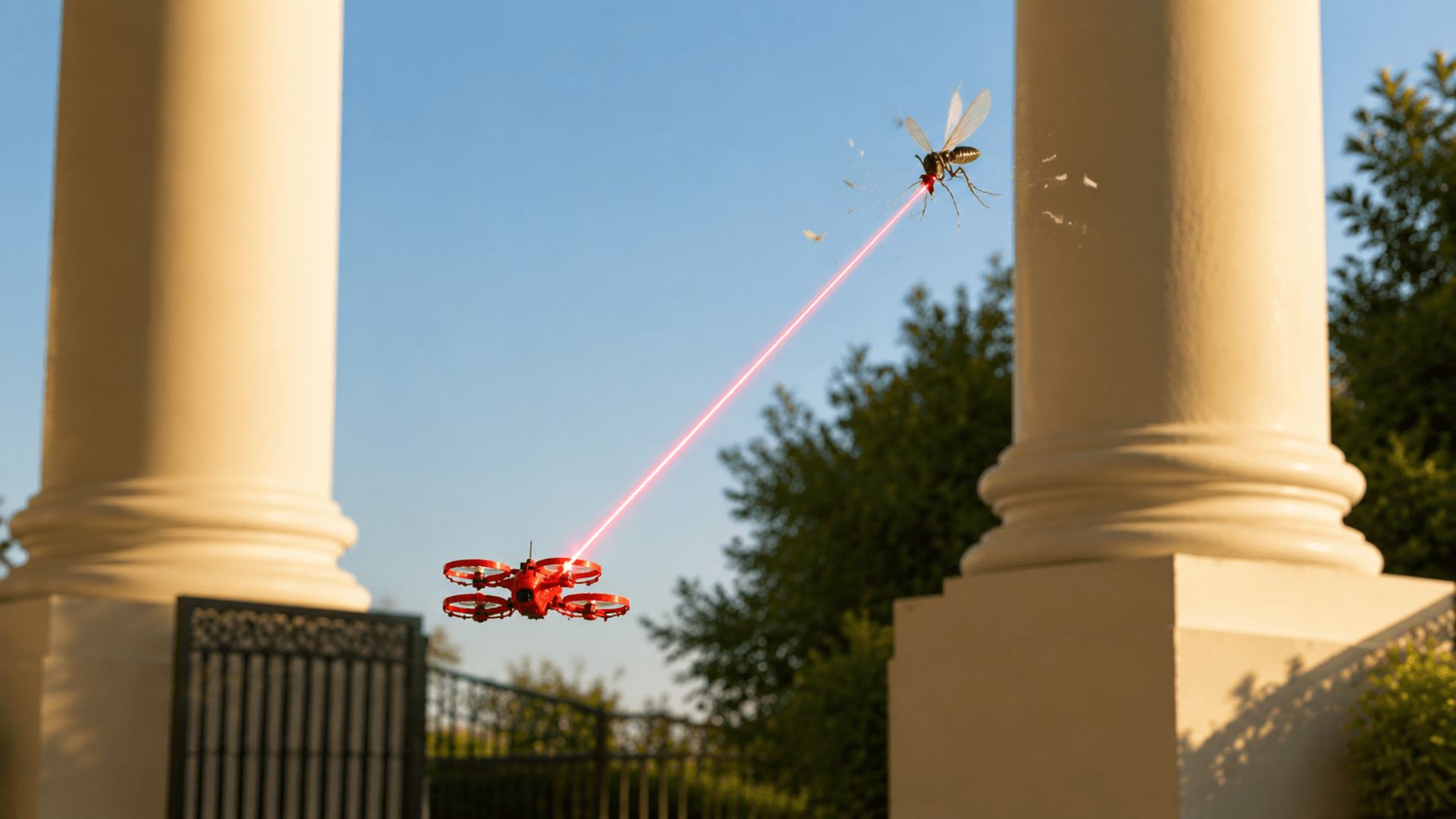
- Small drone uses sonar and AI to hunt mosquitoes autonomously
- Former MBDA engineer develops insect-killing drone with missile-inspired technology
- Tornyol drone detects small objects using extremely low transmission power
Alex Toussaint, a former engineer at missile manufacturer MBDA, has built a 40g autonomous drone that hunts and kills mosquitoes using AMD ultrasonic sonar.
The system combines phased array microphones with onboard AI to detect insects in mid-flight, then intercepts them before they enter a designated area.
His Y Combinator-backed startup Tornyol prices the current prototype at $1,100, although mass production could eventually reduce that cost.

Results of the first tests
In an initial test, the company reported that the drone detected a 2mm-wide plastic ball 30 centimeters away using just 1/1,300th of the intended transmitting power.
Toussaint said the result validated the signal-to-noise budget and brought the project closer to its stated goal of tracking mosquitoes to three meters.
The team also announced its first air-to-air kill, when the autonomous drone intercepted a flying moth during an outdoor test flight.
Toussaint called it “a big step toward completely eradicating mosquitoes,” describing the step as essential to his company’s stated long-term mission.
To operate the drone, a user first sets the protection zone on the base station map before starting the mission, requiring no installation or wiring.
A single Tornyol unit is designed to protect outdoor or indoor spaces covering up to 5 acres.
The battery life of the current prototype is three minutes of flight time on a single charge before recharging.
Once the battery is low, the drone automatically returns to its charging station and begins charging.
The recharging process takes approximately 30 minutes, after which the unit automatically resumes its patrol schedule.
For continuous protection throughout the day, the system intelligently manages and adjusts patrol schedules over time.
Choice of hardware, deployment and design
The drone uses TDK InvenSense T3902 MEMS microphones for its sonar array and consumes less than 5W of power, within USB 3.0 limits.
The microphone array relies on an FPGA to process incoming acoustic data from dozens of sensors in real time.
Current estimates suggest the prototype could be mass-produced for a few hundred dollars, although a scaled-down version could cost less.
Toussaint’s experience at MBDA, a European missile manufacturer, suggests that the underlying sonar and interception system could extend to military applications.
Small autonomous drones capable of acoustic detection and aerial interception could intercept enemy drones just as they intercept mosquitoes.
Neither Toussaint nor Tornyol have so far publicly discussed the defense, surveillance or dual-use potential linked to the underlying sonar technology.
On Tornyol’s website, the drone is marketed as a quiet, chemical-free alternative to pesticides, with a refundable $100 deposit reserving a spot.
Buyers can choose a subscription plan, which can be canceled at any time, or a one-time purchase that grants ownership outright with no recurring fees.
Owned units come with a one-year warranty covering accidental damage, while subscription units are replaced free of charge if a drone breaks down.

Follow TechRadar on Google News And add us as your favorite source to get our news, reviews and expert opinions in your feeds.


