
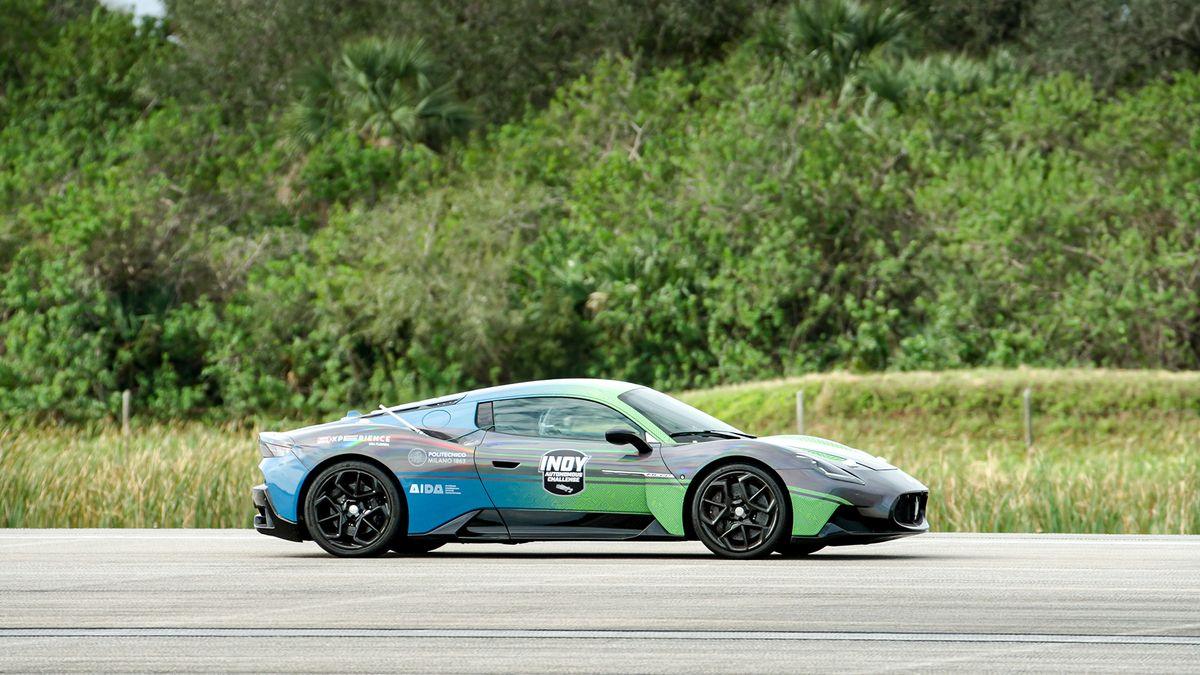
- Maserati MC20 is equipped with many Lidar, cameras and sensors
- The demonstration vehicle hit almost 200 MPH at Kennedy Space Center
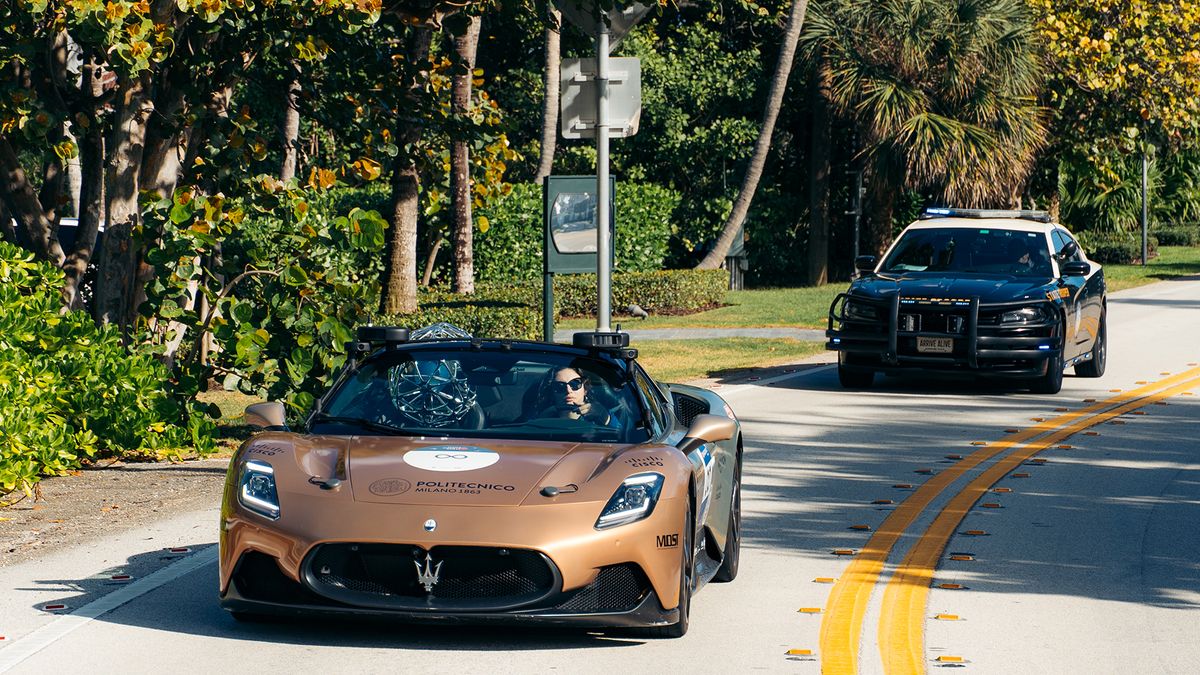
- A second MC20 Cielo Autonomous has come down to the streets of Florida
Maserati has just established a new autonomous speed record in Kennedy Space Center in Florida, while his magnificent MC20 Dead Supercar struck 197.7 MPH without human driving.
The initiative is a partnership between Indy Autonomous Challenge (IAC) and Politecnico Di Milano, the largest scientific scientific scientific university in Italy, the pair aimed at testing the very limits of equipment, computer power and artificial intelligence where it relates to advanced autonomous driving levels.
The intelligent crew of Politecnico Di Milano, which is part of a specialized team only in autonomous driving at university, managed to hit 192.8 MPH in his IAC AV-21 racing car in 2022, but returned to one of the longest tracks in the world at 15,000 feet (2.8 miles) to beat it.
According to the team, the push from the MC20 to nearly 200 MPH without a driver behind the wheel “demonstrates the robustness and the reliability of the algorithms developed for autonomous driving”, scientific director of the project Professor Sergio Matteo Savaresi explained.
To watch
To demonstrate more how far the team has arrived in terms of autonomous driving capabilities, the team also brought its Maserati MC20 Cielo Convertible, which had been specially equipped with Lidar technology, camera and sensors.
This deposit model managed to complete about 60 km (around 37 miles) of the famous 1000 Miglia Road race in Italy two years ago without driver at the wheel.
He then paraded in the streets of the most east American state during the 1000 Miglia in Florida to present “the excellence of Italian research” according to the team.
That said, the images reveal that a human should be at the driver’s seat. Perhaps the organizers were worried that Tesla owners become jealous.
From the Hippodrome to the streets
Far from being simply an impressive autonomous speed record (but not an officially sanctioned Guinness World Record), the realization of Kennedy Space Center helps to push software and a-driver robotics to the limits.
Paul Mitchell, CEO of Indy Autonomous Challenge and Aidoptation BV claims that by transitioning a tram, rather than a race machine specially designed with previous recording attempts, it helps “transition learning of autonomous races to allow a safe, secure and durable high -speed and high speed high -speed mobilization”.
At speeds of nearly 200 MPH, software reaction times must be sharp razors and, perhaps more important, super reliable.
The team says that if it can create a system that saves safely on this very illegal type of speed, it can translate some of the results to help improve urban mobility at low speed.


