
There seems to be a fairly important elephant in the smartphone industry right now. The tastes of Samsung, Apple and Google invest massively in the development (and marketing) of AI software, but consumers seem less than interested in a technology that has not yet been proven for their daily life.
At least, this is the impression that we get readers’ comments, and a recent survey of more than 2,000 iPhone users and Samsung Galaxy found that 73% of ephemeral respondents and 87% of co -owners respond that AI does not add to their smartphone experience. This must be difficult to read for technology leaders who collectively bet hundreds of billions on a future powered by AI.
Of course, the adoption takes time, and Samsung, for its part, is committed to the long game. At the MWC 2025, I spoke to Annika Bizon, vice -president of the mobile experience (MX) of products and marketing at Samsung UK, which spoke of “the number one” of the company “of the company with Galaxy AI – and whose own adoption figures comb a more optimistic image.
“Last year, we launched Galaxy AI on the market, and we now have more than 5 million people who regularly use it in the United Kingdom. It took eight years on the internet to reach this figure, “said Bizon.” Once you start using something, it becomes behavior and our work is to change their behavior, so that people can see the advantages. “”
“Now,” said Bizon, “you can only change behavior if people see an advantage. SO [that’s the] Objective number one. The second thing for us: Galaxy Ai is our hero messaging because we want to have this space and bring credibility to this space. But we also have to demystify it, right? Because AI means a million things. Look around you today [at MWC]. What we say is: AI facilitates the banal. It makes you more creative, giving you time to do the things you love. However, you cannot forget that people buy a phone for the camera, battery life, durability. These are principles that will be seated below each product we put on the market. »»
It is therefore clear that Samsung has not forgotten the importance of equipment for consumers – despite the dizzying number of ads linked to Galaxy AI that you have probably seen in the past year. AI is Samsung’s “hero messaging”, but it’s a question of synergy, not prioritization.
“If you think of hardware and software, they work together,” said Bizon. “The AI optimizes the battery of your phone, the AI optimizes the camera on your phone – you can always iterate the equipment, but when you start adding the AI, you really wear the whole experience to another level.
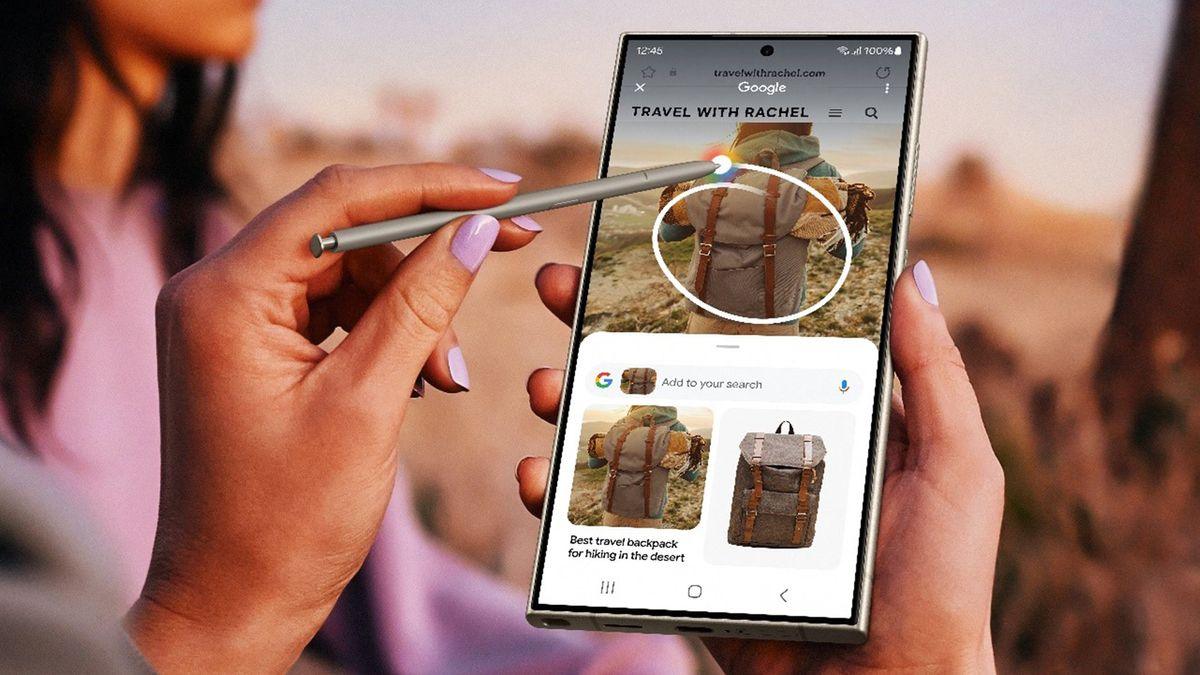
“”[Our customers are using AI] Because it makes life easier for them, be it the circle to search, a live interpreter or the fact that I can reserve a restaurant by my voice and send an invitation directly to my friend’s calendar. It’s about saving time. If you save time and have the best equipment [working alongside] The best software, you start to really change the customer experience. And that’s the important thing. Working in a way that technology works for you rather than working for technology. Ai is the space where we see all our [technology] Gather – it’s like a PA in your pocket.
Democratization is the key to adoption
When the AI based on smartphones was the reserve of the best phones about a year ago, companies now pivoted to offer an AI to almost all stages of the price scale.
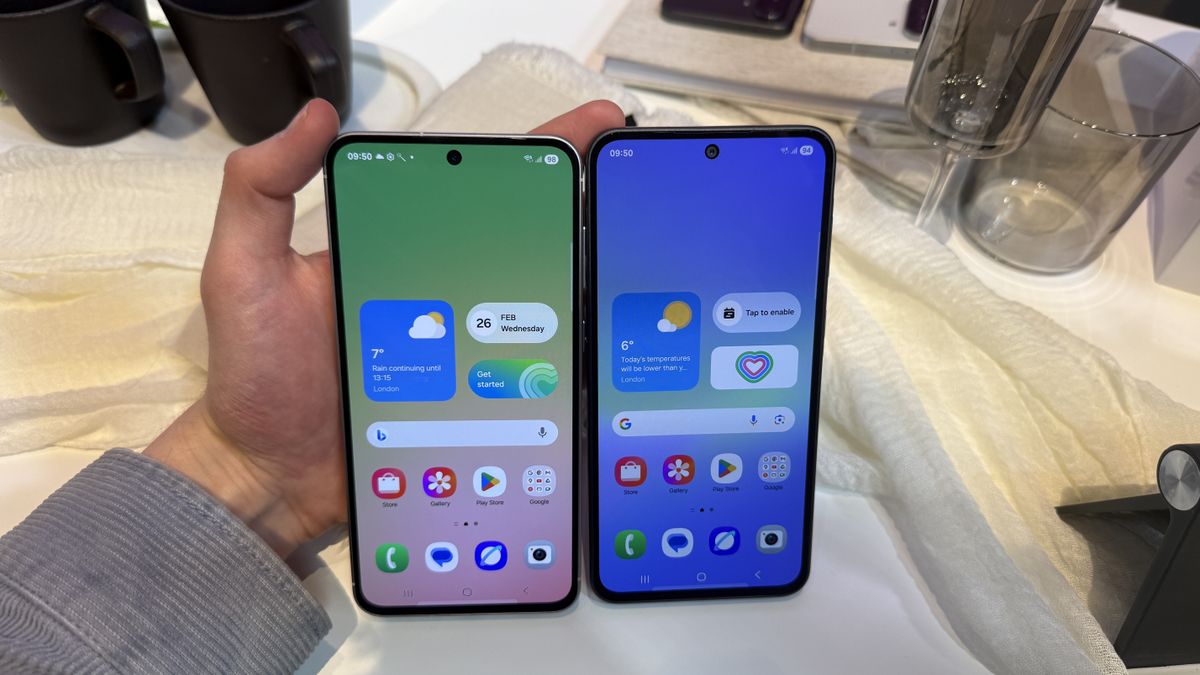
Google, for example, offers the same IA features on the Google Pixel 8A for the budget as on Google Pixel 9 Pro Premium, while Apple recently made its debut on the iPhone 16th compatible Apple Intelligence, reducing the cost of input as a result of AI features. The abolition of the exclusivity of the AI will allow these companies to refine and test stress their AI features in a way that is simply not possible with a limited sample size, and Samsung, on credit, realized earlier than most.
After launching Galaxy AI in January 2024 on the Galaxy S24 series, Samsung deployed the same features to the Galaxy S23 series two months later. Galaxy AI compatibility now covers everything, from the ultra high -end Samsung Galaxy S25 to the mid -range Galaxy A55.
We have more than 5 million people using Galaxy regularly in the United Kingdom.
Annika Bizon, Samsung
“The AI for everyone is really important for us,” said Bizon. “Everyone has the chance to use AI. Personally, I am really proud of the fact that we took the step last year to take [Galaxy AI] On previous generation devices – it’s more than 200 million devices worldwide, and we have given people the opportunity to live it. You can only get adoption when you have a mass market with which to do it. »»
In addition, the figures behind the AI are not all bad. The aforementioned survey results reflect the current feeling of smartphones based on smartphones, but recent research by Techradar Publisher Future suggest that people are increasingly exchanging traditional search engines for AI tools such as Chatgpt.
Consumption habits are Change, and although Galaxy Ai may seem gadget now, it will not take long before millions of smartphones users really use their voice to make restaurant reservations. Consider this: cars, laptops and cheeseburgers were all perceived as stupid modes when they originally arrived on the market. Now they are crucial to the world economy.


