
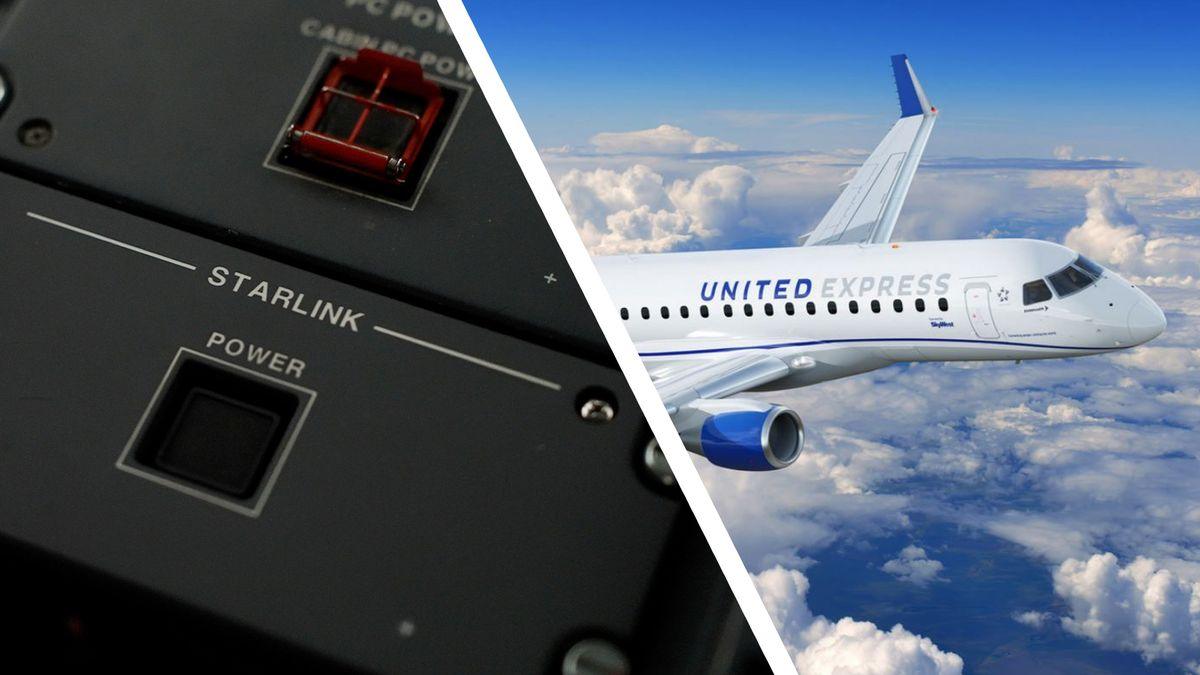
- United Airlines installed Starlink on its first regional plane
- The installation time is only four days by plane against more than 10 days for other Wi-Fi systems
- The airline plans to install Starlink on more than 40 planes per month from May
In January, before the 2025 consumer electronics fair, United Airlines announced that it accelerated its deployment and the installation of Starlink through its fleet. This was good news because Grant Milstead, vice-president of digital technology for the airline, told us that it was “in a way to allow the living room in the sky experience”.
How? Well, once Starlink is installed on the plane of United Airline, the result is free and fast Wi-Fi during the ground and in the air as long as you are a member of MileagePlus, which is free to join. United Airlines accelerated its planned deployment by confirming that the first commercial flight was expected on an Embraer E175 in the spring and that all its regional fleet would be covered by the end of the year. Its first main plane would also have installed Starlink by the end of the year.
Now, United Airlines has managed to install Starlink on his first regional plane, has learned new lessons and has confirmed certain theories about what this process would look like. And for all those who steal United Airlines, this is excellent news because you are a step more to obtain this stronger and more stable connection in the sky.
The most significant learning is that the installation of the starry bond antenna, wiring and wireless access points inside the plane cabin is much shorter than a typical antenna for the Wi-Fi of traditional airlines. United says that it takes about eight hours to install the Starlink equipment, which is about 10 times faster than the Wi-Fi equipment in current flight (although this eight-hour window does not include destallation or test equipment).
And here is the best part for me as a person who tends to pilot United Airlines, and for all the others who do it – you can expect at Wi -Fi speeds up to 250 Mbps on these regional planes, which is 50 times faster than current Internet speeds. This means that when you are connected, you will not have to worry about missing a text – even with images – be able to browse the web, broadcast a show or be productive and do a little work during the cruise in the sky. For my part, I can’t wait to put this to the test.
In addition, the Starlink antenna and the corresponding equipment weigh 85 pounds and are directed electronically, which means no mobile parts inside. This facilitates movement and less likely to need maintenance. It is also much lighter (other antennas weigh more than 300 pounds) and United Airlines says that “means that the plane requires less fuel to operate than with other flight suppliers.”
The faster installation process also means that the plane will be out of service for a shorter period. Currently, Non-Starlink Wi-Fi installations for United take more than 10 days, which means that the plane will not fly for this period. United Airlines expects the installation and the Starlink tests to take only four days, which includes the deletion of the old equipment. Remember that it is outside on the hull of the plane and inside under panels, where the access points are.
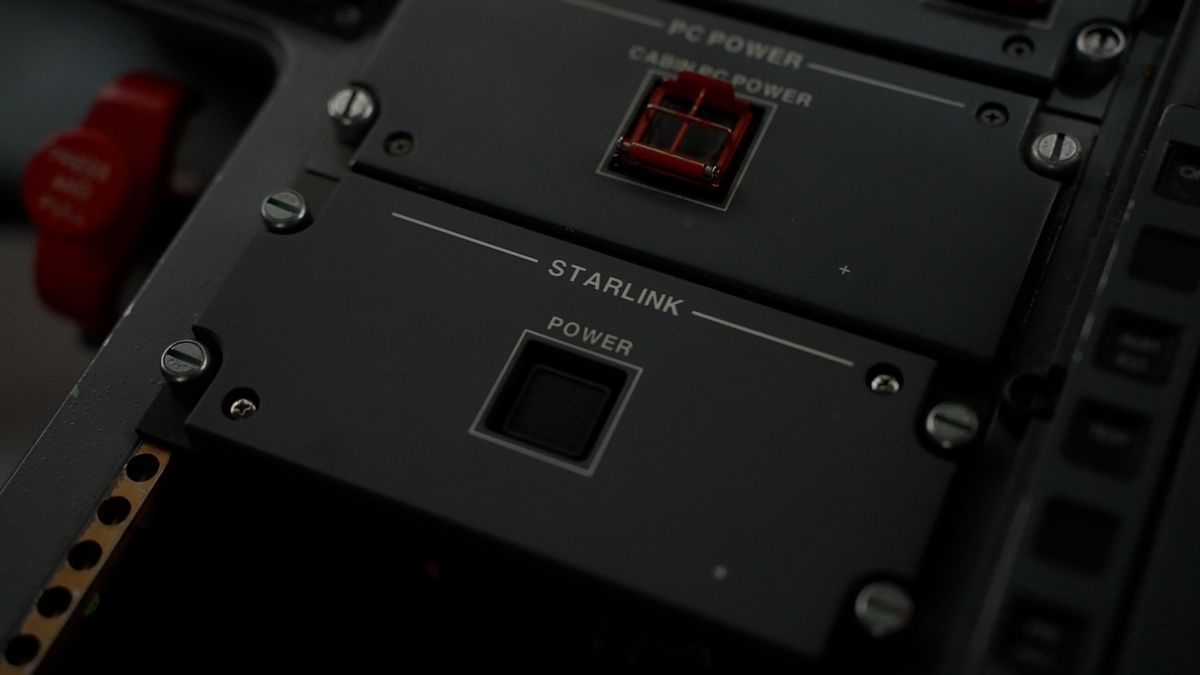
Here are the steps in the installation process as it represents for the regional planes of United Airlines:
- Uninstall the existing Wi-Fi system.
- Install the Starlink system, which consists of the main antenna, an internal strengthening structure, wireless access points for the cabin and a power supply.
- The installation team tests the entire system before and after closing the interior of the plane.
It is clear that United Airlines still works on this accelerated calendar and is impatient to obtain the Internet powered by Starlink to more passengers, starting with regional planes. Nor is it a small set of leaflets – while the whole fleet of United Airlines exceeds 1,000 planes, the regional fleet exceeds 300 planes.
With one of these planes already made, United Airlines plans to install Starlink on more than 40 planes per month from May before wrapping at the end of 2025. The goal is to cover all regional planes, then at least one main plane.
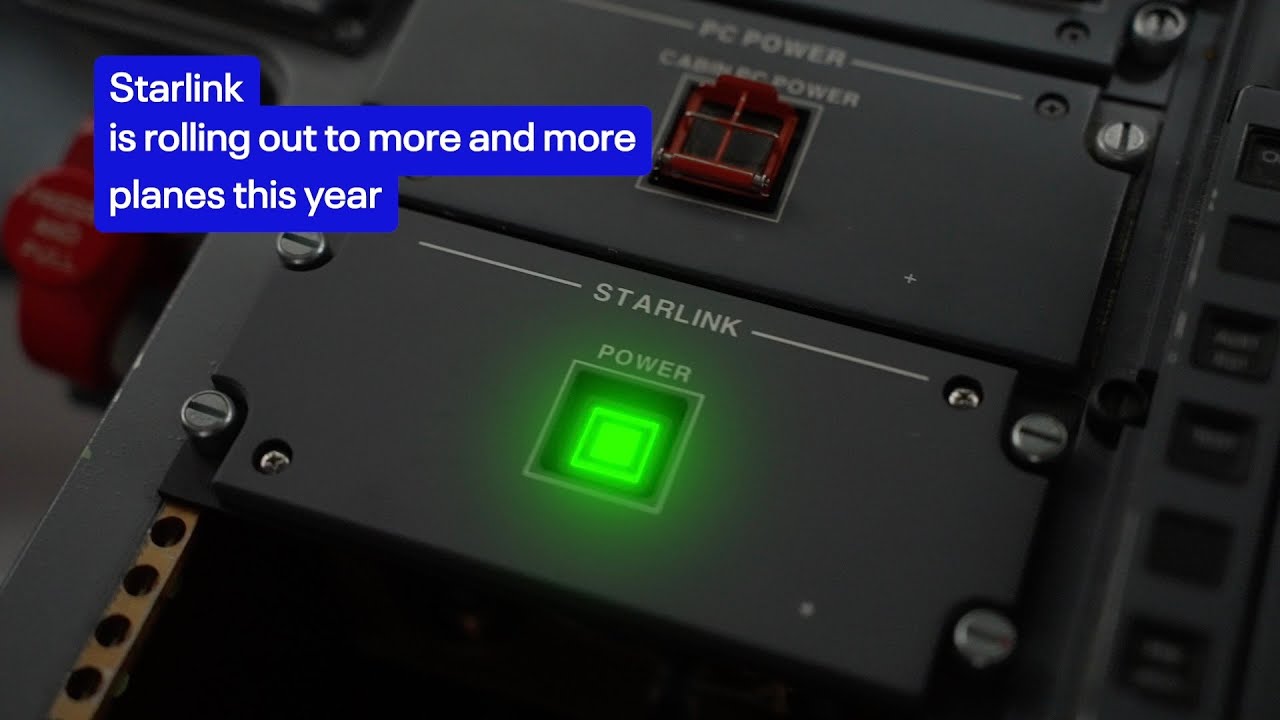
To watch


