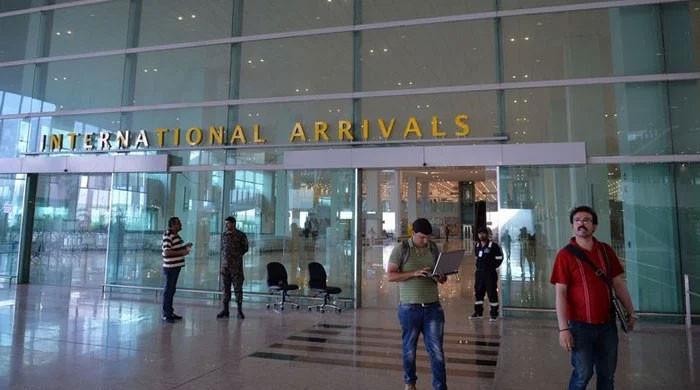
- The State Department urges citizens to “reconsider” trips to Pakistan.
- Warns that being close to the demonstrations can make a meticulous examination by the authorities.
- Consulting problems “level 4” to the Americans of KP’s visit, Balutchistan.
The United States Department of State has warned its citizens against trips to Pakistan urging them to reconsider such a decision due to the risk posed by “terrorism and the potential of an armed conflict”.
The “level 3” travel advisor issued by the Consular Bureau of the State Department warns that “terrorists can attack with little or no warning, targeting transportation centers, markets, shopping centers, military facilities, airports, universities, tourist attractions, schools, hospitals, places of worship and government facilities”.
Pakistan, according to a global report in the 2025 terrorism index, has become the second country most affected by terrorism in the world in 2024.
Placed in second place from its fourth position previously, the country experienced an alarming increase of 45% of deaths linked to terrorism, the total number of victims going from 748 in 2023 to 1,081 in 2024 – one of the most steep increases worldwide.
Meanwhile, the number of terrorist attacks has more than doubled from 517 in 2023 to 1,099 in 2024, which also marked the first year when the attacks exceeded the mark of 1,000 since the creation of the index.
Earlier this week, at least five soldiers and 13 civilians were martyred in a terrorist attack on the canton of Bannu in Khyber Pakhtunkhwa, with security forces eliminating the 16 terrorists involved.
The opinion of the State Department also indicated that the safety environment of Pakistan remains fluid, sometimes changing with little or no notice.
“There are greater security resources and infrastructure in major cities, in particular Islamabad, and security forces in these regions may be more easily able to respond to an emergency compared to other regions of the country,” he said.
In addition, the United States government has also warned that being close to a demonstration could derive a meticulous examination from the Pakistani authorities, as the Americans were detained for participating in demonstrations and to publish content on social networks perceived as a criticism of the Pakistani government.
Noting that the staff of the American government in the country had to use armed escorts and armored vehicles to travel in certain parts, the state which advised American nationals;
- Check the local media for the breakdown of events. Be ready to adjust your plans.
- Vary the travel routes and timing.
- Stay aware of your environment, in particular around public procurement, restaurants, police facilities, places of worship and government and military institutions.
- Avoid demonstrations and crowds.
- Have evacuation plans that are not based on the help of the American government.
- Keep up -to -date and easily accessible travel documents.
- Get full medical insurance that includes medical evacuation.
- Review local laws and conditions before traveling.
- Share important documents, connection information and contact points with relatives.
- Develop a communication plan with your family, employer or host organization.
- Register for the Intelligent Travelers Registration Program (step) to receive security alerts and facilitate the location of an emergency.
- Review the country’s security report for Pakistan.
- Prepare an emergency plan for emergency situations.
- Visit the CDC page for the latest information on the health of travel related to your trip and return to the United States.
‘Don’t travel’
In addition, travel opinion – has a “level 4” hike for Balutchistan, Khyber Pakhtunkhwa and the control line (LOC) with India – strictly warns American citizens against travel in these two provinces and the Pakistani border region.
Stressing that attempts at assassination and kidnapping were common, the state department cited attacks on civilians, the security forces and the functions of the government by “active terrorist groups”.
The warning must be interpreted in the light of the statistics of the World Terrorism Index, which show that the two provinces – which also share a border with neighboring Afghanistan – represented more than 96% of terrorist attacks and deaths in Pakistan in 2024.