
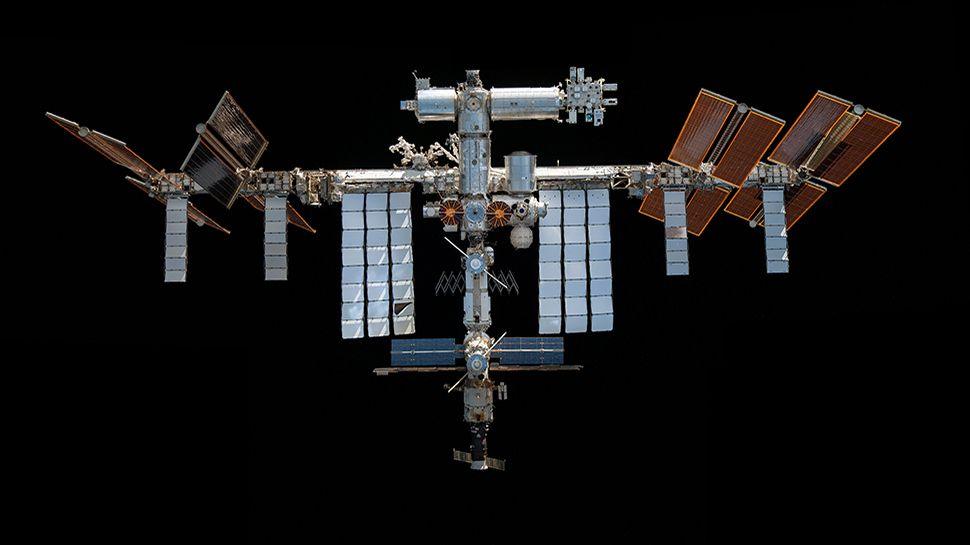
- Red Hat and Axiom space plan to send an orbital data center at the ISS
- Axdcu-1 will perform AI, cybersecurity and cloud computing tests in space
- The objective is to provide secure and low latency treatment outside the world
It seems that space is really the next border for data centers. We recently reported that Lonestar was preparing to send the first physical data center (in fact a RISC-V processor with an SSD Phison running Ubuntu) to the Moon, after the company’s previous success in the test of the first data center defined by the software in the world on the International Space Station (ISS).
Now Red Hat of IBM has announced a link with Axiom Space to send a data center at ISS in the spring of 2025. The Data Center Unit-1 prototype (AXDCU-1) will be fueled by Red Hat Device Edge, a quality version of the quality of the Red Hat Entreprise Linux platform and the Red Hat Anshift platform.
AXDCU-1 will test the applications in Cloud Computing, AI / ML, data fusion and spatial cybersecurity on the space station while demonstrating the initial capacities of the Orbital Data Center (ODC).
Data processing in space
“The processing of out -plane data is the next border, and Edge Component is a crucial element,” said Tony James, chief architect, science and space, Red Hat. “With Red Hat Device Edge and in collaboration with Axiom Space, the mission partners based on earth will have the necessary capacities to make decisions in real time in space with greater reliability and consistency.”
AXDCU-1 is one of the Axiom Space work to develop a space infrastructure and will make it possible to process data closer to world sources, including the spaceship and satellites. The objective is to support a safer and faster decision -making in space.
“We are delighted with the possibilities that this collaboration with Red Hat allows for the ODC infrastructure and the future of space operations. The infusion of earth quality cloud solutions in ODCs will allow users to transform and improve the land workload into orbit while taking advantage of the lower latency and increased security inherent in ODCs, “said Jason Aspiotis, global data and security director in the Axiom space.
The Axiom space indicates that use cases for ODCs include data processing in space for satellites, AI / ML training, cybersecurity, autonomy, space meteorological analysis and off -plan backup for the critical infrastructure of the earth.


