
Imagine a world where each dollar you spend is followed, approved or refused in real time by a government agency. You try to send money to a friend for a political donation, but the transaction is blocked because the beneficiary is on a government “surveillance list”. You buy a critical book from a powerful politician and your account is reported for examination.
This future dystopian seems scandalous, but it is the logical end point of a fully controlled and monitored monetary system for which certain American policy decision -makers recommend. Its defenders argue that such a system of the government-Romiscient would prevent crime. In reality, it would destroy the main freedoms of privacy and financial autonomy. Stablecoins are an existing alternative to this dystopia. They are both a major financial innovation and a rampart against rampant financial authoritarianism. The US Congress must support this technology, because the Senatoric Banking Committee weighs legislation to give clarity to industry and its customers.
Stablecoins, digital currencies fixed at the value of traditional currencies such as the US dollar, offer the advantages of cryptocurrency – fast, inexpensive transactions, without borders and programmable – without the volatility of asset prices like Bitcoin. They are generally supported 1: 1 with equivalents in US dollars and cash, ensuring stability and confidence. Their programmability allows the execution of transactions automatically when the conditions specified are met, unlocking enormous automated financing potential, the efficiency of the supply chain and world trade.
Senators through the American political spectrum, which include the current cases of technology use and the vast future possibilities that we cannot yet imagine, have proposed thoughtful legislation to guide regulations that will promote innovation while protecting consumers. This collaborative approach reflects an understanding that stablecoins could revolutionize global finance, improve financial inclusion and preserve the domination of the US dollar in the digital age.
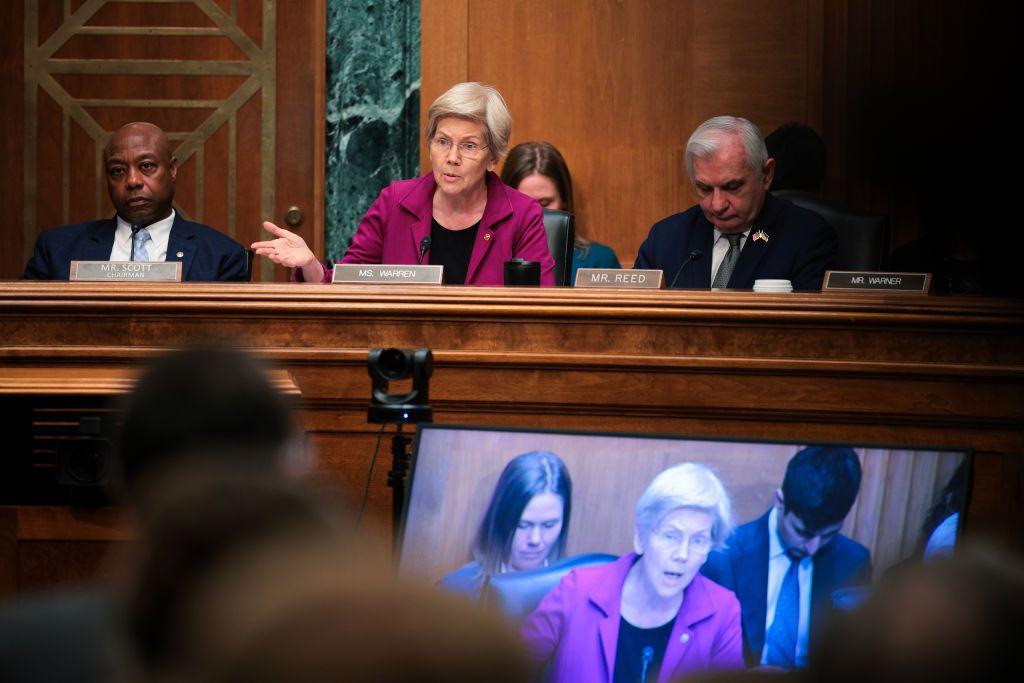
Unfortunately, some senators, in particular the senator Elizabeth Warren (D-MA), are strongly opposed to this progress. Rather than embracing innovation, it pursues legislation that would stifle stablecoins to their childhood. Senator Warren paints stablecoins as an illicit activity tools, saying that they mainly facilitate fraud, drug trafficking and terrorist funding. Its characterization is not only inaccurate – it is dangerously misleading.
The data directly contradict the statements of Senator Warren. Multiple reports of blockchain analysis companies systematically show that illicit activity represents a tiny fraction of stablecoin transactions – often less than 1% of the total volume. In fact, traditional cash flow is much more frequently used for money laundering and illicit trade than stablecoins. Blockchain technology, with its large permanent and transparent book, actually makes an illegal activity easier to follow and continue than crime in cash.
The vision of the ill -informed world of Senator Warren leads her to plead for a closed and controlled financial system – that in which each transaction is examined, private financial activity becomes impossible and access to financial tools is closely controlled. In addition to being a morally reprehensible invasion of privacy, its conception would be operationally impossible to implement.
This would also weaken the global domination of the dollar, because emerging economies and developing countries would turn to other digital currencies which are easier to access and use. Its constraints could not only hinder the development of a new important technology, but also disturb and harm the Americans and ordinary companies, and people around the world, who today use stablecoins to move the value on the Internet as easily as the sending of an email or an SMS, often to a fraction of traditional costs. For example:
- Large American companies such as Visa and Paypal use stablecoins to pay certain cross -border payments, reducing the payment times from days to a few minutes and reducing costs.
- By making dollars the default currency of the digital economy, Stablecoins strengthen the role of the dollar as a global reserve currency.
- The increase in global demand for stablescoins denominated in dollars increases the demand for US dollars and cash securities, helping to finance government loans at lower rates.
- In countries with high inflation or capital control, the stablecoins offer ordinary citizens a safe and dollar savings option, protecting their wealth from economic poor management.
- Migrant workers who send money at home can do so more quickly, at low cost and more reliable with stabbed than through traditional payment services, which often charge exorbitant costs.
The Warren Vision rejects the open, public and universally accessible system under development today – a system where individuals and businesses can transform freely, without the need for the authorization of banks or governments. Fortunately, there is still hope for a balanced regulatory approach.
The Senators Bill Hagerty (R-TN), Kirsten Gillibrand (D-NY), Cynthia Lummis (R-WY) and Tim Scott (R-SC) introduced the act of bipartite engineering which would create a constructive regulatory framework for the stable stables which responds to legitimate concerns while allowing innovation. The act of genius and the executive decree of the White House on Strengthen American leadership in digital financial technology, Both go that the advantages of blockchain technology can be fully made on open, free and transparent public blockchains.
Congress must kiss stablecoins, not fear them. The future of money is written today. Will the United States lead this transformation, ensuring that digital dollars remain the global standard? Or will the stifling fear, disinformation and regulations put the future of finance to other nations? The choice is clear: take charge of innovation, implement intelligent regulations and let the stablecoins prosper.


