
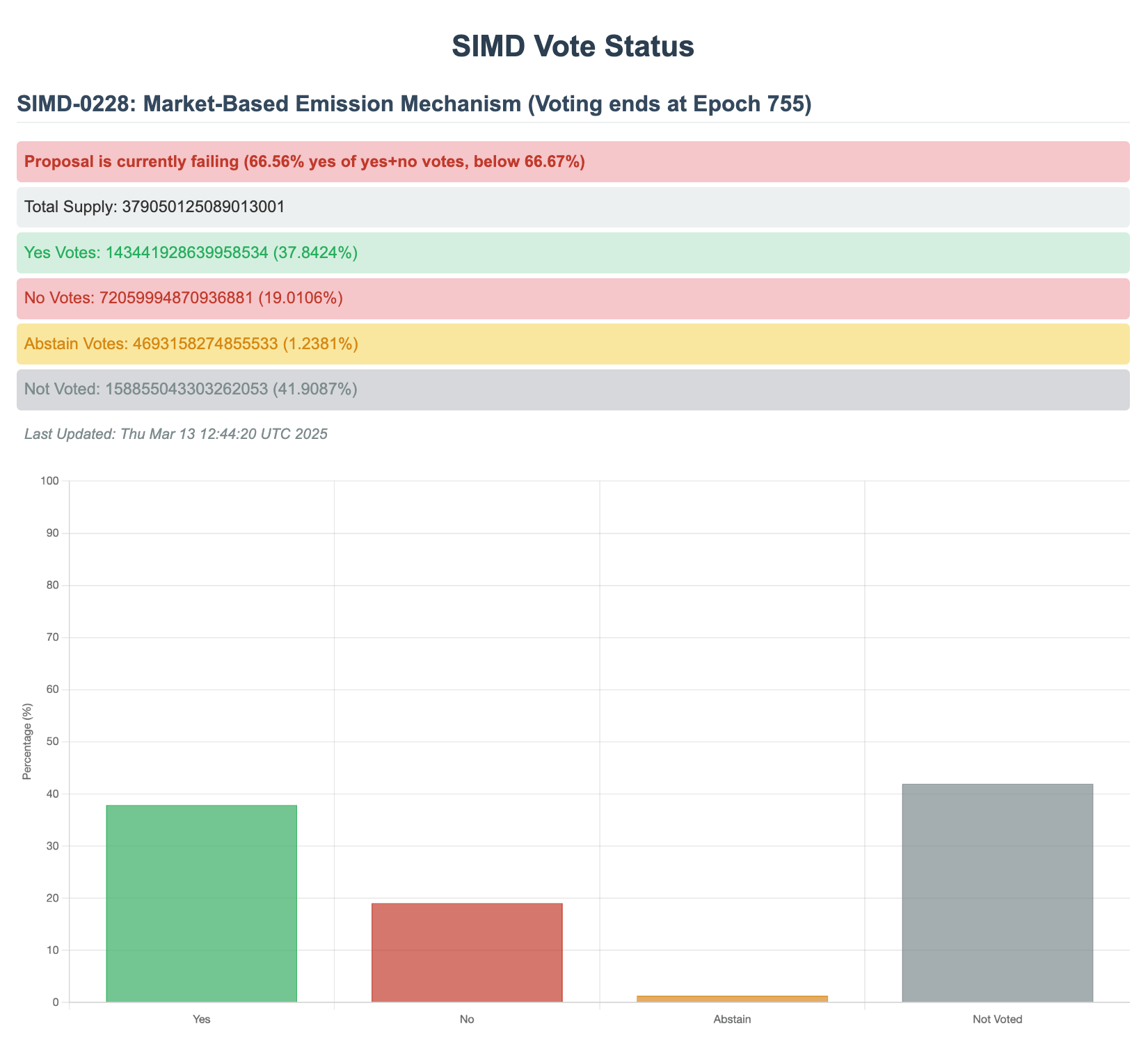
The Solana proposal, called SIMD-0228, which could lead to a drastic drop in the soil inflation rate, had the support of 37.8% of the validators of the network at the time of the press.
According to Dune Analytics, 746 validators, equivalent to almost 58% of the total active validators of 1334, voted on the proposal. 37.8% voted in favor of the proposal, 18.5% were against and 1.2% refrained from voting. Overall, the proposal seemed to be directed towards a failure at the editorial staff. The vote ended at the time 755 planned to be reached in about 11 hours.
The proposal is beats for a market -based tokens emission mechanism to guarantee that the network did not count too much for security and should have positive effects on decentralized finances based on Solana and stimulate the soil markets of liquid onchain.
“Since 2023, the Solana network has been transformed significantly. At the time, chain volumes were often less than 100 million dollars per day, reflecting a limited activity. Today, the ecosystem has constantly reduced billions of people in daily volume on the chain, marking a dramatic change. Given this progression, we think that now is the right time for the inflation rate and SIMD-228 “on X.
According to certain estimates, the proposal could see the level of soil inflation slide from 4.5%to approximately 0.87%, a reduction of 80%.
Tagus Capital expects this to have a positive impact on the soil price.
“If it is approved, this would considerably reduce stimulation rewards and fresh ground supply, potentially increasing its value. However, lower rewards could force the smallest validators, which raises concerns about the decentralization of the network,” said the company in the newsletter bulletin on Thursday.
“However, weaker rewards could force the smallest validators, which raises concerns about the decentralization of the network,” added the company.


