
Islamabad:
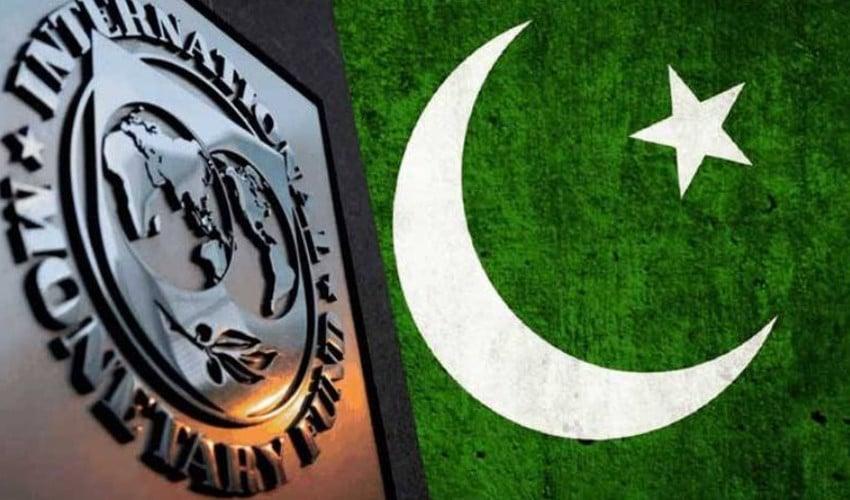
The Minister of Finance Muhammad Aurangzeb said that the talks between Pakistan and the International Monetary Fund for more than a billion dollars have been successful and that an official press release by the fund will be published today (Saturday).
The Minister of Finance made the declaration at a meeting in the Prime Minister’s House, which Shehbaz Sharif presided over to hear the grievances of the business world, according to government sources.
Shehbaz Sharif asked his Minister of Finance if the IMF has given the memorandum for economic and financial policies (MEFP) in Pakistan – all the political documents that define the conditions of the loan tranche.
Everything is in order and the IMF would publish the declaration on Saturday, Aurangzeb would have said to the Prime Minister in the presence of the business community on Friday.
Aurangzeb did not respond to a comment request if he made these remarks at the meeting. However, the multiple sources present at the meeting confirmed this at the Express PK Press Club.
It has also been decided to increase the oil director to RS70 per liter – RS10 higher than existing rates – and to use funds to reduce electricity prices, sources said. The tax will be increased to absorb price reduction, they added.
Pakistan and the FMI talks took place from March 3 to 14 for the first examination of extended funds (EFF) for the July-December period for the current financial year. Before the EFF mission, the IMF also organized meetings for the Climate Resilience Facility (CRF).
The IMF board of directors is expected to examine Pakistan’s request for the completion of the first examination of more than a billion dollars in May. He will also approve the new CRF program worth more than a billion dollars in the first week of May, the sources of the Ministry of Finance said.
The EFF tranche will be published in May after the approval of the board of directors, but disbursements under the climate installation estimated at $ 1 billion will be linked to actual expenses on climate -related initiatives.
The sources of the Ministry of Finance said that before the departure of the IMF, a large agreement on the MEFP had been reached and that the final version will be ready in the month. After that, the case will be broadcast for the approval of the board of directors, which should resume it in early May.
Grid
On the last day of the talks, the IMF held an end of meeting with the Minister of Finance and the Secretary of Finance. Sectoral meetings have also been held at Pakistan’s demand to reduce the quantity of new RS791 per million grid of the British thermal unit (MMBTU) from approximately RS250 to RS300. The two parties also gave final touches to the amendments of the Pakistan Sovereign Wealth Fund to put it in accordance with the prescription of the IMF.
The sources have indicated that the oil division addressed the question of the recently introduced withdrawal with the IMF and asked it to reduce the rates by linking it with the average electricity price instead of the peak rates of the hours.
The sources said that the IMF had not accepted the government’s request and said that higher rates were necessary to force industries to move on the electricity network by abandoning internal electricity production factories.
Last week, the Government informed a 23% increase in gas prices for electrical power plants in industrial captivity (CPP) by imposing RS791 by MMBTU tax.
After the taxation of the new sample, total gas prices for captivity power plants went to RS4,291 by MMBTU, as the government had also increased gas rates for said RS500 category a few months ago.
The gas prices are now even higher than imported LNG prices – a policy that aims to force industries to go to the national network. However, people hesitate to buy the electricity of the network due to exorbitant prices, which are the results of the transmission of ineffectiveness of the sector to consumers and erroneous energy policies.
The government will increase the tax on the network by 10% in July 2025, followed by 15% in February 2026 and an additional 20% in August 2026, taking the final price near RS6,000 to make the supply of punitive gas for the industry to move to the national electricity network.
During the meeting with the business world, manufacturers based in Lahore complained of 600 imported goods containers, who were stuck in Karachi. The PM asked the FBR to clean these cargoes this weekend and to introduce itself.
New tax policies
The sources have indicated that discussions have also taken place in tax policies for the next fiscal year. Pakistan has asked the IMF to put an end to the disparity in tax policies, 18% of the sales tax should apply at the import level, with deductions applied to subsequent retail stages.
The imported goods are already taxed at 18%, with the exception of a few goods, which create distortions and encourage the use of raw materials imported on locally available goods.
The FBR has assured the IMF that it would further eliminate sales tax and income tax distortions to end the rent research culture, sources said. In addition, income tax discounts currently available for a few sectors will be withdrawn in the next budget, the sources said.
Carbon sample
The sources said that understanding the principle has also been reached to slap the carbon tax with effect from July. The tax aims to discourage the use of fossil fuels and to promote renewable technologies.
Ironically, the government has practically eliminated the policy of clear measurement panel and introduced the concept of gross realization by separating the price of the units generated by solar and units imported from the national grid.
The IMF wants to impose RS3 by releases in liter carbon on petrol and diesel from July this year, which will be increased by another RS4 during the 2027 fiscal year.
The IMF has not accepted Pakistan’s point of view that carbon tax will have an impact on the poor and lower middle class and can also bring political implications. The government was also of the opinion that fuel demand was inelastic and that the tax cannot reduce it but that the IMF did not agree.
The fund has also ignored the government’s assertion that Levy will increase the smuggling of low -cost oil and that it cannot accelerate travel to electric vehicles.


