
- Despite the predictions, the hard drives are there to stay and increase the capacity
- Seagate recently sold a Hamr storage exubyte with two hyperscalers
- The “tens of thousands of records” probably cost between 33 and 35 million dollars
Although the tastes of pure storage, IBM and Meta believe that writing is on the wall for hard drives, technology does not seem to disappear so soon.
Seagate and its main Western Digital rival work on magnetic recording methods that will allow discs to continue to increase capacity, helping them maintain a clear advantage over SSDs in terms of storage density.
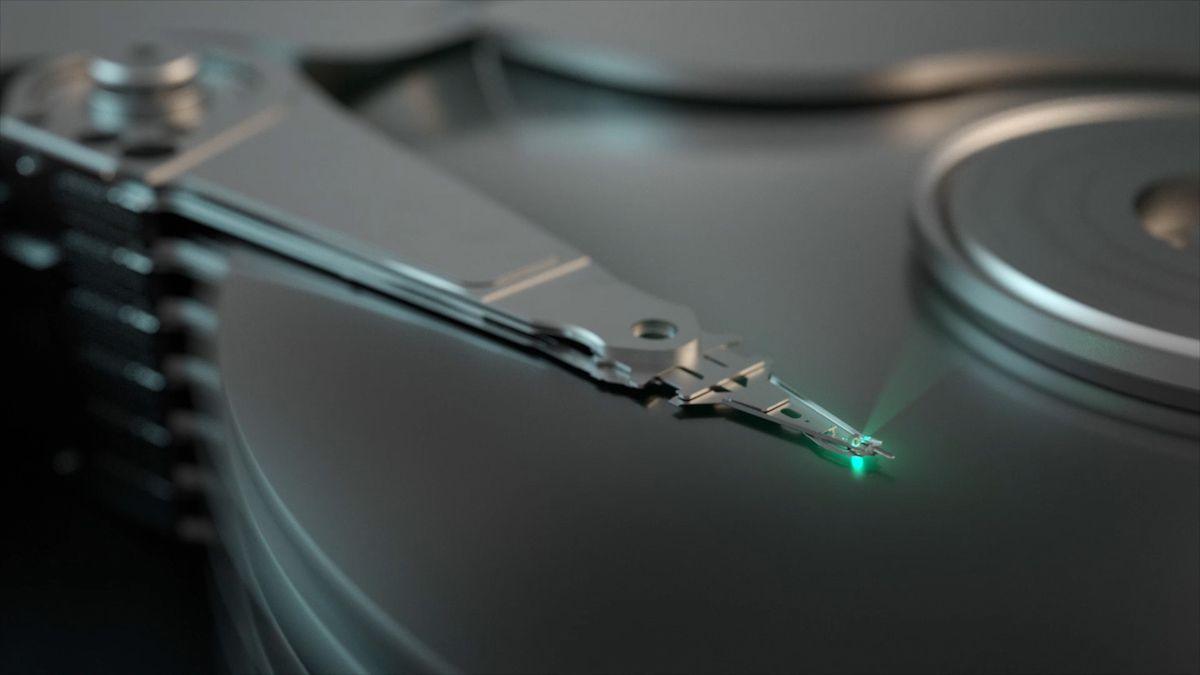
The main technology leading to this load is HAMR, or magnetic recording assisted by heat, which could see hard drives reaching incredible capacities of 100 TB. HAMR works by briefly heating the surface of the disc with a laser to facilitate the writing of data to higher densities. HDMR – Abbreviation of the Point Heated Magnetic Recording – is the likely HAMR successor and could lead to even larger training by concentrating the heat and magnetic energy in smaller and more precise areas for even denser data storage.
Not an unreasonable expenditure
In a recent The Wall Street Journal Article, John Keilman wrote an article covering the “fight to store the world data” of Seagate and mentioned something that drew my attention. “Seagate said that two large clients made up of clouds have each ordered Hamr Hamr storage value, which corresponds to tens of thousands of hard drives.”
Keilman did not name names – Seagate would not have told him who were the buyers – but we can reduce the list of suspects to the usual large American hyperscalers, including Apple, Oracle, Microsoft, Google, Amazon and Meta. It is possible that Chinese hyperscalers were able to shop for the discs, but that seems unlikely to me.
Keilman does not say which capacity readers have been sold, but we can assume that they will have been the highest commercial hard drive in Seagate, the exos M, which varies from 30 to (cmr) to 36 TB (SMR), with a pierced density of 3 TB per dish. Based on the timing, it is likely that we are talking about models of 30 TB, because the 32 TB player was only added to the range in December 2024, followed by the 36 TB model a month later.
Assuming that the hyperscalers in question have paid loose prices of around $ 500 per journey (renovated models of the Exos 28TB hard drive from Seagate can currently be purchased for as low as $ 365), their combined invoice has probably arrived between 33 and 35 million dollars. For a complete excess of advanced and large capacity storage, $ 16 billion is not an unreasonable expenditure.
Seagate previously revealed that a 60 TB route was on the way, and the company recently announced its intention to acquire Intevac, a HAMR specialist, who could help him achieve this 100 TB capacity goal, as well as to accelerate Hamr Drive production.


