
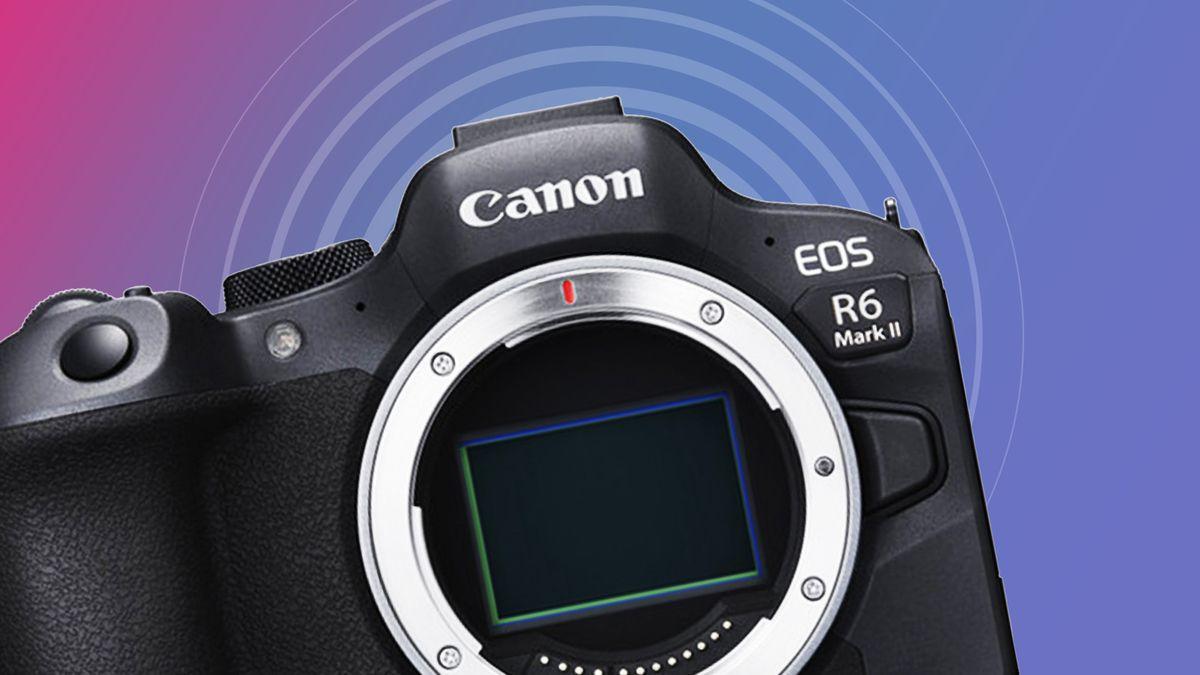
- Rumors suggest a revised launch in May 2025 for the EOS R6 Mark III
- He could inherit the features of the brand more expensive R5 Mark II
- As a potential update EOS R6 Mark II, she competes with the Nikon Z6 III and Sony A7 IV
The twin launch of Canon of the EOS R1 and EOS R5 Mark II I II made the headlines of 2024, with the price of the camera of the year of Techradar winning the camera. However, it is believed that the EOS R6 Mark II of mid -range (and more affordable) remains a camera without the most popular mirror of Canon, and that it could soon be updated with the Canon EOS R6 Mark III.
Canon rumors initially praised an announcement for the end of 2024, which until now completed with the two -year -old cycle of Canon for the EOS R6 cameras. However, we are here for months later in March 2025 and there is still no sign of the third model, the potential EOS R6 Mark III, nor a rival successor by Sony A7 IV elsewhere – the rumor of Sony A7 V, which also takes more time than expected.
This leaves the Nikon Z6 III as the best camera without complete mirror for most people. However, he may not maintain this crown for a long time, if the latest launch rumors EOS R6 Mark III are correct this time.
I have no doubt that a third model is in the pipeline, but I am less convinced that it will come from May – it is revealing that there are so few EOS R6 Mark III features. However, this does not prevent us from speculating on the functionalities of the following model, and what he must have to be a worthy eos R6 Mark II Upgrade and Nikon Z6 III.
1. A new stacked sensor
While a certain number of EOS R6 / EOS R6 Mark II users hope for a high -resolution sensor in a third model, the most likely scenario described by Canon rumors is that the sensor will remain a 24MP unit. However, it will be a type of “stacked” sensor, like the one we saw in the EOS R3 – the previous flagship product of the Canon before EOS R1.
An stacked sensor offers faster reading speeds, which can in turn improve the overall performance of a camera for burst shooting and autofocus, as well as its manipulation of the shutter distortion. The Nikon Z6 III has a partially stacked 24MP sensor, while the Z6 II has a 24 -regular MP sensor.
These sensors are not cheap, and if Canon decides to put one in the R6 Mark III, this will probably have an impact on the price of the camera. However, it is the logical upgrade for Canon to start with; And keeping the resolution at 24MP would leave a sensitive respiratory space between the EOS R6 Mark III and the following model – the EOS R5 Mark II with higher resolution, which has a 45MP sensor.
2. Improved speed
To fully use a faster stacked sensor, the EOS R6 Mark III will also need a new processor. The EOS R1 / EOS R5 Mark II I introduced a digest accelerator – it looks very much like a second processor that rationalizes the way the files are treated, the softening of the bottlenecks – and this same secondary processor will probably find its way in an EOS R6 Mark III.
A digest accelerator could allow faster and longer bursting sequences, as well as better pre-capacity and various other features dependent on speed.
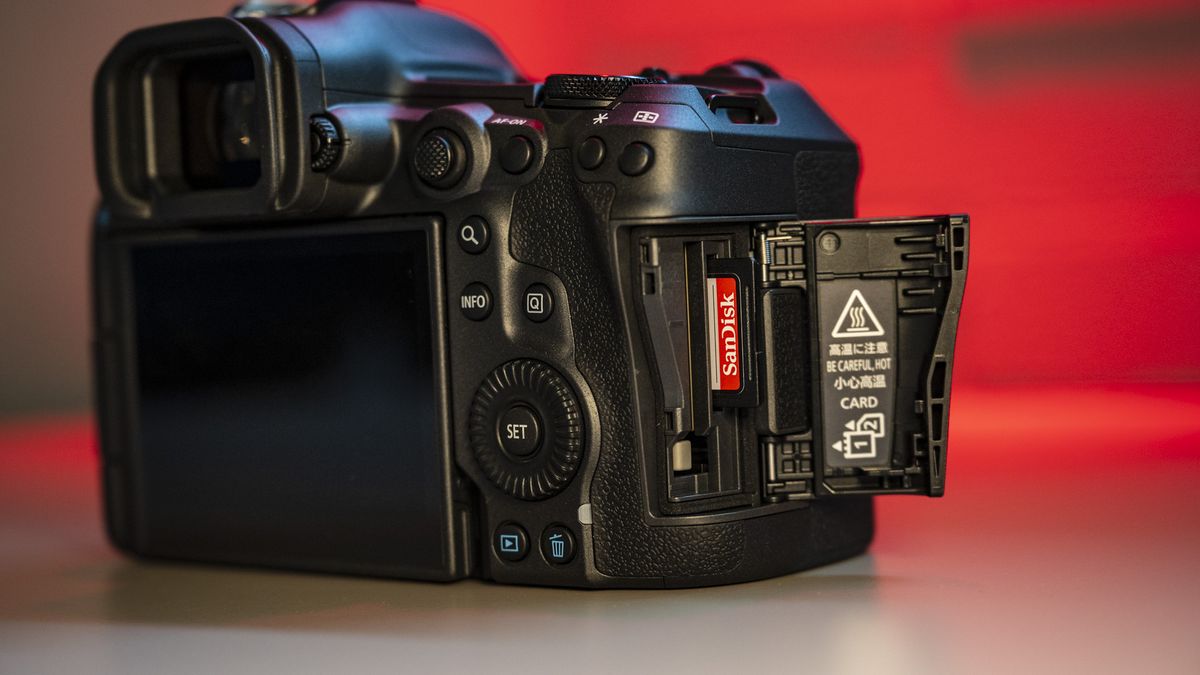
However, it will not be useful to have a stacked sensor and a second processor if the cameras still rely on SD cards to store files. No, the EOS R6 Mark III will also have to accept type B CFEXPRESS cards

3. The last autofocus
Again, it is quite typical that the latest Canon autofocus system is died from its flagship models to its mid -range models, such as the EOS R6 series. To this extent, I expect the EOS R6 Mark III to present the same autofocus system as the EOS R1 / EOS R5 Mark II, which is almost the best of the company, especially if you photograph certain sports.
We have already covered how sophisticated Canon Autofocus is in our in -depth criticisms – some remarkable features include priority and sports priority. For the first, you can take a person’s photo and store it in the camera as a priority subject on which the camera is concentrated, like the bride at a wedding. For the latter, users can select one of the many sports, and the camera can assess where the key points of interest are based on the action, say the player who kicked a bullet.
It is unlikely that it is inherited from the flagship cannon models, it is AF eyes control, which works using a sensor in the viewfinder who knows where your eye looks in the frame, and automatically adjusts the area of focusing to what has your attention.
4. A new multi-angle screen
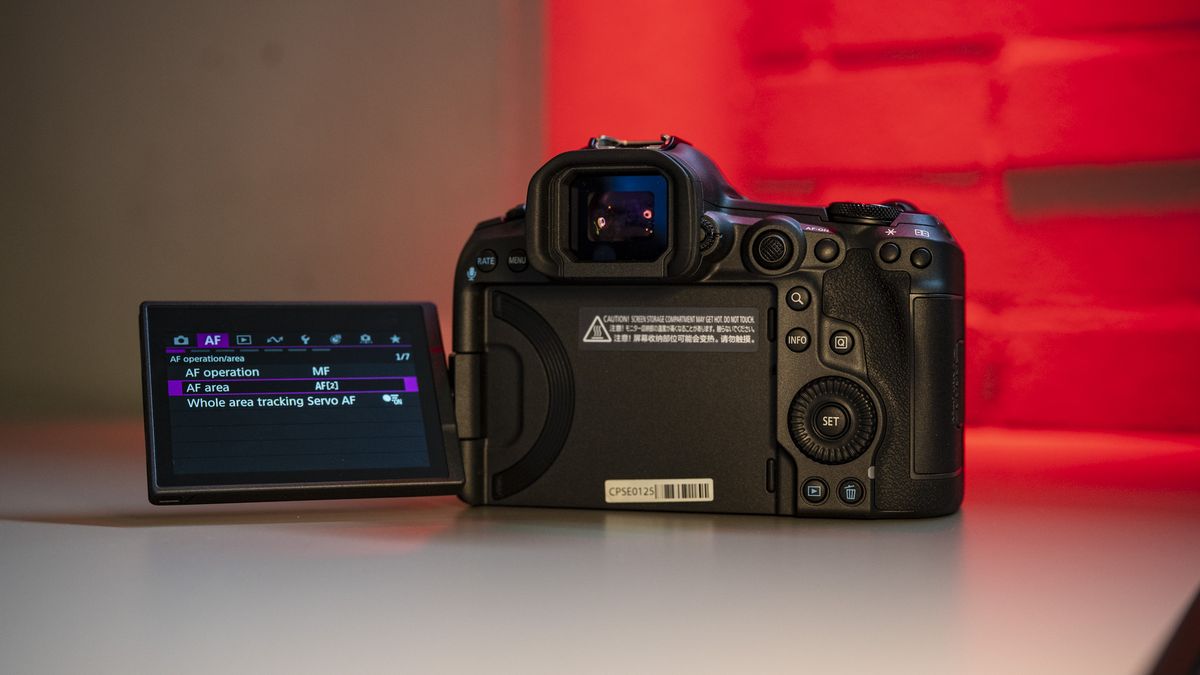
I do not expect many improvements with regard to the body and the manipulation of the EOS R6 Mark III. However, Canon Rumors indicates that the last camera could have a multi-angle LCD screen, just like that of the Sony A9 III, which would be a first for Canon.
A multi-angle screen actually has twin hinges, which means that you can switch the body screen, then run it again. This allows for easy viewing from awkward angles when you are shooting in horizontal And Vertical formats, where a single type of spear is limited to the horizontal inclination.
Apparently, the screen itself could also be a more sophisticated OLED type, rather than the LCD screen. This would make easier visualization in bright light, although technology would further increase the cost. Place it in the improbable category.

5. AI edition on the camera
Another feature that made its debut in the flagship models of last year was the assembly of the AI to the camera. Such AI tools are not only gadgets – they can be really useful on the go, and such functionality is scaling – I wrote on my experience by obtaining 400% larger images with the EOS R5 Mark II. Another is scouring, to improve details of low -light / high ISO images.
I see no reason why these tools cannot make their way in an EOS R6 Mark III if it presents the upgrades already mentioned above. And a functionality such as scaling, which could quadruple the size of the image of the camera from 24 MP at 96MP, undoubtedly even more sense. The growing sophistication of technology could really put megapixel race in bed.
Summary
I don’t think we will see a lot of completely new technologies in EOS R6 Mark III, whenever he finally launches. However, by inheriting many EOS R3 / EOS R5 Mark II Tech, it will be a healthy update of the EOS R6 Mark II, in particular for users who need a faster camera and an improved autofocus accuracy.
We were able to see a faster stacked sensor, twin processors that includes the Digic accelerator, the best cannon automatic, the compatibility of the Bfexpress type B card, a new screen, as well as a host of other hidden features, wrapped in the same body as before.
If all these upgrades are delivered, I find it difficult to see Canon presenting the EOS R6 Mark III for nothing less than the launch price of the EOS R6 Mark II, which places it north of $ 3,000 / £ 3,000. With the Nikon Z6 III and the Canon EOS R6 Mark II already greatly reduced to around 50% less than that, the consequence of delays EOS R6 Mark III is clear.


