
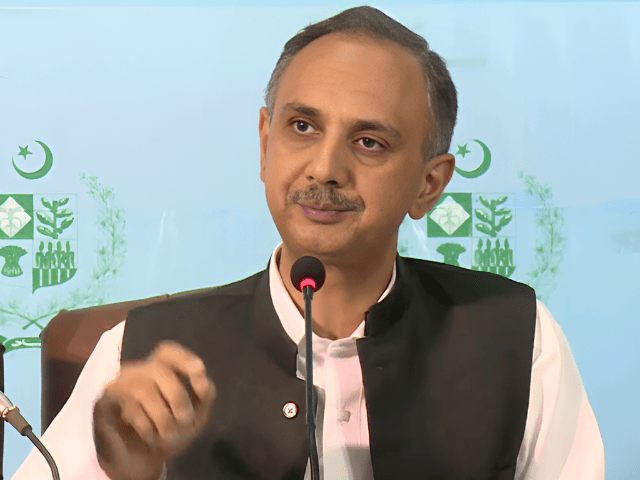
An anti-terrorism court (ATC) in Islamabad rejected the surety of Pakistan Tehreek-E-insaf (PTI), Omar Ayub and ordered his arrest and his presentation to the court.
ATC judge, judge Amjad Ali Shah, announced the rejection of the provisional surety for the opposition chief and head of the PTI, Omar Ayub, ordering his arrest and his presentation before the court.
Omar Ayub, who faces charges related to the November 26 demonstration, did not appear in court, and his lawyer, Dr. Babar Awan, was also absent during the hearing.
Meanwhile, the court extended the provisional bond of Sanam Javed.
Thousands of Pakistani demonstrators, demanding the release of the former Prime Minister Imran Khan, made it possible to obtain obstacles to security and challenged a lock to enter Islamabad, responding to a demand for sit-in on November 26.
The demonstrators, who were supporters of the party of Pakistan Tehreek-e-insaf (PTI), many of whom were armed with fronds and sticks, clashed with security forces when they tried to reach D-Chowk. Despite tear gas and rubber bullets, many had managed to reach the place in the early afternoon.
In response, the government invoked article 245 of the Constitution, allowing the civil government to call the army to help enforce public order within the country.
A case was filed against former Prime Minister Imran Khan, his wife Bushra Bibi, and the former president of Dr. Arif Alvi, as well as several senior leaders (PTI), within the framework of the violent demonstrations which had taken place on November 26.
The accusations were recorded at the Taxila police station under the anti -terrorist laws of Pakistan.
The main members of the PTI appointed in the case included the opposition chief Omar Ayub, the chief minister of Khyber Pakhtunkhwa (KP), Ali Amin Gandapur, the sister of Imran Khan, Aleema Khan, the former minister Azam Swati, Taimur Masood and Shehryar Riaz. More than 300 local managers and activists have also been involved.


