
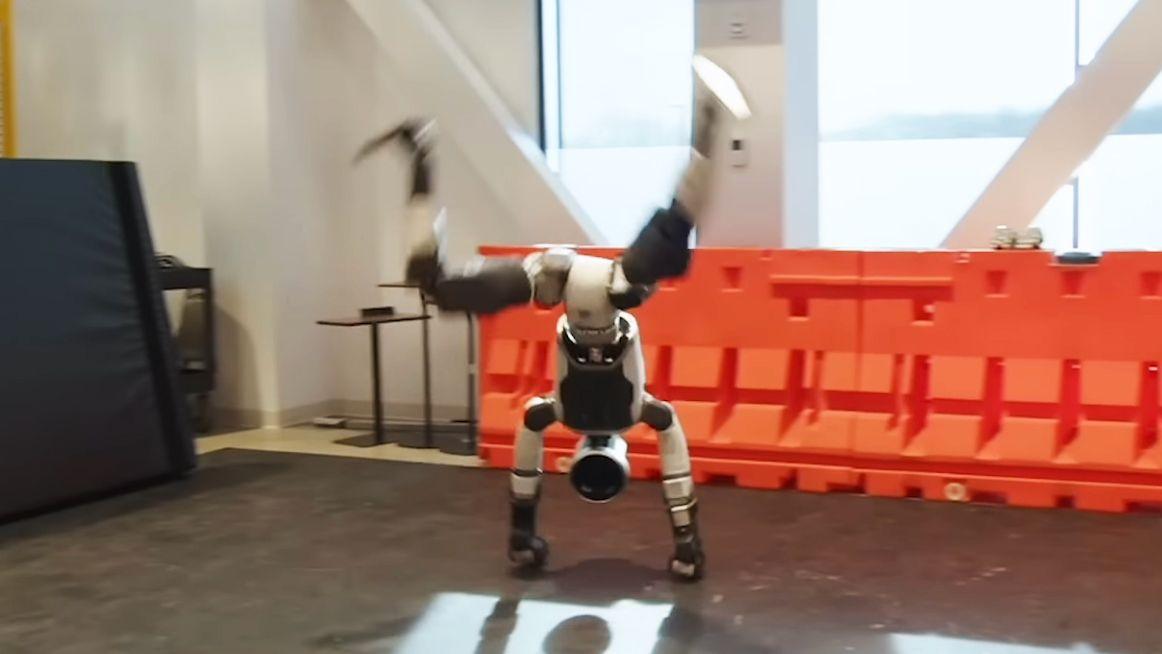
- The Boston Dynamic atlas robot can make cart wheels now
- The more fluid and dynamic movements of robots are possible thanks to the expertise in robotics of Boston Dynamic and the models of Nvidia
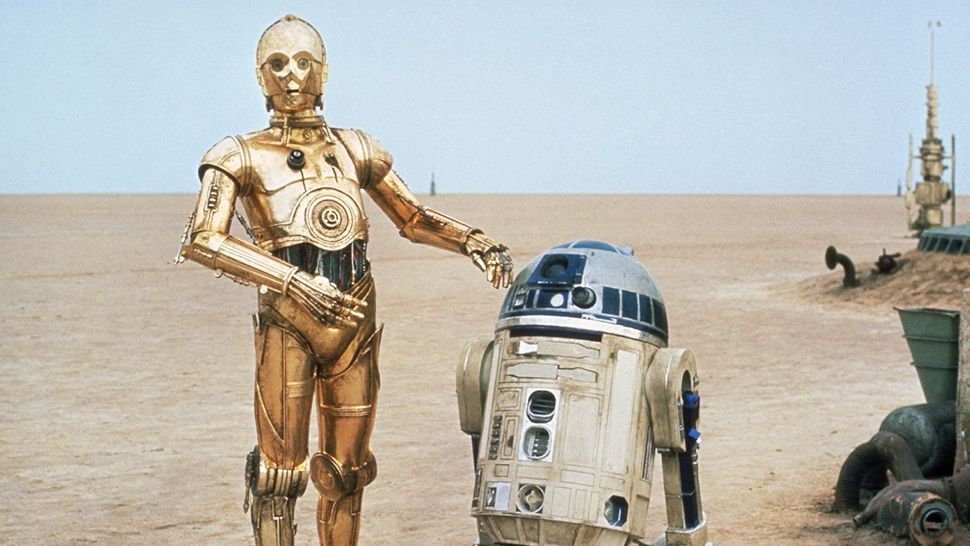
- Atlas is much more like C-3PO now and moves much more like a human
I understand, blue, the adorable collaboration of robots between Nvidia, Google and Disney, captivated the heart, but I saw something better and more practical by Boston Dynamics which is based on many of the same fundamental models of Nvidia. In addition, it is a better indicator of the next big step – or the cart wheel – in humanoid robotics.
Boston Dynamics was a first adopter of the Nvidia Groot project, and now he has deepened the partnership by pressing several Nvidia platforms, including the computer platform of Jetson Thor and Isaac Lab, which uses Isaac SioSID ISAAC SIMIDID DE NVIDIA to help stimulate its dumbfounding humlout.
Jetson Thor is associated with bodily controllers and atlas handling to exploit multimodal AI, and the Isaac laboratory frame is used to help the robot to learn in virtual environments.
All this contributes to movement and adaptation to unforeseen or at least unexpected environments, which can also improve the safety of a humanoid robot which could one day work alongside you.
It would be difficult to conceptualize the advantages of all this deep technology if it was not for this video.
To watch
In the latest atlas demonstration, the fully electric humanoid robot 6 feet high, fully electric robots ramp, races, rollers, performs a housing opener (ask your parents dancing the break) and cart wheels.
The series of movements was so shocking that I had to ask if the video had been accelerated so that everything was smoother. Boston Dynamics representatives have confirmed that the video is working at normal speed.
While I watched the video and imagined all the virtual training necessary to remove the movements live, it came to my mind that we have reached a tilting point.
Keep aside, C-3
Of course, the hydraulic atlas could do parkour and backflips, but that didn’t look like much. Another story is the electric atlas. His physiology is decidedly human. The head has no real face, but it is clearly a head, and the proportions of the body are all normal if they are a little reinforced to the size of the bodybuilder. Remember, it’s 330 pounds.
In other words, Atlas finally resembles C-3PO. Now there are a lot of new humanoid robots from Tesla (Optimus), from the AI figure (Figure 01), X1 (Neo Gama) and Uniree (Unitree G1).
With the exception of G1, these robots are mobile disappointments. None of them moves really fluid and convincingly. Their steps stop, their movements stutter, and sometimes there are important breaks between the actions that humans generally shine like many brilliant pearls.
Most, in fact, move like C-3PO. To be fair, that Star Wars Protocol Droid was actor Anthony Daniels in a rigid plastic costume, trying not to succumb to the heat of the African desert. Even so, the robot has become an icon and the model for our nearly five decades of humanoid robot dreams. This may be why people are so excited by all these other robots, even if they should not be.
Atlas is different, and I think it is the combination of the decades of Boston Dynamic in robotics engineering (company robots were in competition in robotics challenges of years before most of these other companies enter space) and powerful silicon and fundamental models of Nvidia that make the difference.
It is not enough to build a robot that can move and perform basic tasks. Most other robot competitors know this and have teamed up with Google and Openai to access their multimodal AI models, but I think they play a catch -up.
If humanoid robotic development was a horse race, I would put my money on Boston Dynamics and Nvidia. Together, they will probably bring us a factory legion and, finally, home robots which all make literal cart wheels around us and will make us wonder what we saw in C-3PO in the first place.


