
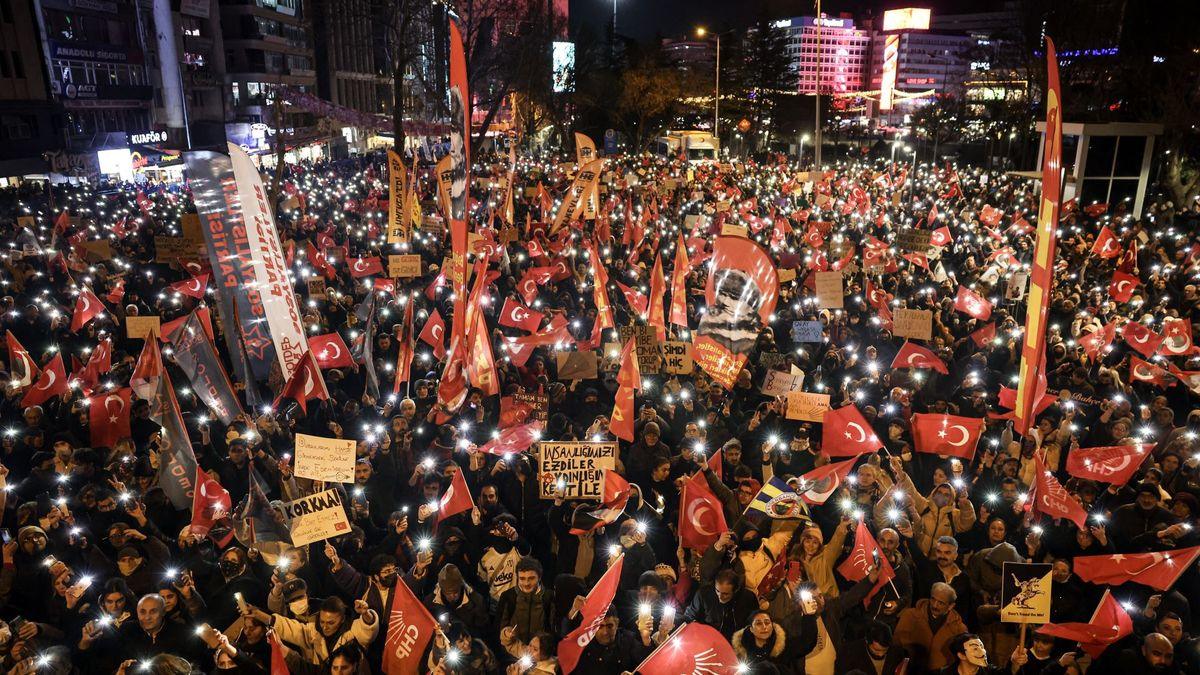
- Access to social media platforms in Türkiye was restored after 42 hours of closing
- Proton VPN recorded an increase of + 1100% from March 19, 2025, the day restrictions were applied
- Many X accounts were then blocked on the orders of the Turkish authorities
On March 21, 2025, the Turkish authorities raised the ban on social media platforms after 42 hours of implementation. However, the use of VPNs remains high as mass demonstrations continue.
Citizens started to turn to the best VPN applications to continue accessing the tastes of X, Instagram, Facebook, YouTube, Tiktok and Whatsapp from March 19, day restrictions were applied. Proton VPN, for example, recorded a peak in inscriptions of + 1100%.
As the demonstrations triggered the arrest of Ekrem İmaMoğlu, the mayor of Istanbul, and his opposition counterpart, continued, numerous accounts of opposition and independent media have been blocked on government orders.
The use of VPN from Türkiye has soared
“The protection of freedom of expression and the fight against censorship is an essential part of our mission, and we are committed to doing what we can to help people around the world. Unfortunately, Turkey is one of these countries with a bad history of recent censorship,” David Peterson, CEO of Proton VPN, Techradar in a press release on Friday.
The peaks of use occurred despite the VPN proton being one of the 27 VPN suppliers restricted in Türkiye
This is not the first time that Proton VPN has recorded similar peaks in use in Türkiye.
It was not until 2024 that VPN Proton registrations made a push of 1,400% in October and 4,500% in August in the middle of similar blocks on social media services. In addition, in 2023, citizens turned more and more to Proton VPN. The company recorded an astounding increase of 15,000% in February after Twitter was blocked following a deadly earthquake and a peak of 2 100% in May while citizens were preparing for potential blocks before the presidential elections.
The peaks of use took place despite the VPN proton being one of the 27 VPN suppliers restricted in Türkiye, alongside NordVPN, ExpressVPN, Surfhark and others. More specifically, their official websites are blocked in the country.
“For this reason, many people – especially those who do not know VPNs – had not heard of Proton VPN,” Tarkish journalist Ali Safa Korkut told Techradar, explaining that the interest in software has developed following the tweet of a Swiss supplier shared on March 22.
“I know people around me who use VPN Proton without any problems,” he added.
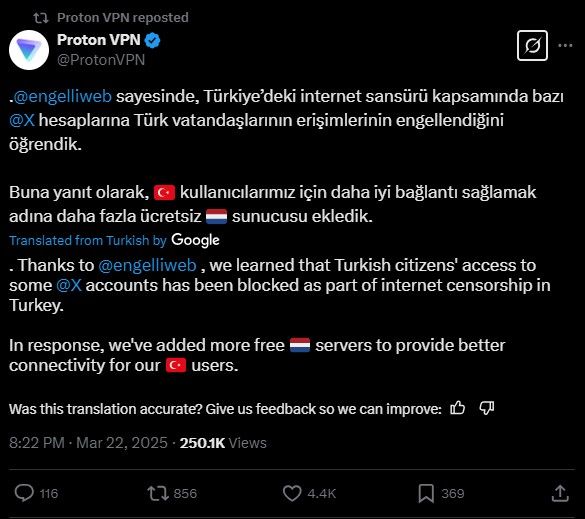
Although access to social media was restored around 1 hour, local time on Friday, censorship on the Internet did not stop completely.
X has blocked several accounts of political figures and students involved in demonstrations at the request of the government, alongside those of independent journalists and press organizations like Bianet.
Korkut, which has closely followed these blocks from the start, has counted 309 X -blocked accounts so far. “These are particularly well-known journalists with 1.5 million followers as well as anonymous accounts without subscribers,” he said, adding: “New accounts are blocked by the minute.”
Isik Mater, director of internet research Watchdog Netblocks, explains that this trend aligns with past cases where X complies with requests for withdrawal from the Turkish government, which raises concerns concerning the neutrality of the platform and freedom of expression.
She told Techradar: “Access to social media is a fundamental pillar for freedom of expression and the right to information, in particular in moments of political tension or crisis. Restrictions like these limit not only public discourse, but also undermine the capacity of citizens to organize, communicate and remain informed during critical events.”


