

Lots of useful information is as useful as its organization. The same goes for my own brain, of course. Obtaining this information in different formats can help learn it, and Google’s notebook has been fun to experiment for this purpose, especially personalized podcasts with AI hosts.
The latest addition is the new Mind Maps feature. A mental card is an old technique for organizing your reflection using visual information networks that connect ideas together. Imagine a branching tree where each member is a concept and each twig is an idea of support. They are perfect for people who think visually.
The notebooklm version is essentially that, but it is assembled by an AI model. I decided to test this thing with two real situations: plan a garden and try to become an exchange of DIY home repairs.
Spirit garden
The garden was the first. I have downloaded a bunch of articles that I had hoard – stuff on company planting, raised beds, native perennials, composting and a blog article where someone swears by pouring beer on their tomatoes. Notebooklm chewed all of this and spitting a mental card on request.
There were branches for planning, locations and even the advantages of gardening, among others. Each branch had a long list of “twigs” covering all kinds of sub-themes, as you can see above. Everyone was clickable, causing the expression of the part of the Conversation of Notebooklm on this subject. It was extremely useful to keep all these elements organized.
DIY
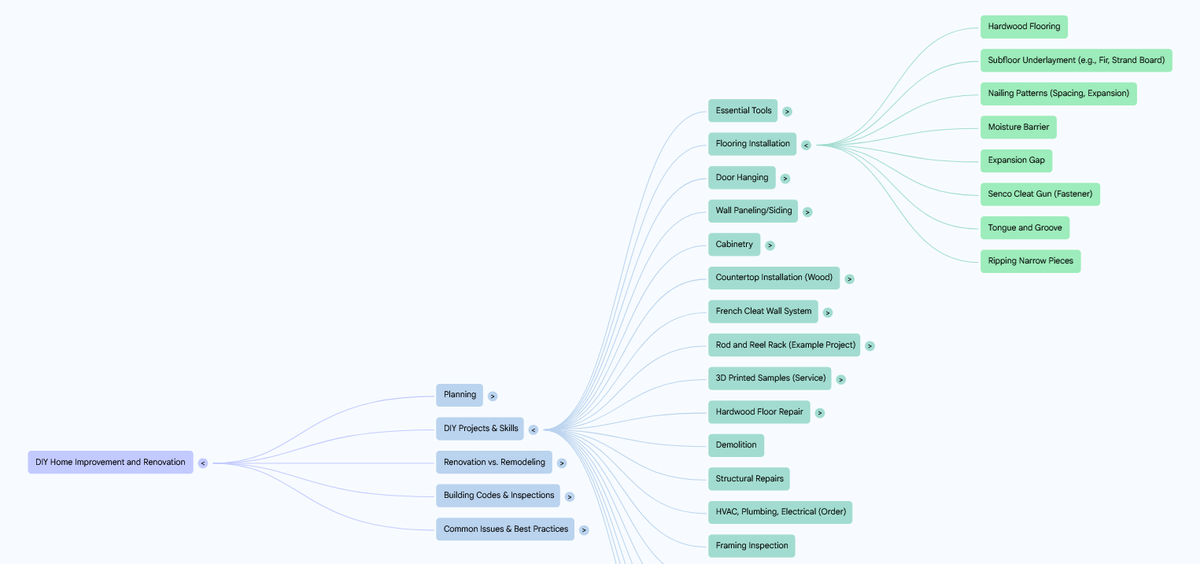
The same goes for the DIY project. My house has this charming quality where things break without reason. I had already tried to repair a toilet leaking once, what ended with me by flooding the bathroom and looking at a YouTube tutorial through a veil of defeat.
This time, I came prepared. I downloaded manuals, practical articles and some confidence repair blogs. Mind Maps whipped categories such as planning, building codes and the list of essential DIY projects in a few seconds. I chose the installation of floor coverings from this set of twigs, and you can see hardwood floors, humidity barriers and an expansion gap.
There was something strangely soothing to see the stages arranged so clearly. I clicked on “Door hanging” and I had an overview of the different types of doors and how to configure them from the AI. I felt like I had a conversation with someone who really knows what they are doing.
Different thought
Notebooklm has already done a good job by summarizing things, but The Mind Maps added a layer of clarity that made almost tactile. I could see how the ideas were connected and how it would help me learn more quickly.
That doesn’t mean it’s perfect. Sometimes the mind cards become a little too enthusiastic and start to branch into tangents that do not really help. A card has tried to connect the “composting” with the music “composing” for gardening for any reason. And with very niche subjects, the AI can always miss the brand by offering generic advice when what you need is something specific, as the way to repair a loose tile without dismantling half of your kitchen.
I would also love more manual control. Right now, you can navigate and explore the cards, but you can’t really change them a lot. Sometimes I want to slide a knot, rename it or cut an entire branch that is not useful. However, they are nitpicks. The main experience is solid, however.
The truth is that I did not expect to love mental cards. I thought they would be a neat visual gadget, something I would play once, then forget. But I think I will use them more, especially for all the ambitious plans that I have to improve my house and my garden. In a world full of tabs, a card is pleasant to have.


