
Islamabad:
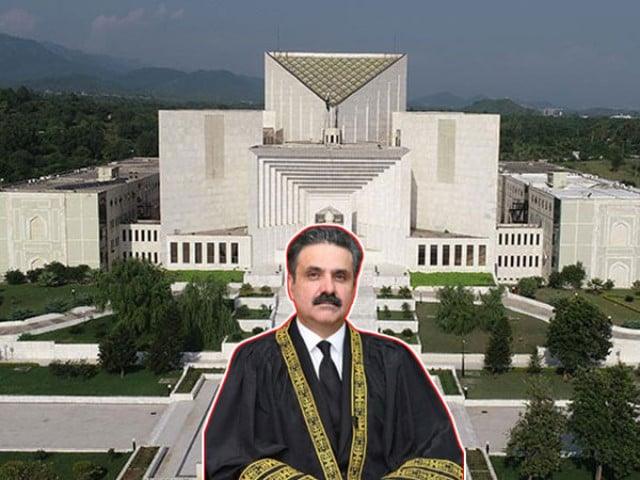
While the incidents of May 9 remain the bone in the running between Pakistan Tehreek-E-insaf (PTI) and the executive authorities, the chief judge of Pakistan (CJP) Yahya Afridi seems determined to walk on a tightrope and to maintain a balance between the two sides.
A bench of three judges led by the CJP Afridi currently hears government petitions requesting the cancellation of the deposit grants the activists of the PTI, allegedly involved in the events of May 9.
Instead of directly carrying out merit, the CJP Afridi offered the Special Prosecutor an alternative: consult relevant quarters of whether the court should have deposit issues by establishing a three -month calendar for the courts of first instance in order to conclude procedures against the accused.
He also proposed that the accused be responsible for joining the investigation in the next seven days.
The special prosecutor Zulfiqar Abbas Naqvi one day asked to consult the proposal. The audience will resume Tuesday (today).
However, for many legal experts, the real test is in advance. They believe that the judiciary must make an additional effort to ensure equity and regular procedure in the trials linked to the events of May 9.
According to them, the courts have so far abandoned the ball when it comes to maintaining regular procedure for PTI managers and workers.
The main politician Chaudhry Fawad Hussain – himself an accused in cases linked to May 9 – expressed the surprise that the accused people chose to stay far from the Supreme Court procedure, without a lawyer present to offer a specific account before the judges.
“The reality is that the affairs of May 9 represent a blatant improper use of the courts to undermine the rule of law. The judges were harassed, but the SCP under Qazi Faez Isa and later within the framework of the current CJP, did not even bother to respond to their complaints,” said Fawad.
He also noted that the anti -terrorist courts collapsed completely following the CS refusal to maintain the rights of the judges. “Now, the judges with a doubtful reputation have been appointed, and they are aggressively pushing these cases without regular procedure.”
“I am one of the accused. In Faisalabad, 23 witnesses were registered in the case against me, but I did not receive official accusation or the declaration of the investigating officer (IO) who led to my appointment,” he deplored.
“The situation is similar to Rawalpindi, where we do not know the specific offenses that we would have committed, because neither a specific accusation sheet nor a copy of the declaration has been provided.”
Fawad also stressed that with such imperfect procedures, the SC directive to conclude trials within three months suggests only convictions of military judicial style.
A debate is now gaining ground as to whether CJP Afridi will succeed in maintaining the balance between PTI and state institutions. It is known to prioritize arbitration and reconciliation between the parties during the arbitration of the cases.
However, following the 26th amendment, the powers of the chief judge were cut. In addition, CJP Afridi is not part of the constitutional bench.
Although he always has the power to interpret the law and the constitution, the executive appears from his current approach, especially since he has not hindered the appointment of candidates supported by the government to the higher judicial power.
Despite the CJP showing the intention of accelerating the elimination of affairs linked to May 9, PTI has already filed a petition requiring the training of a judicial commission to investigate the authenticity of the events that occurred that day.
However, the CJP Afridi confirmed the judicial order made by the chief judge of the High Court of Lahore (LHC), Malik Shahzad Ahmad Khan, who had rejected the request of the government requesting the transfer of the ATC judge.
It also appeared that the CJP Afridi has key meetings concerning the evolutionary political situation in Balutchistan. The president of the association of the Supreme Court Bar, Mian Rauf Atta, also met him on the same question.


