
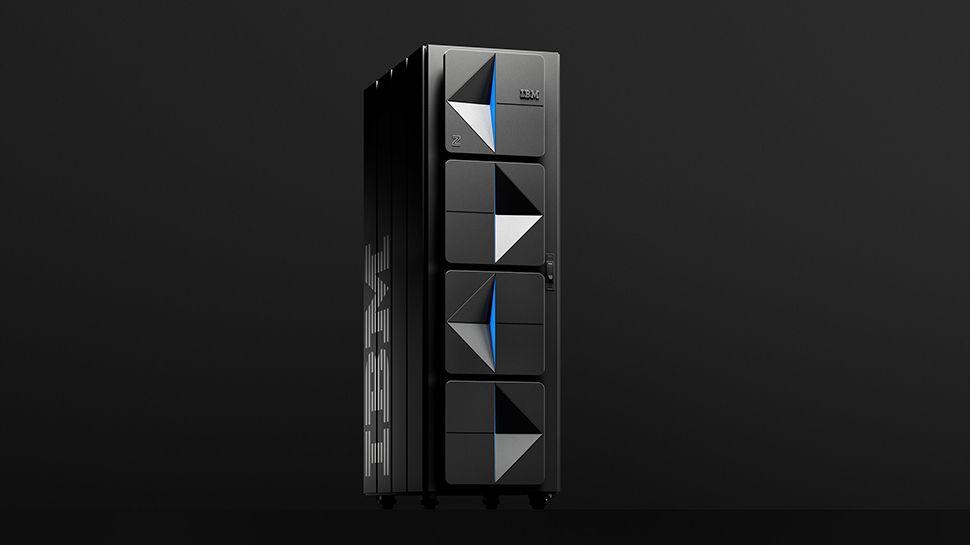
- The fastest Mainframe computer of IBM to date has a Telum II processor with Coprocessor AI on chip
- There is also an AI accelerator that hopes to make it an attractive option
- The IBM Z17 brings a big blue to the AI era, but will it be enough to push the competition?
IBM announced the Z17, a new mainframe to meet the growing AI requests on corporate infrastructure.
Positioned as a base for hybrid cloud environments, and with the support for AI resilience in real time and of business quality, IBM Z17 is designed to manage heavy transactions workloads, improve operational efficiency and respond to safety problems in industries with strict compliance needs.
The Telum II processor, which was originally announced on Hot Chips 2024. Developed using Samsung 5nm technology, it joins an AI coprocessor on chip to support inference tasks, including small models of language with less than 8 billion settings.
Security
In addition to the processor, Big Blue plans to offer the Spyre accelerator card (also originally previewed on Hot Chips) to complete the Telum II and extend the AI calculation capacities for unstructured data processing such as text -based generative.
The Z17 can accommodate up to 48 of these accelerator cards, allowing the scalability between corporate workloads. It should be available 4T 2025 via the PCIE card.
Safety is a big goal for IBM Z17 and includes features fueled by AI such as marking of sensitive data for Z / OS and IBM threat detection for Z / OS, which both use natural language processing to identify and protect sensitive data or scan for potential threats.
In addition, it supports standardized NIST standardized quantum safety algorithms to meet future regulatory requirements.
The Z17 system also incorporates a new data processing unit to speed up IS / O protocols for networking and storage.
IBM says it expects application developers to benefit from AI assistants who can automate tasks throughout the software development life cycle, improve productivity and reduce skills transition problems in mainframe environments.
Cases of use of transactional AIs such as fraud detection, money laundering prevention and anomalies detection can now be deployed closer to data source, known as IBM, with the support of multimodel inference to improve precision and reduce false positives.
“Industry quickly learns that AI will only be precious as the infrastructure it takes place,” said Ross Mauri, managing director of IBM Z and Linuxone, IBM.
“With Z17, we bring AI to the heart of the company with the software, processing power and storage so that AI is quickly operational.
Available in configurations which support up to 208 processors and 64 TB of memory, the Z17, which is the culmination of five years of design and development, is designed to operate at 5.5 GHz and is housed in up to four images. Although intended for critical workloads, IBM also positions it as part of a wider hybrid cloud strategy.
IBM has also deleted the Z / OS 3.2 wraps, the next version of its flagship operating system for IBM Z systems. This is planned for its third quarter of 2025.


