Karachi:
Let’s eliminate this: I live in a joint family. If you do it too, you know exactly what it means. The experience can be too large to be put into words, but do not worry, because Durdana de Dil wali gali mein Summary in a short sentence in episode 4. Mujji’s mother just said that families were not exchanged or gratitude.
If you are even slightly aware of how family relationships work on this side of the world, you might find yourself nod with these words of wisdom. Except that everything seems wise if it is heard in isolation; It seems ideal, even. But living in a joint family system is not the piece of cake that a stranger could see.
That said, the end of Dil wali gali mein I did not simply draw the curtain on the love story of Deeju and Mujji, but also brought the global theme – the point of sale of the series – the complete loop. It is enough to ask Deeju and Mujji, whose rocky life life promises only the recall that no love village is without faults – a reality that you and I know painfully. Aside from the chronicle of a love story for the desperate romantics to complaint, he tells the story of you, and I, and all of us combined.
Beyond a type of love
Unlike Deeju and Mujji, however, you do not need to be married to understand this fly in the ointment, although marriage becomes an object trying to insert. The hurricane blames the butterfly, and all that.
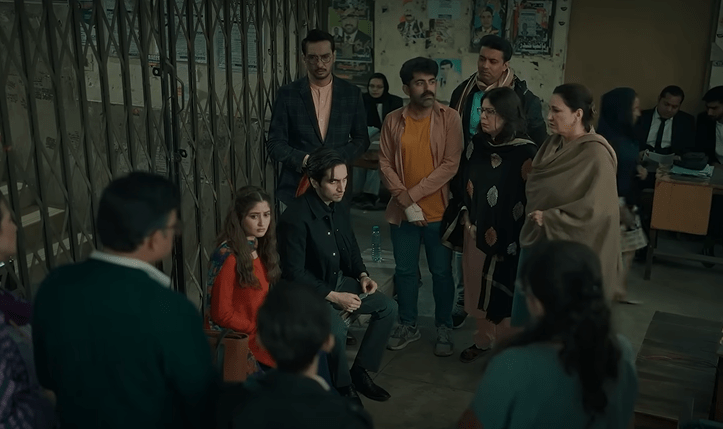
Dil wali gali mein shows us what is to be part of a joint family system. He delimits problems in paradise, sketching a polyp of the thorny family head, parents who harass parents and small grudges. He traces fine lines on a smooth canvas before painting it again and again with bold blows. This contributes to a false perfection, just to show you how bitter reality can be.
But like these sorry not saying and thank you, these are not things that you are supposed to say out loud. Sometimes you don’t even allow yourself to feel them.
As a cog in this machine, you are probably no stranger to please all those who breathe the same air as you. There may be times when your house, which, for others, generally consists of a small family, feels too large for you. It is difficult to escape the feeling when you know that you are observed and sometimes governed by more than your parents. It makes conditional autonomy.
There may be times when you feel that you can hear yourself too much, pushing the limits that are already blurred for you, allowing your space to be invaded. But you can’t help yourself. It’s just life for you now, or it’s your life since you were born.
You are used to engaging in your loved ones. You even appreciate it. But you also host the resentment too. You can’t help him. The door of your room is wide open and anyone can enter. Anyone at all.
The problem, however, is that it is not the right if it comes from a loved one, right? This is how things are when you all live under the same roof.
Admittedly, they mean when they impose restrictions on your lifestyle or make their resentment your problem. Admittedly, there is a good side so that Deeju is forced to accept his tutoring business from his in-laws to spare them the pain in hiring new teachers. Admittedly, the most reasonable means of these trials is to court patience and to be the greatest person. But how long are you waiting for this patience to become a venomous?
A resonant theme
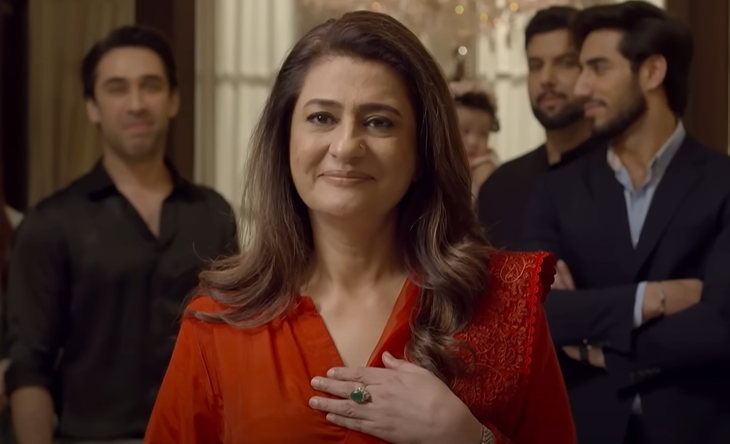
Last year, we saw similar models in Noor Jahan – A series that brought the point to the house by giving the protagonist and the antagonist the same first name. Although it was an appropriate fusion of politics and domestic power, the hearts of the two series beat the same rhythm and echoes the same message.
Noor Jahan We have shown that you don’t really know someone before you start living with them, for the better or for the worst. Like Noor Bano, you can very easily become a song on someone else’s painting, a pawn in someone else’s game, until you start to play. But let it fight the fire, and everything that happens between the flames.
However, it is likely that your domestic difficulties are not like the life of Noor Bano. The ordinary person may not be so familiar with dangerous terrestrial disputes, blood revenge for blood or long-term diets, but we understand the need for Sombul to please the only family she knows, we sympathize with the frequency to which Safina swallows her rage, and we feel Murad’s inability to understand how much their own loved ones can change.
In the same way, we understand the fate of Deeju and Mujji when it comes to navigating a wedding between two families who stopped being amicably a long time ago. The result? A house of many people and, therefore, many resentments.
But cynicism aside, do not use the words “sorry” and “thank you” in your household should not always report a conflict. In fact, this shows how fast the conflicts should be resolved, this love reigns over razed words and feelings. Someone in another part of the world may not understand what our mini-communities could mean for us, but that doesn’t matter.
Conflict is an inevitable drawback when two people live together, and even less than that. But what also prevails is the nourished instinct to help each other, to defy the ups and downs in tandem, and to face the external conflicts together. In the same way that Deeju and Mujji are able to overcome their differences when their families put their contempt aside and intervene to save marriage.
Because sometimes love is not simple. Sometimes there are in waving grocery trips and quarrels on family portraits. Sometimes he accompanies stories at the bedtime of your hunts and candies with your cousins. Sometimes it is the noise you return that distracts you from your personal despair. Sometimes “love” is a word too little for a heart large enough to keep your family for many.
Do you have something to add to the story? Share it in the comments below.