
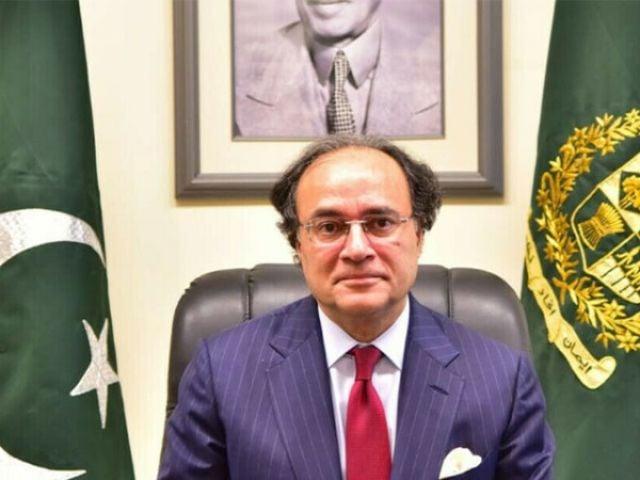
The Pakistan economy is being repaired following the main structural reforms, the Minister of Finance, Muhammad Aurangzeb said on Monday while presenting the economic survey for the 2010-25 financial year.
“We are not moving in the right direction,” admitted to therangzeb, but said that the government had since implemented reforms to consolidate the economy, in particular in terms of taxation, debt and energy control.
He noted significant improvements in the energy sector, with better governance in distribution companies after the inclusion of private sector professionals within their advice. “The recovery has been remarkable,” he said, while recognizing the need to fight against system leaks.
Public finances have also benefited from a strong reduction in the policy rate, which has contributed to reducing debt service costs by around 800 billion rupees. “The debt maintenance remains the largest element of expenses, but we have saved near a rupery billion,” he added.
The Minister announced his intention to privatize 24 public companies (public enterprises) during the coming year, after having reduced the annual losses of 800 billion rupees. “We stopped bleeding,” he said.
Stressing the macroeconomic indicators, Aurangzeb said that the current account had recorded a surplus of $ 1.9 billion in July-April Exercise 25, driven by strong computer exports. Shipments of funds are expected to reach $ 37 to 38 billion by the end of the year, compared to 27 billion dollars two years ago.
He also placed the resumption of Pakistan in the larger global context, noting that the growth of world GDP reached 2.8%.
“We must first stop bleeding, then solve the inherited problems,” said Aurangzeb.
“The government is no longer a desperate borrower,” said Aurangzeb, crediting a significant reduction in the policy rate to save nearly RS1 billion in indebted service fees, including 800 billion rupees during the current financial year.
The number of individual declarants has doubled while Pakistan widens and deepened its tax base, said the minister. During the 2010 financial year, the Government also withdrew 2.4 billions of rupees from the Treasury bills and increased RS610 billion thanks to an obligation to newly introduced void coupon, extending the average maturity of the interior debt from 2.9 to 3.5 years.
The government now provides for the exercise as a “year of recovery”, with plans to privatize 24 public loss of loss companies. Aurangzeb said that banks should also intensify private sector loans.
The economy has published mixed results between the sectors. Agriculture increased by 2.6% despite the drop in key crop production, including cotton, wheat and corn. Rice exports, however, have improved considerably. Construction displayed a growth rate of 6.6%, while the services increased by 2.9%.
Large -scale manufacturing (LSM) has remained in contraction but has shown signs of stabilization. In March 2025, the LSM increased by 1.8% in annual shift, against 1.7% the same month of last year. However, a monthly drop of 4.6% was recorded, slightly better than the 5.6% drop in February.
The electricity production capacity reached 46,605 MW, with 55.7% of thermal sources and 24.4% of hydroelectricity. Consumption amounted to 80,111 GWh, with almost half used by households. The demand for petroleum products increased by 7% during the July-Mat-Mars period, with transport representing 80% of use.
Aurangzeb said that governance in the electricity sector has improved, private sector experts brought to boards of directors of electricity distribution companies. The recovery has been described as “remarkable”, although leaks in the energy sector remain a challenge.
The external sector has experienced an improvement, with a current account surplus of $ 1.9 billion in July-April Fy5, driven by IT exports. Shipments of funds are expected to reach 37 to 38 billion dollars this exercise, compared to $ 27 billion two years ago. Imports increased by 12%.
In terms of climate, Pakistan launched its Pakistan charging project with $ 77 million in funding and introduced its first carbon market policy to COP29.
“The next exercise will be a recovery story,” said Aurangzeb, giving the tone to a budget that should aim for the compliance of the IMF, the increase in income and the growth -oriented reforms.
Pakistan exchange reserves reached $ 16.64 billion, Aurangzeb said it has increased, stimulated by improving economic indicators and renewed investors’ confidence, even if the agriculture sector has displayed low growth due to bad yields.
Of the total reserves, the State Bank of Pakistan held $ 11.5 billion while commercial banks have kept $ 5.14 billion. The increase follows improved credit notes, with Fitch improving the sovereign note of Pakistan from CCC + to B- with a stable perspective.
The International Monetary Fund (IMF) has recognized Pakistan’s progress under the installation of the Extended Fund (EFF) and approved additional $ 1.4 billion as part of the installation of resilience and sustainability (RSF) to support the efforts of climate adaptation and resilience to the country’s disasters.
The Pakistan stock market also worked, the reference index with a 50% return and earning 78,000 points during the financial year, reflecting the growing confidence of investors.
Agriculture, however, remained under pressure. The sector recorded a modest growth of 0.56% in financial year 25 due to a drop in major agricultural production. Officials have recognized the challenges, including inadequate storage of crops and the limited funding of farmers. Reforms are explored to reduce the role of Middlemen and improve access to the farm to creation.
Meanwhile, more than 5,000 federal cost centers have been labeled as part of the government’s new climate budget initiative to follow the expenses related to the climate.
In the social sector, the Benazir income support program (BISP) disabled 593 billion rupees during the financial year to support vulnerable households.


