
Islamabad:
Attached by political considerations and budgetary constraints, the coalition government proposed a public sector development program of RS1 billion RS (PSDP) for the 2012,25-26 financial year – a significant reduction in the original RS1.4 Billions of Rs last year.
The reduced PSDP reflects the government’s prioritization of infrastructure projects, in particular the roads, often aligned with the interests of the allies of the coalition. On the other hand, the financing of education, health, space and atomic energy programs has been reduced.
The PSDP of the previous year was cut in the middle of the year to adapt to electricity subsidies and to achieve the objectives of the IMF program. For 2025-26, the benefits to specific regimes for the Sindh and the discretionary projects of parliamentarians increased, indicating an inclination to politically strategic spending.
The Book of the PSDP 2025-26 shows the government’s political priorities to appease the allies and spend more on the roads. It has approved reduced budgets for space and atomic energy programs in Pakistan, health and education, but an increased allocation to specific Sindh and parliamentarian diets.
Major allowances have been proposed for discretionary expenses on the regimes recommended by parliamentarians, specific infrastructure projects of the Sindh and an improved allowance for the National Highway Authority. Water, energy and railway allowances have been considerably reduced to create a budgetary space for politically oriented projects.
Against the budget of 25 billion rupees this year for discretionary expenses on parliamentary plans, the allowance was offered at 70 billion rupees in the new budget, showing an increase of 172% in the middle of the tight budgetary space. The development budget of the Ministry of Defense was also increased by 114% to 11.6 billion rupees for the new fiscal year.
For the provinces, special areas allowances have been proposed to have gone from RS227 billion to more than 253 billion rupees due to the compulsions of expenses related to coalition parties. In this area, the allocation of provincial projects was proposed to have gone from 83 billion rupees to 106 billion rupees.
The 28% increase in provincial projects allowed mainly to respond to the concerns of the Pakistani peoples party (PPP), said a minister of the office subject to anonymity.
Pakistan had engaged in the IMF that the federal government would not distribute funds for provincial programs. However, such an allowance is in violation of this commitment and the national tax pact.
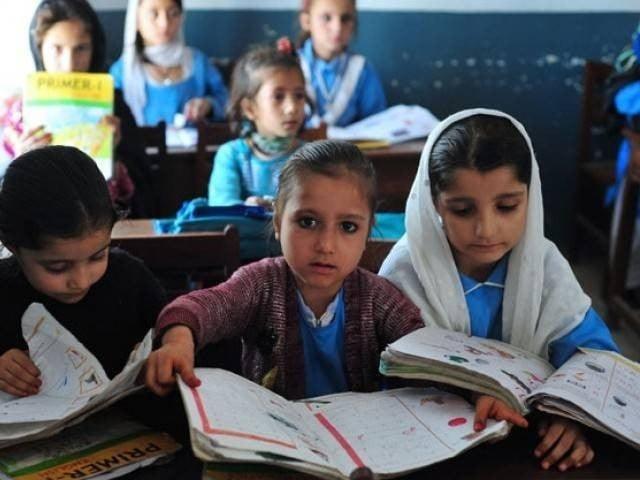
The budget of the Higher Education Commission is considerably reduced to RS39.4 billion, a reduction of RS21.5 billion or 35%. The cup was made to create space to spend infrastructure projects. The budget of the Ministry of Health is reduced to 14.3 billion rupees – a reduction of 10 billion rupees.
Suparco’s budget increased from RS24.2 billion to only 5.4 billion rupees – a drop of 77% compared to last year. The budget of Pakistan Atomic Energy Commission is reduced by 25 billion rupees to 781 million rupees, a reduction of 96%. An official of the Ministry of Finance said that these entities had self-generated resources and did not need major budget allowances.
Currently, 1,071 development projects with a total cost of RS 13.4 Billions are being implemented. These projects require 10.2 billions of additional rupes for their completion, and the Ministry of Planning estimates that it would take more than a decade to finish them all.
The government also proposed 16.2 billion rupees for the Ministry of Information Technologies, which is reduced by 32% compared to this year’s allowance.
The Ministry of Planning said that the PSDP 2025-26 had been formulated in an environment limited to resources, marked by a budgetary discipline, but guided by an unshakable emphasis on development priorities.
He added that the print of the lessons of the PSDP 2024-25 in progress and recommendations of various institutional journals, including those of the public IMF Investment Management Assessment (PIMA) Framework, an in-depth examination has been undertaken to prune sick and non-efficient projects in order to focus on priority projects which behave in national development, economic growth and the framework of Pakistan Uraan.
In the new budget, the government has planned to finish or initiate work on mega and main national projects. These projects include N25 Quetta-Karachi, which is funded by the increase in oil withdrawal per RS8 per liter.
Other priority projects include Sukkur-Hyderabad Motorway M-6, Dasu Hydro Power Project, including evacuation, Diamer Basha Dam, Mohmand Dam, K-IV projects and Karachi water increases, power supply to Allama Iqbal Industrial City, Karacha and Islamabad.
The government has also included the Pakistan income project funded by the World Bank in its priority list, which is considered a failed project.
The Ministry of Town Planning said that, among other priority projects, projects are the reconstruction of homes and schools damaged in the Sindh in the floods, a 2022 post-round reconstruction program in Balutchistan, rail connectivity of coal, Islamabad cancer hospital, the Prime Minister’s national program for the control of hepatitis “ `and diabetes.
The document has shown that the government has reduced the allocation of water projects by 185 billion rupees to Rs133.5 billion – a decrease of 52 billion rupees compared to last year. It also reduced the allowance of the Ministry of Railways by 35 billion rupees to 22.5 billion rupees – a reduction of 37%.
The allocation of the development budget of the energy sector is reduced by 105 billion rupees to 90 billion rupees – a reduction of 28%. However, the NHA budget increased from 161 billion rupees to 227 billion rupees – a jump of 66 billion rupees or 41%.
The NHA budget was increased to finance the main infrastructure projects. Among the priority road regimes are and the improvement of N-5 (Phase I), Mashkhel Panjgur Road and East Bay Expressway Phase II in Gwadar.
Strategic progress in space science is also priority through the habid Pakistani space mission and Pakistan Lunar Exploration Rover, according to the Ministry of Planning.


