
- More than half of marketing specialists say they cannot do their job without AI, despite bad results
- AI budgets continue to increase, even if 81% of leaders say it is wasted
- Marketing specialists are manually blocked to repair AI production for days a week
Social media professionals have become more and more dependent on artificial intelligence, new research finding more than half saying that they cannot now imagine playing their roles without him.
A Hootsuite survey claims that this growing dependence is not equaled by results despite heavy investments in AI technologies.
The company’s research reveals that 88% of senior marketing leaders encourage their teams to use AI tools, but 81% admit that budgets are wasted on tools that are not suitable for the objective.
Manual work persists despite the promises of automation
Deepening, Hootsuite has found that many marketing specialists find themselves trapped in a cycle that takes time of manual manual and lower results, revealing a deep disconnection between the expectations and the real usefulness of the generative tools of AI in marketing.
A significant proportion of social media managers still spend up to three working days each week to check the content generated by the AI and manually collect information from online platforms.
This discrepancy does not only drain staff time, but also affects campaign performance.
While trends are changing rapidly, marketing specialists often find their content beyond the moment when it is published, which may explain why more than half of the marketing specialists that their campaigns are constantly underperform.
The financial implications are just as disturbing. The budgets of AI tools continue to increase, but for some, the wasted investment exceeds 20% of their entire marketing budget.
“It should be alarm clock to all marketing specialists: traditional AI is not as sophisticated as you think,” noted Irina Novoslosky, CEO of Hootsuite.
“With five billion people who spend up to five hours a day online, Social is one of the richest sources of available real -time data sources and yet traditional AI tools cannot use it, leaving specialists in marketing ideas that really need to hide in view.”
With the growing pressure of executive leadership to justify all expenses, marketing specialists find it increasingly difficult to defend investments in AI tools that do not provide tangible yields.
A critical weakness in current generative AI systems lies in their dependence on obsolete data sets.
These tools often fail to capture the dynamic nature of the behavior of the public in real time, which means that their ideas can be non -synchronized with the present moment.
While 64% of senior leaders believe that their AI tools provide real -time information, only 39% of social media managers agree, a clear signal that confidence in the real world of AI is unequal at all organizational levels.
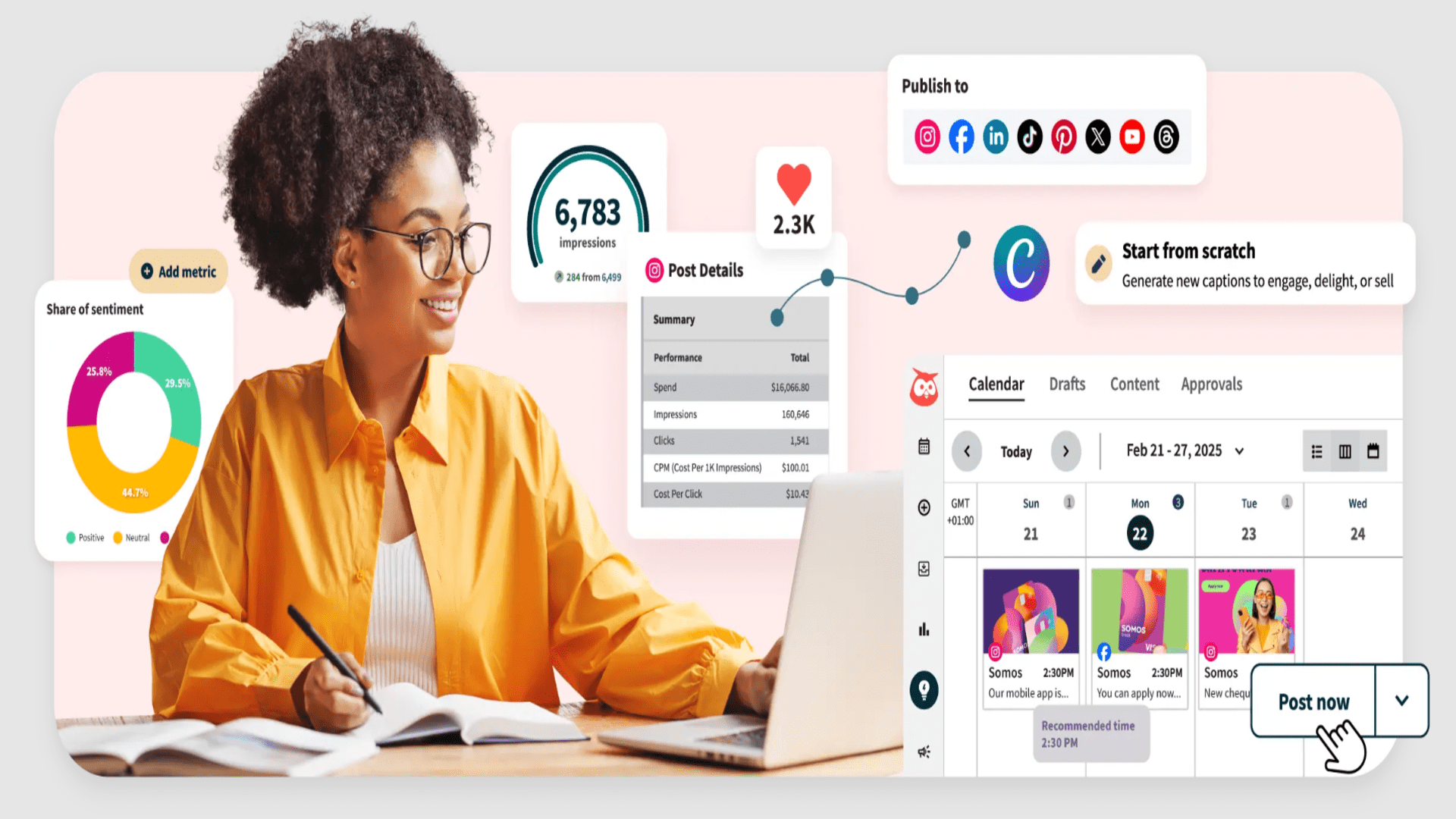
In response to these challenges, Hootsuite introduced Owlygpt, a generative AI assistant trained on live social data.
The company says this tool provides information per minute adapted to the vocal brand and the cultural context.
Given the problems with AI static data, this decision seems promising, but it is good to approach it with some skepticism. After all, companies were led to believe in the transformer power of AI before, to deal with disappointing results.


